

Разработчик Bitcoin призвал запретить NFT в сети первой криптовалюты
Люк Дашжр предложил включить эти активы в спам-фильтр сети
10.05.2023 - 14:15
1332
4 мин
0
Что произошло? Ведущий разработчик ядра Bitcoin Люк Дашжр призвал криптовалютное сообщество запретить невзаимозаменяемые токены (NFT), выпущенные на основе стандарта BRC-20 в сети биткоина. По мнению Дашжра, такие NFT перегружают сеть спамом. В качестве одной из мер противодействия он предложил внести изменения в спам-фильтр блокчейна, добавив в него Taproot-транзакции.
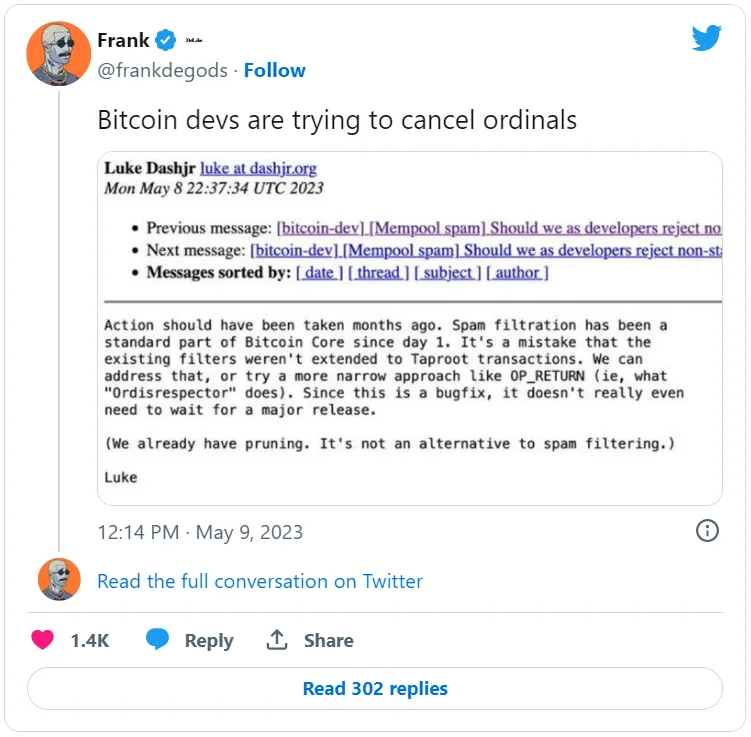
Какие еще заявления сделаны? Дашжр считает, что для разрешения проблемы нет необходимости в проведении большого обновления сети. При этом разработчик добавил, что меры должны были быть приняты несколько месяцев назад:
«Фильтрация спама была стандартной частью Bitcoin Core с первого дня. Это ошибка, что существующие фильтры не были распространены на Taproot-транзакции».
NFT на блокчейне Bitcoin. Создание NFT в сети первой криптовалюты стало технически возможным в результате обновления Taproot 2021 года, превысившего ее пропускную способность, а также запуска протокола Ordinals в начале 2023 года. Протокол позволяет привязывать данные/цифровые активы к сатоши, мельчайшей дробной части BTC (0,00000001 часть монеты). Bitcoin-NFT также называются inscriptions («надписи»).
Что такое биткоин. О криптовалюте простыми словами
Рассказываем простыми словами о том, что такое биткоин, как он был создан, где его можно использовать в повседневной жизни и зачем нужен майнинг
По данным Dune, с момента запуска протокола было выпущено более 5,1 млн NFT, комиссия за эти операции превысила 1070 BTC (более 29,9 млн долларов на 10 мая). При этом доля текстовых «надписей», сделанных с помощью Bitcoin Ordinals, составляет 86,5%, а остальная часть приходится в основном на изображения.
Популярность протокола Ordinals и NFT стандарта BRC-20 привела к многочисленным проблемам в работе сети Bitcoin, включая резкое повышение комиссии и задержек при обработке большого количества транзакций. Так, 8 мая средняя комиссия подскочила на 1156% по сравнению с 30 мая, достигнув отметки $30,91, согласно данным YCharts. С августа 2021 года показатель в основном колебался в диапазоне от $1 до $2,9, лишь единожды поднявшись до $4,5.
Также 8 мая маркетплейс Binance NFT анонсировал поддержку невзаимозаменяемых токенов на основе Ordinals. Такой вариант использования блокчейна представители биржи назвали перспективным.

Полезный материал?
Происшествия
За 104 минуты злоумышленник опустошил 1 404 адреса, после чего валидаторы остановили сеть и заморозили почти всю добычу.
19 окт. 2026 г.
Происшествия
Разработчики предупредили о рисках для мостов и обратились к биржам за помощью.
22 июн. 2026 г.
Происшествия
Осужденный помогал переводить средства жертв инвестиционных афер и заработал на этом не менее $4 млн.
10 июн. 2026 г.
Происшествия
Компания связывает инцидент с компрометацией приватного ключа сервисного кошелька, а не со взломом смарт-контрактов.
22 мая 2026 г.
Происшествия
После инцидента проект временно остановил торговые операции и работу узлов.
15 мая 2026 г.
Происшествия
Пользователь безуспешно подбирал пароль несколько недель, пока ИИ не помог найти старую резервную копию кошелька
14 мая 2026 г.
Курсы криптовалют
-

Bitcoin
$80 613
BTC
-0.06%
-

Ethereum
$2 345.96
ETH
-1.14%
-

BNB Smart Chain
$743.97
BSC
+1.17%
-

Ripple
$1.42
XRP
+1.04%
-

TRON
$0.328866
TRX
-0.23%
-

Zcash
$1 195.8
ZEC
+2.84%
-

Dogecoin
$0.076903
DOGE
-1.34%
-

Cardano
$0.218269
ADA
+2.11%
-

Stellar XLM
$0.184461
XLM
+2.83%
-

Bitcoin Cash
$275.03
BCH
-0.35%