

Команда HyperLiquid анонсировала планы по повышению децентрализации проекта
Ранее сообщество раскритиковало проект за отсутствие прозрачности, что привело к резкому падению курса токена HYPE

08.01.2025 - 12:45
923
4 мин
0
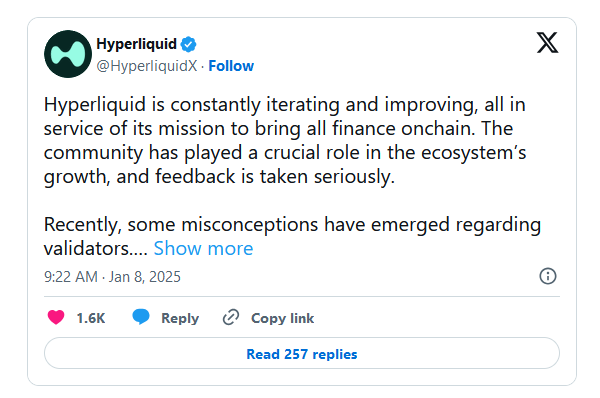
Что произошло? Команда децентрализованной криптобиржи (DEX) бессрочных фьючерсов HyperLiquid на собственном одноименном блокчейне выпустила обращение, чтобы прояснить ситуацию с валидаторами, а также пообещала открыть исходный код узлов, когда это можно будет сделать без угрозы безопасности проекта. Разработчики подчеркнули, что производительность валидаторов оценивалась в тестнете и никто из участников сети не мог купить себе статус валидатора.
Что еще известно?
«Купить место невозможно. Обратные утверждения подрывают усилия валидаторов, которые посвятили время и силы пониманию системы. Как и во всех блокчейнах по мере их развития, набор валидаторов со временем будет увеличиваться», — подчеркнули в HyperLiquid.
Вместе с тем в команде признали, что некоторые пользователи пытаются сформировать черный рынок нативных токенов HYPE, выпущенных в тестнете. Разработчики назвали такие действия неприемлемыми и пообещали улучшить процесс отбора участников тестнета.
Также команда напомнила, что вскоре будет запущена программа Foundation Delegation для поддержки высокопроизводительных валидаторов и дальнейшей децентрализации сети. Кроме того, любой пользователь сможет запустить API-сервер на любом узле.
Ранее на этой неделе в сообществе выразили обеспокоенность по поводу централизации проекта и отсутствия прозрачности токена HYPE, а также закрытого исходного кода и централизованного API. В результате курс HYPE упал на 18% за сутки и достиг минимума с 14 декабря на отметке $21,24.
Инициатором дискуссии стал популярный в криптосообществе пользователь под ником KamBenbrik. В своем X-аккаунте он написал, что структура валидаторов платформы чрезмерной централизована и закрыта для более широкого участия.
Он также утверждал, что существующая система ограничивает конкуренцию и создает барьеры для валидаторов за пределами первоначальных участников тестовой сети.
Ранее на HyperLiquid был зафиксирован крупный отток депозитов в стейблкоинах USDC от Circle, которые используются на платформе в качестве обеспечения. Отток начался после того, как в криптосообществе предупредили, что хакеры из КНДР совершают на платформе торговые операции для поиска уязвимостей.
Позже команда Hyperliquid запустила стекинг HYPE. В целом с момента запуска в конце ноября актив подорожал на 66%.

Полезный материал?
Происшествия
За 104 минуты злоумышленник опустошил 1 404 адреса, после чего валидаторы остановили сеть и заморозили почти всю добычу.
19 окт. 2026 г.
Происшествия
Разработчики предупредили о рисках для мостов и обратились к биржам за помощью.
22 июн. 2026 г.
Происшествия
Осужденный помогал переводить средства жертв инвестиционных афер и заработал на этом не менее $4 млн.
10 июн. 2026 г.
Происшествия
Компания связывает инцидент с компрометацией приватного ключа сервисного кошелька, а не со взломом смарт-контрактов.
22 мая 2026 г.
Происшествия
После инцидента проект временно остановил торговые операции и работу узлов.
15 мая 2026 г.
Происшествия
Пользователь безуспешно подбирал пароль несколько недель, пока ИИ не помог найти старую резервную копию кошелька
14 мая 2026 г.
Курсы криптовалют
-

Bitcoin
$80 812
BTC
+0.28%
-

Ethereum
$2 359.51
ETH
-0.5%
-

BNB Smart Chain
$741.21
BSC
+0.91%
-

Ripple
$1.42
XRP
+1.04%
-

TRON
$0.32906
TRX
-0.19%
-

Zcash
$1 207.77
ZEC
+3.43%
-

Dogecoin
$0.077897
DOGE
-0.44%
-

Cardano
$0.218269
ADA
+2.11%
-

Stellar XLM
$0.184461
XLM
+2.83%
-

Bitcoin Cash
$277.06
BCH
-0.93%