

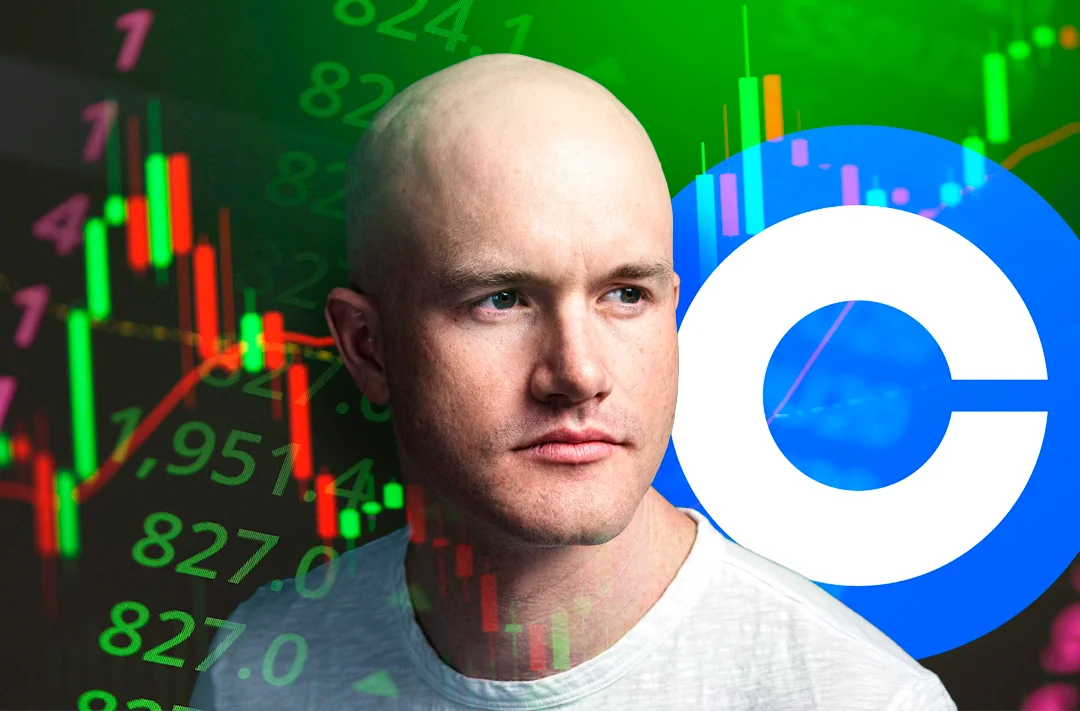
Coinbase CEO announces his readiness to defend staking services in court
Brian Armstrong stated that the program could not be considered an offer of securities
13.02.2023 - 13:10
1860
3 min
0
What’s new? Coinbase CEO Brian Armstrong stated that the crypto exchange’s staking services cannot be considered an offer of securities. He stressed that the trading platform is ready to defend this claim in court. Armstrong’s statement follows a settlement between the Kraken exchange and the US Securities and Exchange Commission (SEC), in which the platform agreed to stop providing staking services to US users.
Coinbase's staking services are not securities. We will happily defend this in court if needed.https://t.co/GtTOz77YV3 — Brian Armstrong (@brian_armstrong) February 12, 2023
What else did Coinbase say? Coinbase chief legal officer Counsel Paul Grewal released a post on the company’s blog in which he noted the importance of staking technology, stating that improper regulation could severely harm the development of the crypto industry in the United States.
According to Grewal, Coinbase Earn is not an investment of money, even under an expanded definition that includes any “specific consideration” that is given up “in return for a separable financial interest.” When a customer uses staking services, they are not giving up one thing to get something else, but rather owning the same thing as before, the lawyer explained. In addition, users can unstake their assets according to the underlying protocol.
Grewal noted that staking services do not meet the “common enterprise” criterion under the Howey test because the assets are hosted on decentralized networks. They are connected only by blockchain technology and validate transactions through a community of users, not a common enterprise. Stacking rewards are determined by the protocol, not Coinbase.
The Howey test determines whether an investment contract is a security. It includes four criteria: investment, common enterprise, reasonable expectation of profits, and the efforts of others. In other words, such a test reveals whether investors expect income from the work of third parties.
In addition, according to Grewal, stacking does not meet the “reasonable expectation of profits” criterion. To determine this, courts look at whether an asset attracts a customer based on the prospects of a return on investment or a desire to use or consume the item purchased. Staking rewards are payments for validation services provided to the blockchain, not return on investment. They are set by the blockchain protocol and are the same whether the customer does the staking themselves or through an intermediary such as Coinbase. The only difference is that the stand-alone user may require a dedicated computer, whereas a customer using staking services through Coinbase pays the exchange for these actions on their behalf.
Finally, staking services do not pay rewards based on the “efforts of others.” Service providers’ staking services are not entrepreneurial or managerial, nor are they a significant factor in clients’ receipt of rewards. The relevant blockchain protocol governs the amount of rewards and which validator nodes receive them. Service providers simply use publicly available software and basic computer hardware to perform validation services and make no management efforts. These are IT services, not investment services, Grewal concluded.
Earlier, Armstrong called the ban on staking a “terrible path” for the country that would lead companies to go offshore. He added that innovative staking technology improves the scalability and security of networks and reduces the carbon footprint.
Kristin Smith, CEO of the Blockchain Association, a lobbying group, held a similar view. She called on Congress to end the SEC’s “attack” on the crypto industry, noting that the regulator’s activities “driving innovation offshore.”

Useful material?
 Telegram
  Twitter
 Incidents
Developers warned of potential risks to bridges across the ecosystem and asked exchanges for assistance.
Jun 22, 2026
Incidents
The defendant helped move funds stolen through investment scams and earned at least $4 million for his role in the operation.
Jun 10, 2026
Incidents
The company is linking the incident to a compromised private key on a service wallet, rather than a smart contract exploit
May 22, 2026
Incidents
Following the incident, the project temporarily halted trading operations and node activity.
May 15, 2026
Incidents
The user spent weeks unsuccessfully trying to guess the password until Claude helped find an old wallet backup file
May 14, 2026
Crypto regulations
Authorities are introducing mandatory registration for companies handling cross-border crypto transactions
May 8, 2026
Cryptocurrency rates
-

Bitcoin
$76 250
BTC
-1.7%
-

Ethereum
$2 394.33
ETH
-2.1%
-

Ripple
$1.46
XRP
-5.8%
-

BNB Smart Chain
$579.4
BSC
+1.23%
-

Dogecoin
$0.090422
DOGE
-2.5%
-

TRON
$0.160134
TRX
-1.59%
-

Zcash
$798.31
ZEC
-0.5%
-

Cardano
$0.217182
ADA
-7.6%
-

Stellar XLM
$0.190743
XLM
-8.7%
-

Bitcoin Cash
$267.45
BCH
-5.5%