


Monero в 2025 году: что произошло с самой популярной монетой у преступников
Использование XMR в течение прошлого года увеличилось, несмотря на делистинг монеты с большинства крупнейших бирж и торговых платформ.

13.02.2026
224
12 мин
0
Ключевые выводы
- Активность транзакций Monero остается стабильной и устойчивой. Использование монеты удерживается выше уровня до 2022 года, несмотря на массовое исключение ее с крупных бирж и усиление контроля за прозрачными криптовалютами.
- Преступные группы, в том числе вымогатели, по-прежнему заявляют, что предпочитают получать платежи в Monero. Однако на практике большинство реальных выкупов все равно выплачивается в биткоине. Это показывает противоречие между желанием скрытности и удобством использования.
- Доля Monero на теневых онлайн-рынках растет. Почти половина новых таких площадок, запущенных в 2025 году, принимает только XMR — это заметный рост по сравнению с предыдущими годами и признак изменения поведения участников рискованных сегментов.
- Новое исследование показало, что около 14–15% узлов сети Monero ведут себя нестандартно. Это проявляется в особенностях передачи сообщений, времени отклика и концентрации инфраструктуры, что может влиять на представления о приватности.
- Приватность внутри самой блокчейн-системы Monero сохраняется, однако реальное поведение участников сети имеет значение: особенности работы одноранговых соединений могут создавать дополнительную наблюдаемость, которая учитывается в расследованиях.
Monero занимает особое место в нелегальном криптовалютном сегменте. За последние годы операции в публичных блокчейнах стали намного прозрачнее для аналитиков и правоохранительных органов. Стейблкоины, привязанные к доллару США, стали основным инструментом международных расчетов и все чаще находятся под контролем эмитентов и регуляторов, даже если свободно обращаются в открытой экосистеме.
На этом фоне Monero остается сложным объектом для отслеживания благодаря своей архитектуре, изначально ориентированной на защиту конфиденциальности. Рыночные наблюдения и академические исследования помогают лучше понять, где механизмы приватности действительно эффективны, а где реальные модели использования создают дополнительные факторы риска. GetBlock AML Research объясняет, как изменилось использование Monero в 2025 году..
Адаптация и рост использования Monero
Хотя месячная активность иногда резко менялась под влиянием рыночных событий, общая тенденция показывает заметный рост использования Monero с 2020 года. Более того, уровень активности остается устойчивым в разные фазы рыночного цикла.
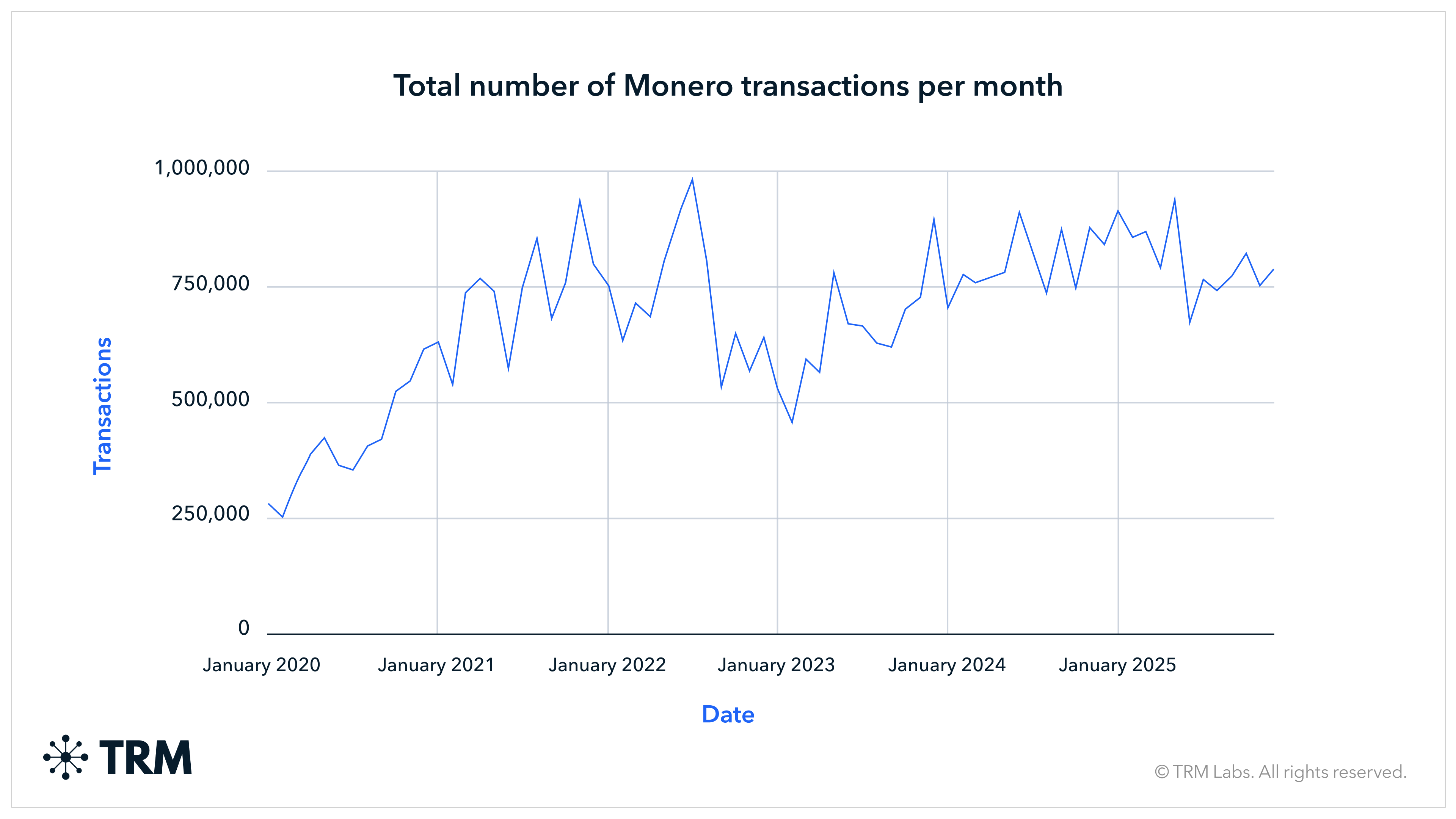
Месячное количество транзакций в сети Monero. Визуализация: TRM Labs
В 2024–2025 годах объемы транзакций оказались значительно выше, чем в начале десятилетия. Это говорит о том, что Monero сохраняет актуальность даже по мере совершенствования инструментов отслеживания более прозрачных криптовалют. Активность закрепилась на более высоком базовом уровне, что указывает не на спекулятивные всплески, а на регулярное использование.
Это особенно примечательно с учетом того, что Monero была удалена или ограничена на многих крупнейших централизованных биржах мира. За последние годы ее исключили такие площадки, как Binance, Coinbase, Kraken, OKX, Huobi и Bitstamp. В 2025 году, по отдельным оценкам, Monero была исключена с 73 бирж. В результате ликвидность сосредоточилась на меньшем числе площадок, часто находящихся вне жестких регуляторных требований.
Ограниченная ликвидность объясняет разрыв между предпочтениями преступников и фактическими платежами. Хотя вымогатели часто просят оплату в Monero и даже предлагают скидки, подавляющее большинство выкупов по-прежнему выплачивается в биткоине. Его проще купить, перевести и обменять в больших объемах, даже несмотря на более высокую отслеживаемость. Это показывает, что на практике удобство и доступность часто важнее приватности. За последние 30 дней Monero демонстрировала значительно более высокую ценовую волатильность, чем биткоин и Ethereum — примерно в 2,5 раза выше, что отражает меньшую ликвидность и более фрагментированный рынок.
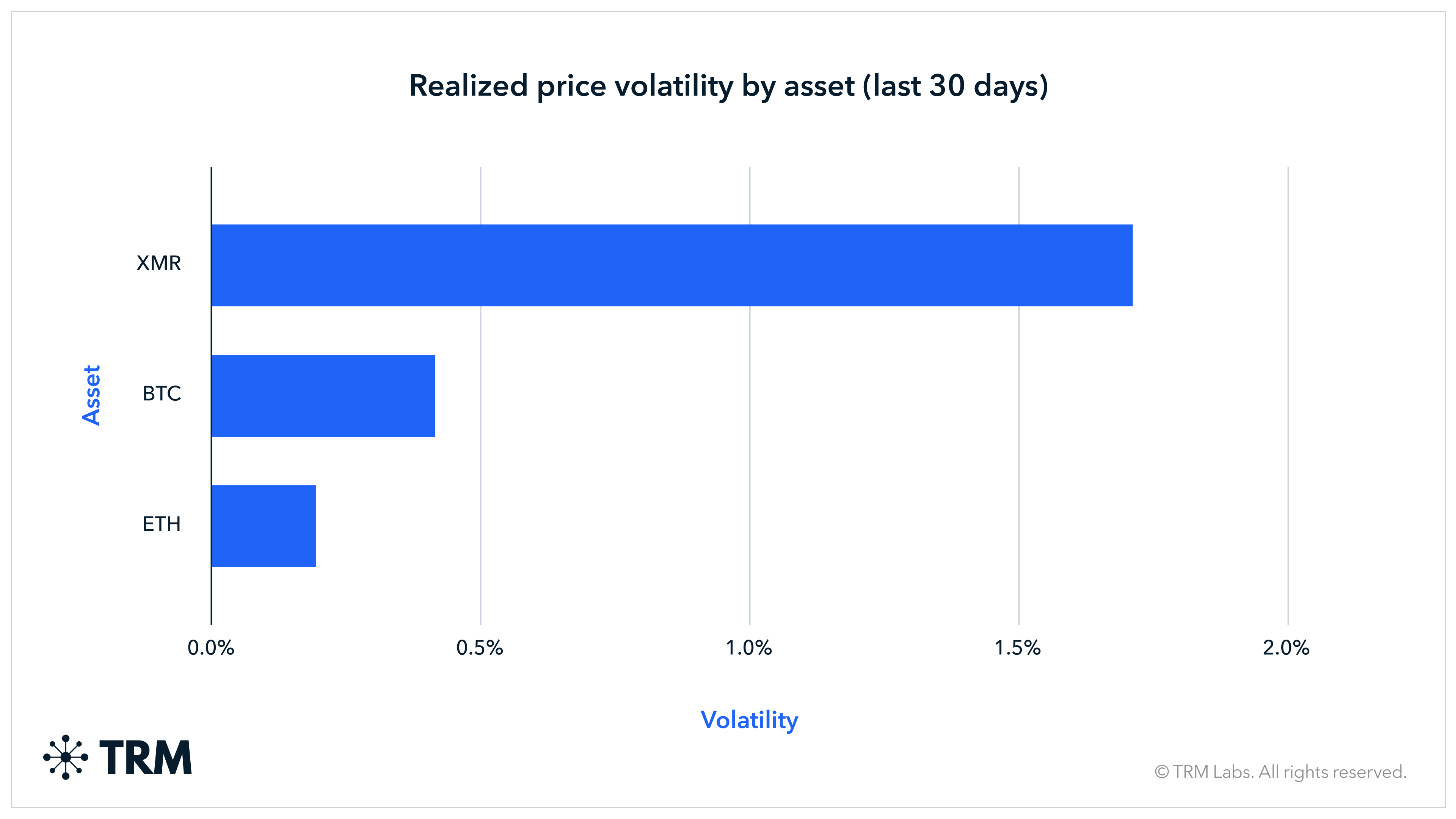
Показатель волатильности XMR, BTC и ETH за последние 30 дней. Визуализация: TRM Labs
Несмотря на ограничение доступа к крупным биржам, использование Monero внутри сети практически не сократилось. Это говорит о том, что спрос формируется не случайными розничными трейдерами, а пользователями, осознанно выбирающими повышенную конфиденциальность и готовыми мириться с неудобствами.
Использование Monero на теневых маркетплейсах также растет. В 2025 году почти 48% новых площадок принимали только XMR. Особенно заметен этот тренд на рынках, ориентированных на западные страны, где усиление инструментов отслеживания биткоина и стейблкоинов стимулирует переход к более закрытым валютам.
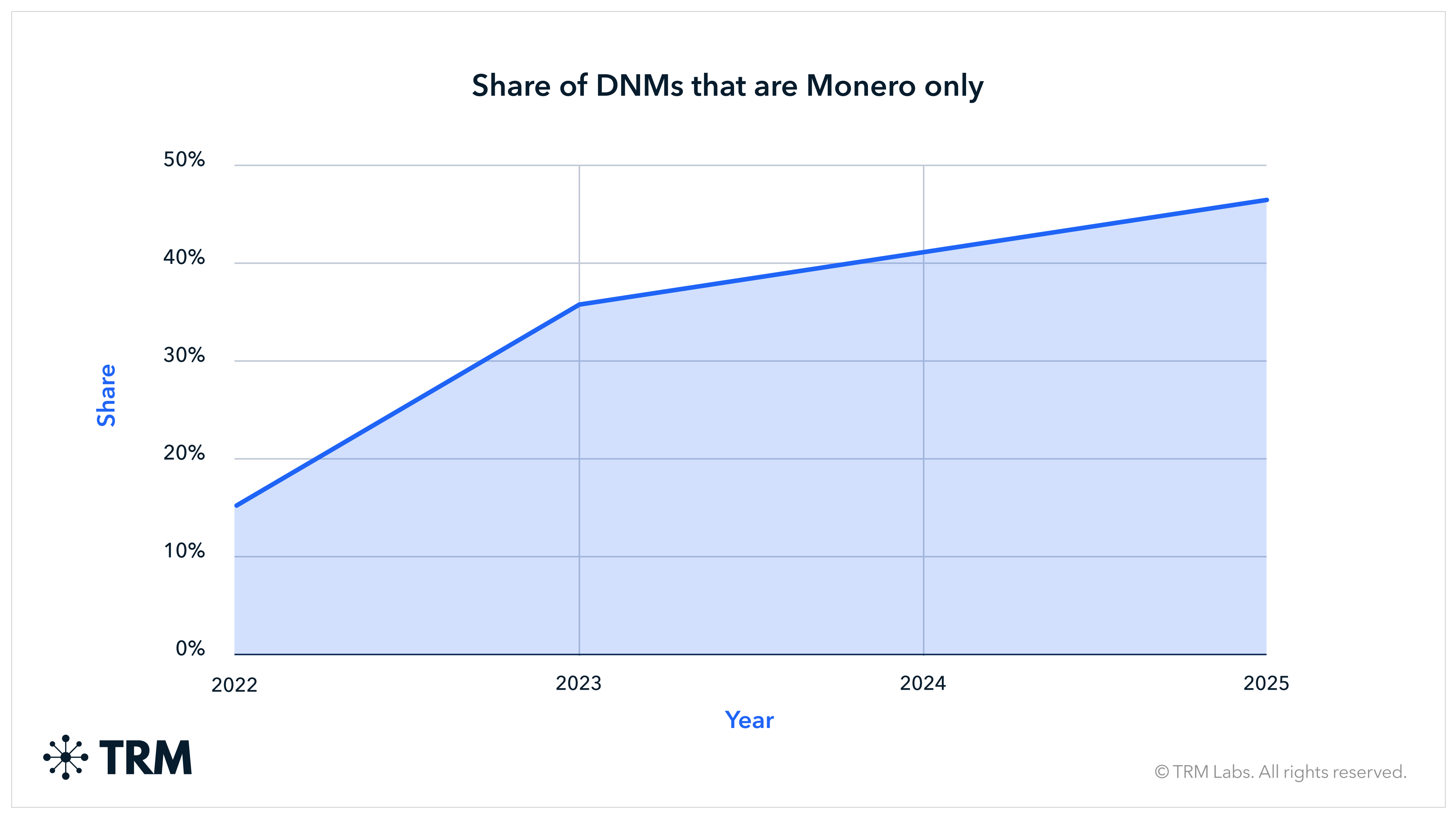
Рост использования XMR на даркнет-маркетплейсах. Визуализация: TRM Labs
Хотя доля Monero в общем объеме криптовалютных операций остается ниже, чем у крупнейших прозрачных сетей, ее объемы остаются значительными с учетом узкой специализации. Сочетание стабильной активности и роста числа XMR-ориентированных площадок показывает, что спрос на повышенную конфиденциальность не снижается.
Новые исследования: нестандартное поведение в сети Monero
Рост популярности Monero закономерно поднимает вопрос о том, как ее механизмы приватности работают в реальных условиях.
Обычно обсуждение устойчивости Monero сосредоточено на криптографии внутри блокчейна. Однако фактическая приватность зависит не только от алгоритмов, но и от того, как участники сети подключаются и обмениваются данными ежедневно. По мере усиления давления на прозрачные активы понимание работы самой сетевой инфраструктуры становится все более важным.
Недавние исследования одноранговой (P2P) сети Monero выявили особенности реального поведения узлов. В ходе анализа сетевого трафика было замечено поведение, не полностью соответствующее стандартной реализации клиента и ожидаемым протокольным правилам.
Для системного изучения этих аномалий были привлечены внешние исследователи. Результаты опубликованы в виде научной предварительной версии на платформе arXiv. Работа дает эмпирическое описание отклонений в поведении узлов и возможных последствий этих отклонений.
Ключевые выводы исследования
- Примерно 14–15% доступных узлов сети демонстрировали поведение, отличающееся от стандартных ожиданий протокола.
- Нестандартное поведение не означает автоматически злонамеренные действия. Речь идет о необычных шаблонах подключения, времени обмена сообщениями и других технических особенностях.
- Анализ выявил признаки концентрации инфраструктуры: часть узлов может контролироваться ограниченным числом операторов, что потенциально дает им больше наблюдаемости.
- Хотя криптографическая защита внутри блокчейна остается неизменной, особенности распространения сообщений по сети могут влиять на теоретические модели анонимности.
Интерпретация результатов
Отклонения наблюдались в нескольких аспектах работы P2P-протокола: процедуре установления соединения, временных интервалах передачи сообщений, формировании списков соседних узлов и распределении инфраструктуры.
По отдельности такие особенности могли бы объясняться устаревшим программным обеспечением или альтернативными реализациями. Однако важным фактором стала их устойчивость и повторяемость во времени, а также масштаб — значимая доля узлов демонстрировала одинаковые отклонения.
При этом исследование описывает только «как» ведут себя узлы, но не «почему». Оно не пытается установить мотивы или принадлежность операторов.
Концентрация инфраструктуры и сетевые эффекты
Одной из повторяющихся закономерностей стала концентрация узлов в ограниченном числе хостинговых площадок. В одноранговых сетях это может иметь значение даже при сохранении криптографической защиты.
Узлы, к которым чаще подключаются другие участники или которые активнее распространяются в списках соседей, получают более полное представление о том, как по сети распространяются сообщения. Со временем это может уменьшать неопределенность относительно источника транзакций или путей их передачи.
Такие эффекты возникают не из-за прямого нарушения правил протокола, а из-за динамики работы сети, что делает их сложнее для выявления и нейтрализации.
Последствия для оценки приватности
Гарантии приватности Monero обычно оцениваются на уровне блокчейна. При этом предполагается, что сеть работает статистически равномерно, а узлы действуют независимо и по стандартным правилам передачи данных.
Наличие устойчивых отклонений ставит под вопрос эту идеализированную модель. Различия во времени передачи сообщений, продолжительности соединений и составе списков узлов могут создавать наблюдаемую структуру распространения транзакций, что в определенных сценариях может учитываться при анализе.
Это не означает, что криптография Monero дала сбой. Скорее, это подчеркивает разницу между теоретической моделью приватности и тем, как сеть функционирует в реальных условиях.

Полезный материал?
Расследования
Один и тот же криптовалютный адрес получил две полностью противоположные оценки от разных аналитических систем: от обычного сервиса азартных игр до крайне тяжкого уголовного преступления. Эта история стала поводом для обсуждения того, какими должны быть научные стандарты анализа блокчейна и почему ошибки в подобных системах способны повлиять на судьбы людей
1 июл. 2026 г.
Расследования
Блокчейн помог выявить связи между криптовалютными сборами средств, обменниками в Сирии и посредниками в нескольких странах мира. Обнаружена характерная схема, при которой одни и те же адреса использовались сразу в нескольких кампаниях по сбору пожертвований
24 июн. 2026 г.
Расследования
Четыре иранские криптовалютные биржи обеспечивали около 78% всего объема цифровых активов, связанных со страной в 2025 году. Теперь они оказались в центре крупнейшей санкционной кампании США против криптовалютной инфраструктуры Ирана.
5 июн. 2026 г.
Расследования
На публичных блокчейнах уже работает финансовая система с кредитами, аналогами облигаций США и автоматическими рынками капитала. Через DeFi-протоколы прошло более $551 млрд, но большая часть этой активности связана не с экономикой, а со спекулятивным наращиванием рисков
29 мая 2026 г.
Расследования
Около 97% китайских поставщиков химических веществ для производства фентанила принимают оплату в криптовалюте. Объем таких операций продолжает расти вместе с глобальным рынком синтетических наркотиков
22 мая 2026 г.
Расследования
Новый закон впервые делает блокчейн-аналитику официальным обязательным инструментом финансового контроля в США. Власти также получат право ограничивать операции с иностранными криптосервисами, связанными с рисками отмывания денег
20 мая 2026 г.
Курсы криптовалют
-

Bitcoin
$83 967
BTC
-0.15%
-

Ethereum
$2 688.58
ETH
+0.51%
-

BNB Smart Chain
$774.45
BSC
+0.35%
-

Ripple
$1.42
XRP
+1.04%
-

TRON
$0.337426
TRX
-0.29%
-

Zcash
$1 533.9
ZEC
-1.56%
-

Dogecoin
$0.097979
DOGE
+2.9%
-

Cardano
$0.218269
ADA
+2.11%
-

Bitcoin Cash
$337.66
BCH
+0.11%
-

Stellar XLM
$0.184461
XLM
+2.83%