


США обогатились на $61 млн в крипте: раскрыта новая группа криптомошенников
Американские власти конфисковали миллионы долларов в криптовалюте, украденных через инвестиционные мошеннические схемы. Следователи смогли проследить путь денег через десятки кошельков и несколько блокчейнов.

13.03.2026
218
12 мин
0
Министерство юстиции США конфисковало криптовалюту на сумму $61 млн, связанную с мошенническими схемами. Схемы «pig butchering» стали одним из крупнейших источников криптомошенничества. Мошенники выстраивают длительные отношения с жертвами и направляют их на поддельные платформы для торговли криптовалютой, постепенно убеждая переводить крупные суммы денег.
Ончейн-анализ позволил следователям проследить путь украденных средств.
Несмотря на попытки скрыть происхождение денег, переводя их между множеством кошельков и разных блокчейнов, следователи смогли восстановить цепочку транзакций и обнаружить кошельки, где в итоге накапливались деньги жертв. GetBlock AML Research раскрывает детали расследования и процесса изъятия криптоактивов в пользу американской казны.
Быстрое сообщение о мошенничестве увеличивает шансы вернуть средства. Чем раньше жертвы сообщают о преступлении, тем выше вероятность отследить переводы и заморозить украденные деньги.

Как вернуть украденные криптоактивы: единственная успешная стратегия
При столкновении с мошенниками важно действовать быстро и рассудительно: собрать всю доступную информацию, обратиться к поставщику услуг и полицию
Министерство юстиции США конфисковало $61 млн в криптовалюте
На прошлой неделе прокуратура Восточного округа Северной Каролины объявила о конфискации более $61 млн в USDT, которые были связаны с инвестиционными мошенническими схемами, известными как «pig butchering».
Расследование проводилось подразделением Homeland Security Investigations (HSI) в городе Роли при поддержке международных подразделений ведомства. Этот случай демонстрирует, насколько продвинутыми стали методы анализа блокчейна и конфискации цифровых активов в делах о крупном криптомошенничестве.
Согласно материалам суда, изъятые средства были обнаружены на криптовалютных адресах, использовавшихся для отмывания денег, полученных от жертв инвестиционных афер. Расследование началось после того, как один из пострадавших отправил жалобу через специальную линию для сообщений о преступлениях.
В ходе расследования следователи обнаружили криптовалютные кошельки, где деньги многих жертв были объединены вместе. Именно эти кошельки и стали объектом конфискации.
Как работает схема «pig butchering»
Схемы «pig butchering» представляют собой тщательно организованные мошеннические операции, рассчитанные на длительное время. Их главная цель — постепенно выманить у жертвы как можно больше денег.
Мошенники обычно начинают с установления доверительных отношений. Они могут представляться потенциальными романтическими партнерами или близкими друзьями. После того как доверие сформировано, жертве предлагают якобы выгодную возможность инвестировать в криптовалюту. Часто мошенники утверждают, что имеют доступ к эксклюзивным торговым стратегиям или инсайдерской информации о рынке.
Жертву направляют на поддельные платформы для торговли криптовалютой, которые выглядят почти так же, как настоящие биржи. Интерфейс, дизайн и функции копируют реальные сервисы. На экране отображаются фиктивные прибыли и растущий баланс, создавая иллюзию успешных инвестиций.
Иногда жертвам даже позволяют вывести небольшую сумму денег, чтобы убедить их в легитимности платформы. Но когда человек начинает переводить более крупные суммы, появляются дополнительные требования: например, оплатить «налог», «комиссию за соответствие требованиям» или «депозит для подтверждения ликвидности». На этом этапе деньги уже находятся на кошельках мошенников и вернуть их через фальшивую платформу невозможно.
Как у вас будут воровать криптовалюту: топ-5 популярных схем
Мошенники используют набор готовых схем, с помощью которых обманывают ничего не подозревающих владельцев криптовалют и получают их активы
Такие схемы устроены как настоящий бизнес. Одни группы занимаются общением с жертвами, другие создают и поддерживают поддельные сайты, а третьи управляют переводами денег и их последующим отмыванием. Главная цель — не единичное мошенничество, а масштабируемая система извлечения денег.
Как следователи отслеживали деньги
После того как жертвы переводили деньги на кошельки мошенников, средства быстро перемещались между множеством промежуточных адресов. Это делается для того, чтобы запутать след и скрыть происхождение денег.
В этом деле следователи обнаружили, что деньги разных жертв объединялись на одних и тех же кошельках, даже если переводы происходили из разных стран и через разные блокчейны.
Агенты и аналитики HSI смогли проследить путь средств через серию переводов между кошельками. Они выявили характерные паттерны транзакций, указывающие на организованную систему отмывания денег. Даже когда средства смешивались с другими балансами, анализ блокчейна позволял объединять связанные адреса в группы на основе их поведения и контроля.
С помощью анализа транзакций, времени переводов и структуры сети переводов следователи смогли обнаружить кошельки-концентраторы, где в итоге аккумулировались значительные суммы.
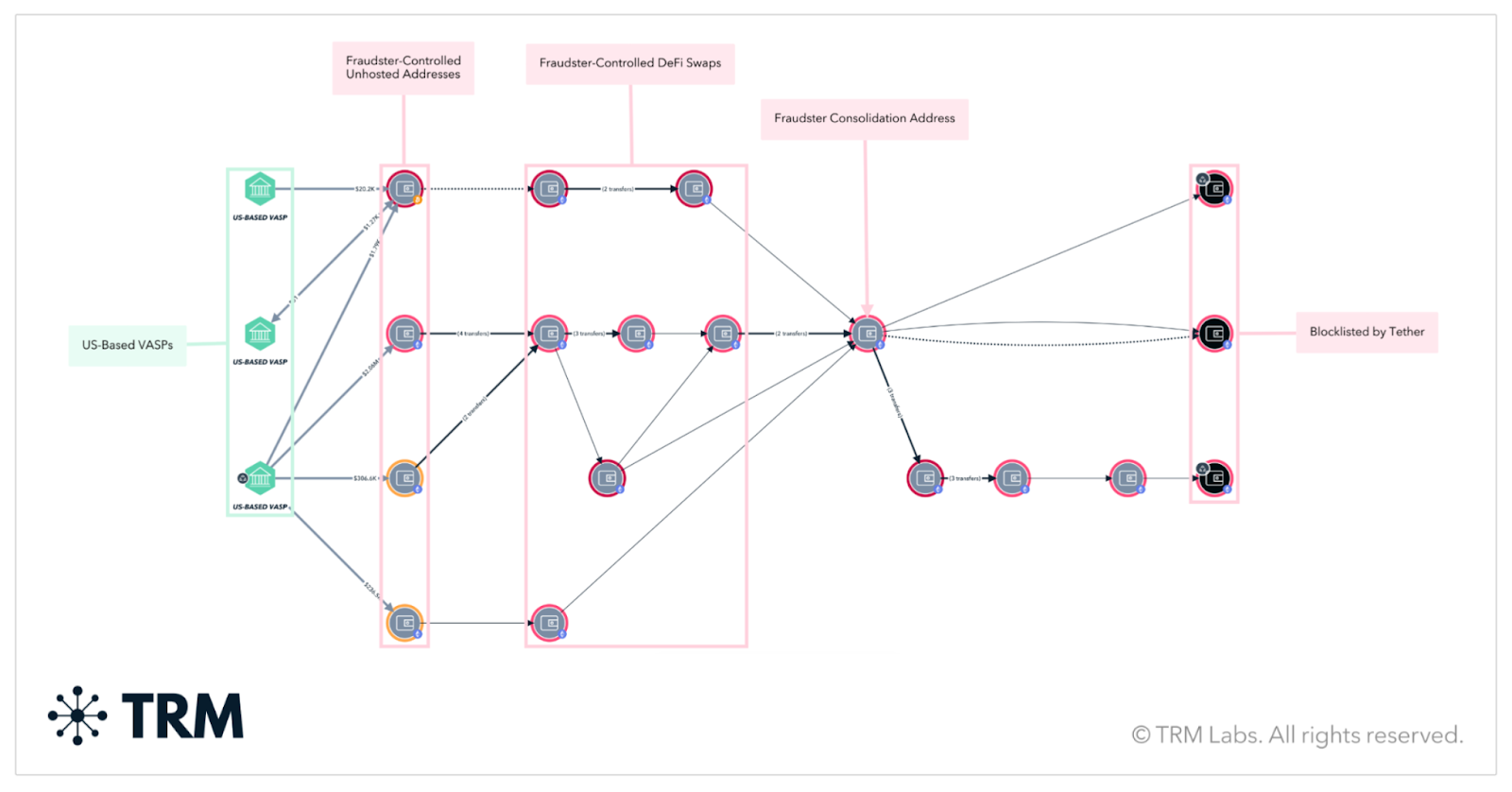
Сеть адресов, используемая для хранения и отмывания украденной криптовалюты. Визуализация: TRM Labs
Несмотря на попытки скрыть следы, публичная природа блокчейна означает, что каждая транзакция навсегда записана в реестре. Следователи смогли восстановить весь путь денег — от первой транзакции жертвы до кошельков, где оставались значительные суммы. Эти кошельки и стали основанием для конфискации.
Расследование включало отслеживание переводов между несколькими блокчейнами и через сервисы, которые часто используются для запутывания транзакций, включая обмены криптовалюты и переводы между сетями. Возможность сопоставлять данные из разных блокчейнов оказалась ключевой для обнаружения точек, где средства сходились.
Роль сотрудничества между государством и криптокомпаниями
Министерство юстиции и HSI отметили помощь со стороны компании-эмитента USDT, которая содействовала переводу конфискованных средств. Сотрудничество с компаниями из индустрии цифровых активов часто играет важную роль в подобных расследованиях, особенно если деньги находятся на платформах, где их технически можно заморозить или вернуть.
Подобные дела показывают, насколько важна быстрая реакция. Схемы «pig butchering» специально построены так, чтобы деньги перемещались очень быстро — иногда в течение 24–48 часов после получения. Если жертвы оперативно сообщают о мошенничестве и предоставляют данные о кошельках и транзакциях, вероятность обнаружить и заморозить деньги значительно возрастает.
Масштаб криптовалютного мошенничества
Конфискация $61 млн происходит на фоне глобального роста мошенничества с использованием криптовалют. По данным отраслевых исследований, в 2025 году мошенническим схемам было переведено около $35 млрд. Значительная часть этих средств связана именно со схемами «pig butchering».

Что делать, если вам пишут про крипту: подробный чек-лист
Мошенники могут использовать хитрый способ отвлечения внимания: дать жертве возможность вывести первую небольшую прибыль. После этого слезть с крючка уже нельзя
Хотя инфраструктура таких мошенничеств глобальна, их последствия глубоко личные. Люди часто теряют пенсионные накопления, средства бизнеса и деньги, которые копили десятилетиями. Психологический ущерб также огромен, поскольку мошенники долго выстраивают доверие и эмоциональную связь с жертвами.
Значение операции
Конфискация средств в Северной Каролине показывает несколько важных вещей.
- Во-первых, прозрачность блокчейна остается большим преимуществом для следователей. Хотя преступники могут запутывать транзакции и смешивать деньги, они не могут удалить историю переводов из публичного реестра.
- Во-вторых, продвинутый анализ транзакций позволяет обнаруживать ключевые кошельки даже в сложных схемах отмывания.
- В-третьих, вернуть деньги возможно, если расследование проводится достаточно быстро, чтобы успеть за движением средств.
Конфискация более $61 млн в USDT стала результатом совместной работы: сообщений от жертв, аналитики блокчейна, действий правоохранительных органов и сотрудничества участников криптовалютной индустрии. Этот случай подтверждает важный принцип современной борьбы с финансовыми преступлениями: даже в мире быстрых цифровых переводов незаконные операции все равно оставляют след, который можно обнаружить.
По мере развития криптомошенничества подобные расследования показывают, что при наличии правильных инструментов и координации правоохранительные органы способны отслеживать и изымать преступные доходы и работать над возвратом средств пострадавшим.

Полезный материал?
Расследования
Один и тот же криптовалютный адрес получил две полностью противоположные оценки от разных аналитических систем: от обычного сервиса азартных игр до крайне тяжкого уголовного преступления. Эта история стала поводом для обсуждения того, какими должны быть научные стандарты анализа блокчейна и почему ошибки в подобных системах способны повлиять на судьбы людей
1 июл. 2026 г.
Расследования
Блокчейн помог выявить связи между криптовалютными сборами средств, обменниками в Сирии и посредниками в нескольких странах мира. Обнаружена характерная схема, при которой одни и те же адреса использовались сразу в нескольких кампаниях по сбору пожертвований
24 июн. 2026 г.
Расследования
Четыре иранские криптовалютные биржи обеспечивали около 78% всего объема цифровых активов, связанных со страной в 2025 году. Теперь они оказались в центре крупнейшей санкционной кампании США против криптовалютной инфраструктуры Ирана.
5 июн. 2026 г.
Расследования
На публичных блокчейнах уже работает финансовая система с кредитами, аналогами облигаций США и автоматическими рынками капитала. Через DeFi-протоколы прошло более $551 млрд, но большая часть этой активности связана не с экономикой, а со спекулятивным наращиванием рисков
29 мая 2026 г.
Расследования
Около 97% китайских поставщиков химических веществ для производства фентанила принимают оплату в криптовалюте. Объем таких операций продолжает расти вместе с глобальным рынком синтетических наркотиков
22 мая 2026 г.
Расследования
Новый закон впервые делает блокчейн-аналитику официальным обязательным инструментом финансового контроля в США. Власти также получат право ограничивать операции с иностранными криптосервисами, связанными с рисками отмывания денег
20 мая 2026 г.
Курсы криптовалют
-

Bitcoin
$84 318
BTC
-0.26%
-

Ethereum
$2 687.35
ETH
-0.02%
-

BNB Smart Chain
$776.79
BSC
+1.37%
-

Ripple
$1.42
XRP
+1.04%
-

TRON
$0.340143
TRX
-0.39%
-

Zcash
$1 543.76
ZEC
+2.83%
-

Dogecoin
$0.095802
DOGE
+3.31%
-

Cardano
$0.218269
ADA
+2.11%
-

Bitcoin Cash
$337.25
BCH
-0.02%
-

Stellar XLM
$0.184461
XLM
+2.83%