


На сайте блокчейн-эксплорера Etherscan обнаружили фишинговую рекламу
В Scam Sniffer предположили, что причиной масштабной фишинговой кампании стало отсутствие надзора со стороны агрегаторов рекламы
08.04.2024 - 13:05
901
4 мин
0
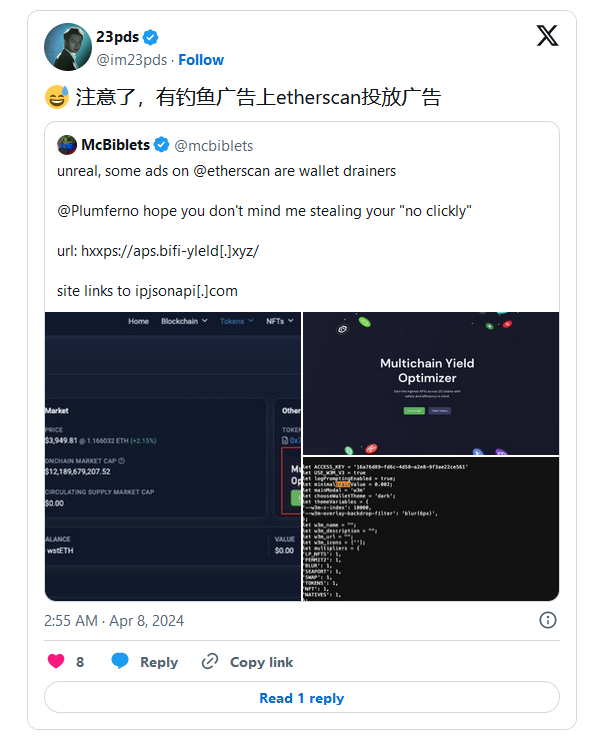
Что произошло? Пользователь X под ником McBiblets обнаружил, что некоторые рекламные объявления на сайте блокчейн-эксплорера Etherscan для блокчейна Ethereum являются фишинговыми, и предостерег от перехода на мошеннические страницы. Дальнейшее расследование показало, что реклама, появляющаяся на Etherscan, также отображалась на известных фишинговых сайтах.
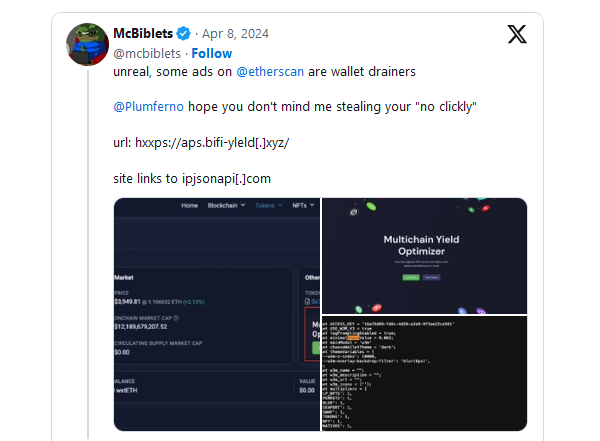
Что еще известно? Эксперты аналитической платформы Scam Sniffer обнаружили, что фишинговая реклама распространилась за пределы Etherscan и стала появляться в популярных поисковиках, таких как Google, Bing, DuckDuckGo, а также в X. В компании предположили, что причиной масштабной фишинговой кампании стало отсутствие надзора со стороны агрегаторов рекламы:
«Etherscan агрегирует рекламу с таких платформ, как Coinzilla и Persona, где недостаточная фильтрация может привести к попыткам фишинга».
Суть схемы заключается в том, что пользователей заманивают на поддельные сайты и предлагают подключить криптокошельки. После этого мошенники могут выводить средства на личные адреса без аутентификации и разрешения пользователя.
Главный специалист по информационной безопасности компании SlowMist также выпустил предупреждение о фишинговой рекламе на Etherscan.
В 2022 году с Etherscan уже происходила аналогичная ситуация. Тогда вредоносные баннеры также были обнаружены на сайте агрегатора данных о крипторынке CoinGecko и других отраслевых аналитических порталах.
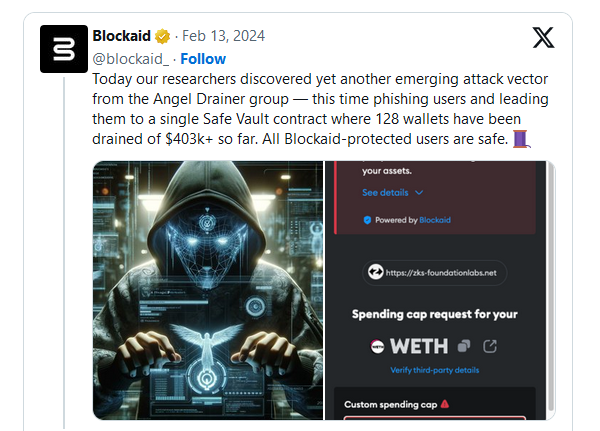
В феврале специалисты Blockaid сообщали, что фишинговая группа Angel Drainer похитила $403 000 из 128 криптокошельков, используя Etherscan для сокрытия вредоносной природы смарт-контракта. Мошенники развернули вредоносный контракт протокола Safe (ранее Gnosis Safe), чтобы создать «ложное чувство безопасности», поскольку Etherscan автоматически добавляет флаг верификации для подтверждения легитимности контракта.
Scam Sniffer сообщала, что за февраль текущего года криптопользователи потеряли почти 47 млн долларов в результате фишинговых атак. Доля блокчейна Ethereum в общем количестве краж составляет 78%.

Полезный материал?
Происшествия
Разработчики предупредили о рисках для мостов и обратились к биржам за помощью.
22 июн. 2026 г.
Происшествия
Осужденный помогал переводить средства жертв инвестиционных афер и заработал на этом не менее $4 млн.
10 июн. 2026 г.
Происшествия
Компания связывает инцидент с компрометацией приватного ключа сервисного кошелька, а не со взломом смарт-контрактов.
22 мая 2026 г.
Происшествия
После инцидента проект временно остановил торговые операции и работу узлов.
15 мая 2026 г.
Происшествия
Пользователь безуспешно подбирал пароль несколько недель, пока ИИ не помог найти старую резервную копию кошелька
14 мая 2026 г.
Крипторегулирование
Власти вводят обязательную регистрацию для компаний, работающих с трансграничными криптопереводами
8 мая 2026 г.
Курсы криптовалют
-

Bitcoin
$84 681
BTC
-2.04%
-

Ethereum
$2 683.4
ETH
-2.28%
-

BNB Smart Chain
$770.82
BSC
-0.97%
-

Ripple
$1.42
XRP
+1.04%
-

TRON
$0.336462
TRX
+0.53%
-

Zcash
$1 311.02
ZEC
-5.07%
-

Dogecoin
$0.092898
DOGE
-3.71%
-

Cardano
$0.218269
ADA
+2.11%
-

Stellar XLM
$0.184461
XLM
+2.83%
-

Bitcoin Cash
$311.5
BCH
-1.08%