

Угроза для пользователей Ledger: что делать после утечки данных
Недавно компания Ledger столкнулась с очередным инцидентом безопасности: злоумышленники получили доступ к персональных данным пользователей аппаратных криптокошельков.
09.01.2026
419
8 мин
0
Недавняя утечка данных у Ledger наглядно показала, что безопасность не ограничивается только блокчейном и криптокошельками. Раскрытие персональной информации — включая контактные данные и домашние адреса — открыло новую волну сложных кибератак, направленных именно на клиентов Ledger. GetBlock AML Research объясняет, что нужно предпринять после утечки данных, чтобы защитить свои активы.
Утечка данных Ledger: что произошло
Недавно Ledger столкнулась с новой утечкой данных. В официальном заявлении компания сообщила, что инцидент безопасности произошел у одного из ее платежных партнеров — компании Global-e.
В результате несанкционированного доступа злоумышленники смогли просматривать информацию пользователей, которые совершали покупки на сайте Ledger.com через Global-e. В скомпрометированные данные вошли:
- имя и фамилия;
- почтовый адрес;
- адрес электронной почты;
- номер телефона;
- некоторые детали заказов.
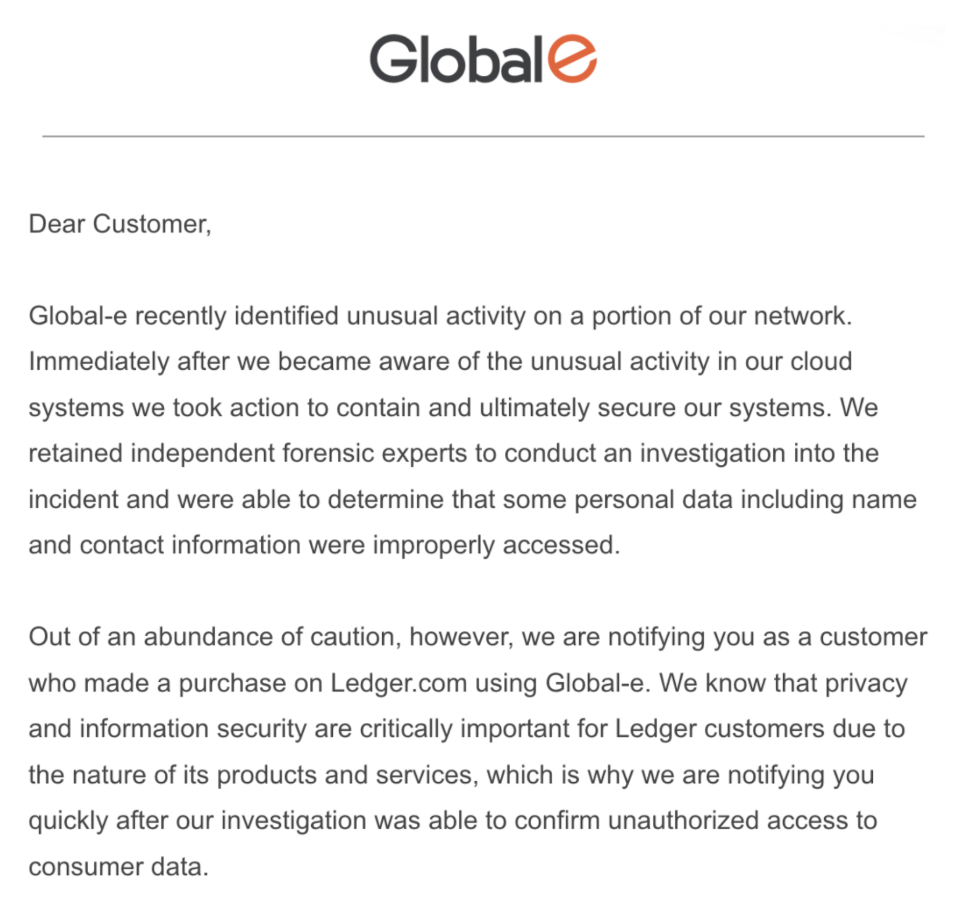
Письмо от Global-e с предупреждением для пользователей после утечки данных.
Важно: секретные фразы для восстановления доступа и приватные ключи не пострадали. Кроме того, утечка затронула не только клиентов Ledger. Злоумышленник получил доступ к облачной системе Global-e, где хранились данные заказов клиентов сразу нескольких крупных брендов. Данные банковских карт и платежной информации при этом раскрыты не были.
Понимание современных схем мошенничества
Прежде чем защищать свой криптокошелек, важно понять, как сегодня выглядят основные виды обмана:
Классический фишинг
Фишинговые атаки стали намного убедительнее. Мошенники используют реальные данные из утечки — ваше имя, историю заказов — чтобы письма и сообщения выглядели как настоящие обращения от службы поддержки Ledger. Из-за этого отличить обман от настоящего сообщения стало значительно сложнее.
Подделки с использованием ИИ
Злоумышленники применяют искусственный интеллект для копирования голосов или лиц известных людей, например руководителей компании или сотрудников поддержки. Вам могут позвонить, написать голосовое сообщение или даже выйти на видеосвязь в мессенджерах, сообщая о якобы срочной проблеме с безопасностью.
«Квишинг» (фишинг через QR-коды)
Этот вид обмана активно набирает популярность. Человек получает письмо по почте или электронное сообщение с QR-кодом и просьбой «подтвердить» устройство. После сканирования открывается поддельный сайт, где просят ввести секретную фразу из 24 слов.
Поддельные SMS и звонки
Так как номера телефонов тоже утекли, мошенники могут писать SMS, которые выглядят как часть реальной переписки, например о доставке. Часто используется давление: «Ваш аккаунт будет заблокирован через 2 часа. Срочно подтвердите данные».
Фальшивые расширения и приложения
Через рекламу или неофициальные магазины распространяются поддельные обновления программ для работы с кошельком. Внешне они полностью копируют оригинальные, но содержат вредоносный код, который крадет средства при подключении устройства.
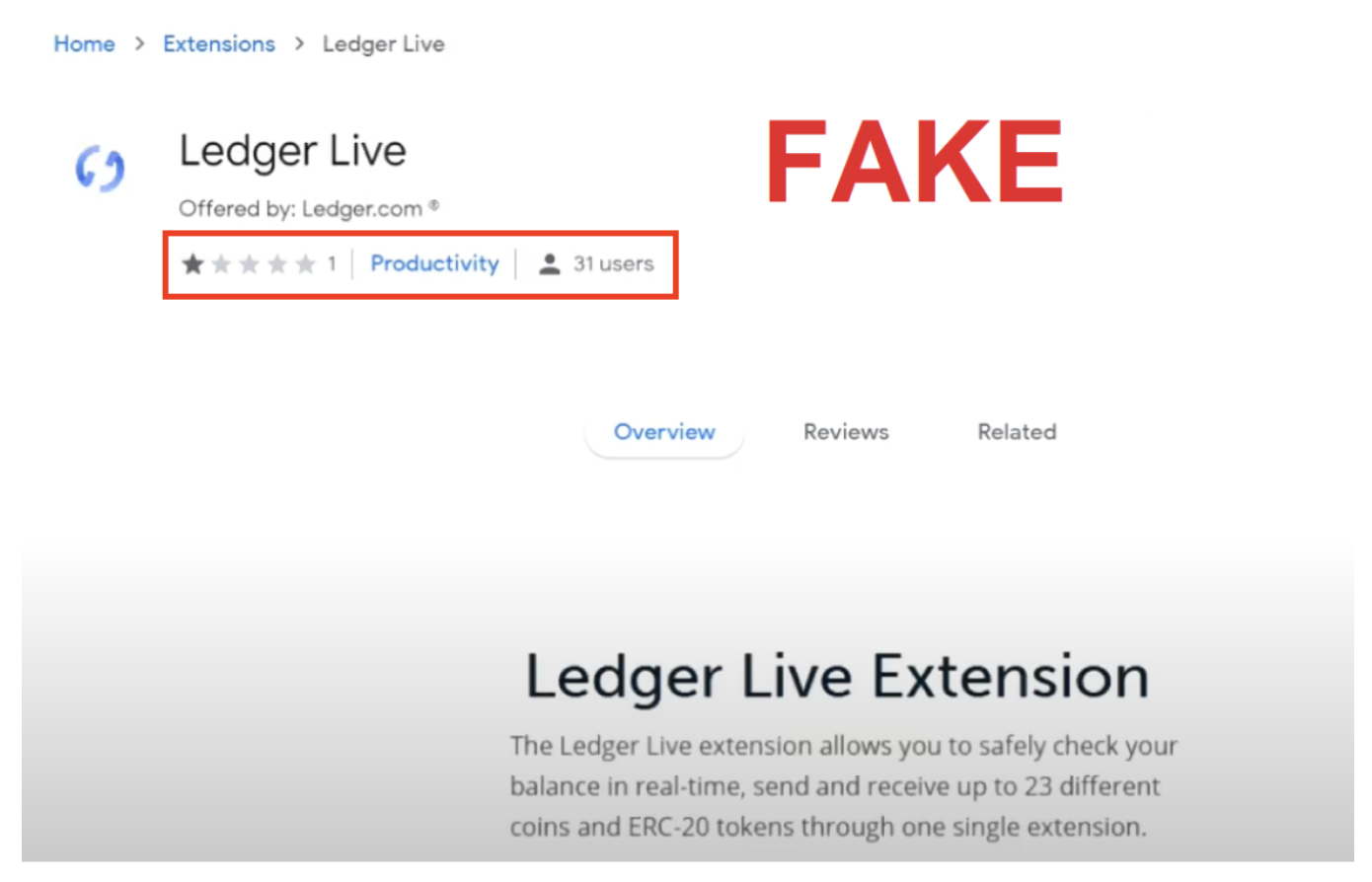
Фейковое расширение Ledger Live в Google Chrome.
Физические атаки («атака с гаечным ключом»)
Зная точный адрес владельца кошелька, преступники могут попытаться получить доступ к средствам с помощью физического давления или угроз. В этом случае обычная утечка данных превращается в реальную угрозу личной безопасности.
Как распознать ловушку
Даже самые продуманные схемы обмана имеют общие признаки. Главный из них — искусственно созданное ощущение срочности и страха. Вас пытаются напугать и заставить действовать немедленно, не давая времени спокойно проверить информацию.
Жесткое правило безопасности: Ledger никогда и ни при каких условиях не запрашивает вашу секретную фразу из 24 слов. Ни по почте, ни по телефону, ни через сайты или приложения. Эта фраза — полный ключ к вашим средствам, и любая просьба сообщить ее означает попытку кражи.
Также важно внимательно относиться к ссылкам. Мошенники часто используют адреса сайтов, которые выглядят почти так же, как настоящие, но отличаются одной буквой или символом. Лучше всегда вводить адрес сайта вручную, а не переходить по ссылкам из сообщений.
Особую осторожность стоит проявлять к обычной почте. Ledger крайне редко рассылает письма или устройства без запроса пользователя. Любая неожиданная посылка с «заменой устройства» с высокой вероятностью является подделкой.
Усиление защиты
После утечки данных защита требует комплексного подхода — как к вашей цифровой личности, так и к настройкам устройств. В первую очередь стоит минимизировать риски, связанные с раскрытием персональных данных. Для этого полезно использовать отдельные или скрытые почтовые адреса для сервисов, связанных с криптовалютами. Это снижает вероятность того, что будущая утечка будет напрямую связана с вашей основной почтой.
Использование SMS для двухфакторной аутентификации больше нельзя считать безопасным. Подмена SIM-карт — распространенная практика. Минимальный уровень защиты — переход на приложения-аутентификаторы, которые генерируют коды прямо на устройстве.
Для максимальной защиты можно использовать аппаратные ключи безопасности, которые требуют физического присутствия устройства при входе в аккаунт. Такой подход практически исключает возможность удаленного взлома, даже если мошенники знают логин и пароль.
Последняя линия обороны
Финальный уровень защиты — это ваша личная дисциплина при подтверждении операций. Необходимо внимательно проверять все детали транзакции на экране самого устройства перед подтверждением. Если операция выглядит неполной или скрывает адрес получателя и сумму, ее следует считать опасной и немедленно отменить.

Полезный материал?
Расследования
Один и тот же криптовалютный адрес получил две полностью противоположные оценки от разных аналитических систем: от обычного сервиса азартных игр до крайне тяжкого уголовного преступления. Эта история стала поводом для обсуждения того, какими должны быть научные стандарты анализа блокчейна и почему ошибки в подобных системах способны повлиять на судьбы людей
1 июл. 2026 г.
Расследования
Блокчейн помог выявить связи между криптовалютными сборами средств, обменниками в Сирии и посредниками в нескольких странах мира. Обнаружена характерная схема, при которой одни и те же адреса использовались сразу в нескольких кампаниях по сбору пожертвований
24 июн. 2026 г.
Расследования
Четыре иранские криптовалютные биржи обеспечивали около 78% всего объема цифровых активов, связанных со страной в 2025 году. Теперь они оказались в центре крупнейшей санкционной кампании США против криптовалютной инфраструктуры Ирана.
5 июн. 2026 г.
Расследования
На публичных блокчейнах уже работает финансовая система с кредитами, аналогами облигаций США и автоматическими рынками капитала. Через DeFi-протоколы прошло более $551 млрд, но большая часть этой активности связана не с экономикой, а со спекулятивным наращиванием рисков
29 мая 2026 г.
Расследования
Около 97% китайских поставщиков химических веществ для производства фентанила принимают оплату в криптовалюте. Объем таких операций продолжает расти вместе с глобальным рынком синтетических наркотиков
22 мая 2026 г.
Расследования
Новый закон впервые делает блокчейн-аналитику официальным обязательным инструментом финансового контроля в США. Власти также получат право ограничивать операции с иностранными криптосервисами, связанными с рисками отмывания денег
20 мая 2026 г.
Курсы криптовалют
-

Bitcoin
$81 282
BTC
+0.02%
-

Ethereum
$2 393.74
ETH
+0.48%
-

BNB Smart Chain
$741.13
BSC
+1.5%
-

Ripple
$1.42
XRP
+1.04%
-

TRON
$0.329852
TRX
+0.61%
-

Zcash
$1 220.01
ZEC
+0.55%
-

Dogecoin
$0.079054
DOGE
+0.64%
-

Cardano
$0.218269
ADA
+2.11%
-

Stellar XLM
$0.184461
XLM
+2.83%
-

Bitcoin Cash
$282.32
BCH
+3.2%