


Центральный банк Бразилии утвердил новые правила для криптовалютных компаний
Резолюции ЦБ вступят в силу в феврале 2026 года и установят контроль за операциями и рисками.
11.11.2025 - 09:25
545
5 мин
0
Главное:
- Центральный банк Бразилии официально включил криптовалютные платформы в финансовую систему страны, установив строгие правила AML и CTF.
- С 2 февраля 2026 года все криптобиржи и эмитенты стейблкоинов обязаны проверять клиентов, сообщать о трансграничных переводах и иметь минимальный капитал.
- Криптосообщество обеспокоено, что новые меры приведут к чрезмерному контролю и централизации данных пользователей.
Центральный банк Бразилии утвердил новые правила для криптовалютной отрасли, официально включив цифровые платформы в финансовую систему страны. Документ устанавливает меры по предотвращению отмывания денег (AML) и финансирования терроризма (CTF). Они будут обязательны для криптовалютных бирж, эмитентов стейблкоинов и других компаний, работающих с цифровыми активами.
Новые требования, закрепленные в резолюциях №519, 520 и 521, вступят в силу 2 февраля 2026 года. Это первая крупная попытка страны привести рынок криптовалют к тем же стандартам, которые действуют для банков и брокеров.
По словам директора по регулированию ЦБ Гилнеу Вивана, изменения направлены на снижение рисков мошенничества и незаконных операций с виртуальными активами. В прошлом году объем криптотранзакций в Бразилии превысил 1,7 трлн реалов (около $330 млрд).
Новая система контроля за криптовалютами
Теперь каждая операция с цифровыми активами, привязанными к фиатной валюте, например с USDT или USDC, будет квалифицироваться как валютная сделка. Это означает, что любые международные переводы или расчеты в стейблкоинах должны соответствовать валютному законодательству страны.
Согласно правилам, криптобиржи и другие поставщики услуг обязаны:
- Проверять личность пользователей, переводящих средства на личные кошельки;
- Сообщать о трансграничных криптотранзакциях;
- Поддерживать системы внутреннего контроля, управления рисками и кибербезопасности;
- Иметь минимальный капитал от 10,8 до 37,2 млн реалов — в зависимости от размера компании и уровня риска.
Иностранные компании смогут работать в Бразилии только при наличии локального разрешения. Местные стартапы могут столкнуться с дополнительными расходами на выполнение требований, что затруднит конкуренцию с крупными игроками.
Реакция криптосообщества
После публикации правил сторонники криптовалют выразили обеспокоенность. Аналитик Фелипе Демартини отметил, что новые меры могут привести к полному контролю над операциями пользователей. По его мнению, биржи будут обязаны отслеживать и сообщать о любых переводах на частные кошельки.
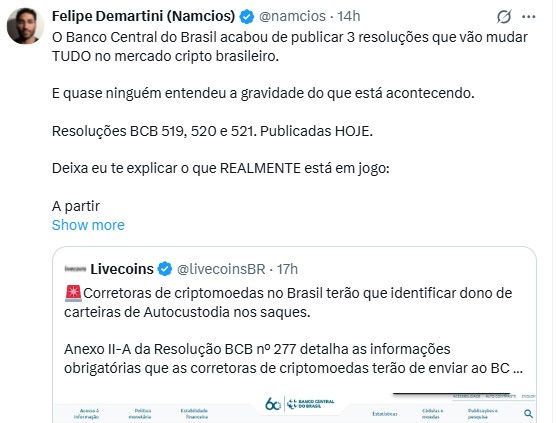
«Центральный банк будет знать ваше имя, CPF, сколько у вас биткоинов и когда вы их переводите/ Это создаст централизованную базу данных всех держателей криптовалюты в Бразилии — непреодолимую цель для хакеров и опасный политический инструмент».
Он также указал на новые лимиты суммы международных криптовалютных переводов: $100 000 для бирж и $500 000 для банков, — заявив, что эти правила «вынуждают пользователей возвращаться к традиционным банковским каналам».

Полезный материал?
Происшествия
Разработчики предупредили о рисках для мостов и обратились к биржам за помощью.
22 июн. 2026 г.
Происшествия
Осужденный помогал переводить средства жертв инвестиционных афер и заработал на этом не менее $4 млн.
10 июн. 2026 г.
Происшествия
Компания связывает инцидент с компрометацией приватного ключа сервисного кошелька, а не со взломом смарт-контрактов.
22 мая 2026 г.
Происшествия
После инцидента проект временно остановил торговые операции и работу узлов.
15 мая 2026 г.
Происшествия
Пользователь безуспешно подбирал пароль несколько недель, пока ИИ не помог найти старую резервную копию кошелька
14 мая 2026 г.
Крипторегулирование
Власти вводят обязательную регистрацию для компаний, работающих с трансграничными криптопереводами
8 мая 2026 г.
Курсы криптовалют
-

Bitcoin
$84 575
BTC
-2.4%
-

Ethereum
$2 675.48
ETH
-2.45%
-

BNB Smart Chain
$766.62
BSC
-1.88%
-

Ripple
$1.42
XRP
+1.04%
-

TRON
$0.334261
TRX
-0.33%
-

Zcash
$1 315.93
ZEC
-5.27%
-

Dogecoin
$0.093014
DOGE
-3.92%
-

Cardano
$0.218269
ADA
+2.11%
-

Stellar XLM
$0.184461
XLM
+2.83%
-

Bitcoin Cash
$309.59
BCH
-1.67%