


Более 51% блоков в сети Ethereum проверяются на соответствие правилам OFAC
В компании Labrys отметили, что даже мягкая цензура приведет к росту комиссий и повышению времени обработки транзакций
15.10.2022 - 06:45
1345
3 мин
1
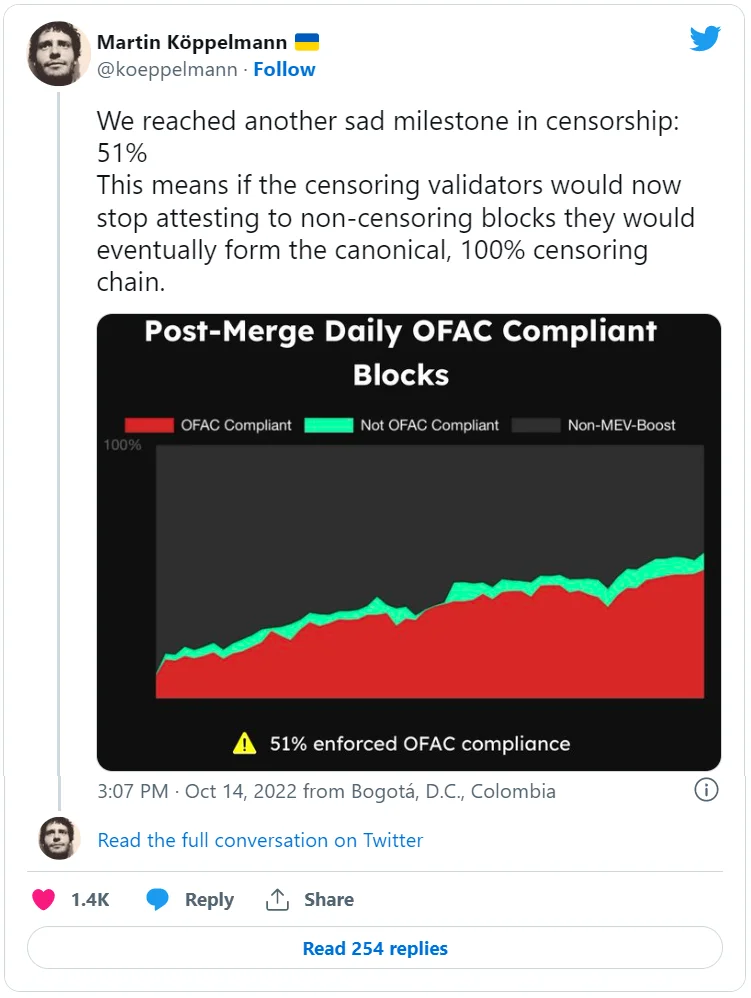
Что произошло? Через месяц после перехода сети Ethereum на алгоритм консенсуса Proof-of-Stake (PoS) 51% блоков подверглись цензуре. Они соответствуют стандартам Управления США по контролю за иностранными активами (OFAC), а ретрансляторы MEV-Boost Relay расширили свою долю рынка в качестве добытчиков. Криптосообщество обеспокоено тем, что цифры указывают на дальнейшее цензурирование проекта и полную централизацию из-за регулирования надзорными органами.
О чем говорят специалисты? Генеральный директор компании по разработке блокчейн-продуктов Labrys Лашан Фини отметил, что в случае жесткой цензуры «сколько бы вы ни ждали, сколько бы ни платили, вы никогда не дойдете до момента, когда эти санкционные транзакции будут включены в блокчейн». Он пояснил, что «узлы будут вынуждены в соответствии с правилами отбрасывать любые блоки с такими транзакциями».
Фини также отметил, что даже при мягкой цензуре, когда санкционные транзакции будут подтверждены, это приведет к длительному ожиданию и повышенным комиссиям, что негативно отразится на пользователях. Согласно Labrys, существует семь основных реле, включая Flashbots, BloXroute Max Profit, BloXroute Ethical, BloXroute Regulated, BlockNative, Manifold и Eden. Только 3 из них не подвергаются цензуре в соответствии с требованиями OFAC.
Ранее Фини уже отмечал, что Ethereum может столкнуться с цензурой в результате перехода на PoS. По его мнению, 45% валидаторов, использующих ПО Flashbots, вынуждены соблюдать американские санкции.

Полезный материал?
Происшествия
Разработчики предупредили о рисках для мостов и обратились к биржам за помощью.
22 июн. 2026 г.
Происшествия
Осужденный помогал переводить средства жертв инвестиционных афер и заработал на этом не менее $4 млн.
10 июн. 2026 г.
Происшествия
Компания связывает инцидент с компрометацией приватного ключа сервисного кошелька, а не со взломом смарт-контрактов.
22 мая 2026 г.
Происшествия
После инцидента проект временно остановил торговые операции и работу узлов.
15 мая 2026 г.
Происшествия
Пользователь безуспешно подбирал пароль несколько недель, пока ИИ не помог найти старую резервную копию кошелька
14 мая 2026 г.
Крипторегулирование
Власти вводят обязательную регистрацию для компаний, работающих с трансграничными криптопереводами
8 мая 2026 г.
Курсы криптовалют
-

Bitcoin
$84 786
BTC
+1.43%
-

Ethereum
$2 704.92
ETH
+0.6%
-

BNB Smart Chain
$770.55
BSC
+0.04%
-

Ripple
$1.42
XRP
+1.04%
-

TRON
$0.334812
TRX
-0.73%
-

Zcash
$1 337.66
ZEC
-7.05%
-

Dogecoin
$0.094279
DOGE
-0.37%
-

Cardano
$0.218269
ADA
+2.11%
-

Stellar XLM
$0.184461
XLM
+2.83%
-

Bitcoin Cash
$309.02
BCH
+0.9%