


Классическая финансовая пирамида: как проект DSJ Exchange привлек $150 млн
Мошенники пытались скрыть более $90 млн через сложные криптовалютные операции. Однако часть средств все же удалось отследить и заблокировать.
06.05.2026
251
6 мин
0
В начале мая 2026 года прекратила работу крупная финансовая схема, замаскированная под криптовалютную инвестиционную платформу. Проект под названиями DSJ Exchange (DSJEX) и BG Wealth Sharing обещал пользователям высокий доход, но в итоге оказался финансовой пирамидой. GetBlock AML Research раскрывает детали краха очередной финансовой пирамиды, использующей криптовалюты.
По оценкам, общий объем привлеченных средств превышает $150 млн. Только за последнюю неделю перед закрытием участники схемы попытались скрыть более $90 млн, переводя деньги через разные криптовалютные сети, чтобы запутать следы.
Как работала схема
Проект начал активно привлекать пользователей еще в 2025 году. Людям обещали доход от 1,3% до 2,6% в день — цифры, которые значительно превышают любые реальные инвестиционные возможности.
Платформа DSJ представлялась как торговая площадка, где якобы можно зарабатывать на криптовалютах. BG Wealth Sharing позиционировалась как инвестиционная группа. На деле обе структуры были частью одной схемы.
Для повышения доверия использовался вымышленный руководитель по имени Стивен Берд. Также организаторы регулярно меняли сайты и криптокошельки, чтобы усложнить отслеживание.
Привлечение новых участников происходило через мессенджер BonChat, где публиковались «сигналы для торговли» и обещания высокой прибыли.
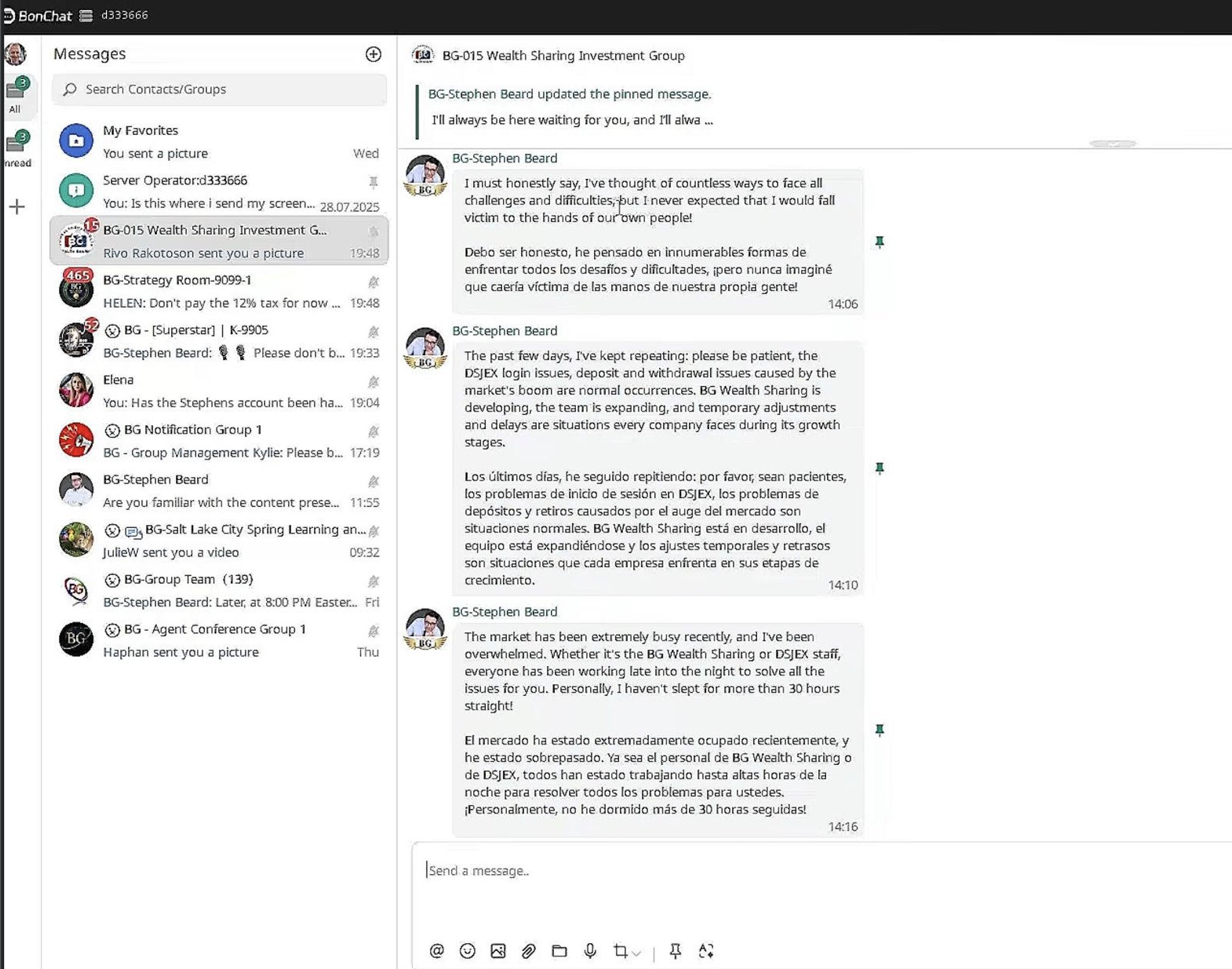
Переписка участников пирамиды в BonChat
О схеме начали предупреждать регуляторы по всему миру — всего было зафиксировано более десяти официальных предупреждений на разных континентах. 23 апреля 2026 года американские правоохранительные органы заблокировали один из сайтов, связанных с проектом. Однако даже после этого схема продолжала работать.
Последний этап перед крахом
2 мая человек, представлявшийся руководителем проекта, опубликовал видео, в котором заявил, что компания якобы готовится к выходу на биржу. При этом от пользователей потребовали заплатить «налог» в размере 12% от суммы на счету.
К этому моменту вывод средств уже был отключен, и пользователи не могли вернуть свои деньги.
Как скрывались средства
После этого организаторы начали активно переводить средства через разные криптовалютные инструменты. Проще говоря, деньги «прогонялись» через множество операций и адресов, чтобы усложнить их отслеживание.
За период с 27 апреля по 3 мая было перемещено более $90 млн. Часть средств в итоге оказалась на крупных криптовалютных сервисах.
Что удалось сделать
Известный в криптосообществе блокчейн-исследователь ZachXBT вместе с криптовалютными компаниями и правоохранительными органами смог отследить движение средств.
В результате:
- более $38 млн были заморожены компанией Tether
- еще около $3 млн заблокированы на других платформах
- общий объем замороженных средств превысил $41 млн
Это означает, что значительная часть средств все же была остановлена до того, как их окончательно скрыли.
| Кошельки, которые использовались для отмывания средств |
| 0xf3bd39870d26cfdcdc582ed02b97f74e19e0ee97 |
| 0x35c752ddbd5a5f23482141fab42f943c52ba9adb |
| 0x7a22c5d74f90515ed5834b237b6f8f865c543a66 |
| 0x78255cFa63A3b49b742Cbc9aDb36aF926d3cdA90 |
| TGTWYCJxhvrDkZc4pyugBAnc4qWeXdXJdF |
| TBsjjfnBi5mW3soFmSVFK1pAD5Jbwrbjcg |
| TWF1bcuNLXtwQCRxb6Qn6uKqWCuXRatiei |
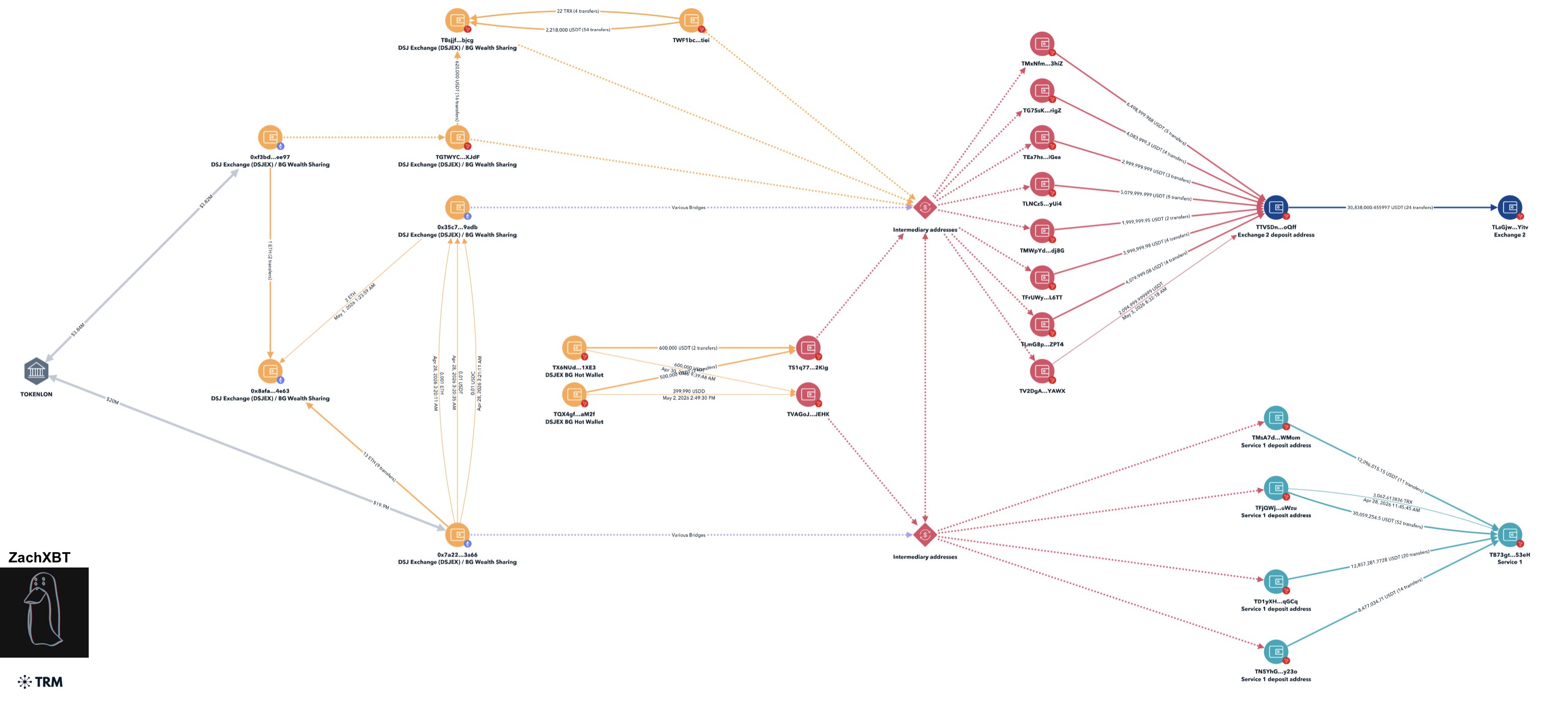
Схема движения похищенных средств. Визуализация: ZachXBT & TRM Labs
Почему люди продолжают попадаться
Несмотря на явные признаки мошенничества, такие схемы продолжают привлекать тысячи людей. Основная причина — ориентация на неподготовленных пользователей, которые не разбираются в инвестициях и криптовалютах.
Обещания высокой доходности и активное продвижение в социальных сетях делают такие проекты особенно опасными. Даже после краха многие участники сначала не верили, что стали жертвами обмана.
Реальный масштаб схемы может быть значительно больше $150 млн, поскольку проект работал более года. Этот случай показывает, что даже в сложной цифровой среде возможно отслеживать движение средств и частично возвращать контроль над ними. Однако главным способом защиты остается осторожность и критическое мышление.

Полезный материал?
Расследования
Один и тот же криптовалютный адрес получил две полностью противоположные оценки от разных аналитических систем: от обычного сервиса азартных игр до крайне тяжкого уголовного преступления. Эта история стала поводом для обсуждения того, какими должны быть научные стандарты анализа блокчейна и почему ошибки в подобных системах способны повлиять на судьбы людей
1 июл. 2026 г.
Расследования
Блокчейн помог выявить связи между криптовалютными сборами средств, обменниками в Сирии и посредниками в нескольких странах мира. Обнаружена характерная схема, при которой одни и те же адреса использовались сразу в нескольких кампаниях по сбору пожертвований
24 июн. 2026 г.
Расследования
Четыре иранские криптовалютные биржи обеспечивали около 78% всего объема цифровых активов, связанных со страной в 2025 году. Теперь они оказались в центре крупнейшей санкционной кампании США против криптовалютной инфраструктуры Ирана.
5 июн. 2026 г.
Расследования
На публичных блокчейнах уже работает финансовая система с кредитами, аналогами облигаций США и автоматическими рынками капитала. Через DeFi-протоколы прошло более $551 млрд, но большая часть этой активности связана не с экономикой, а со спекулятивным наращиванием рисков
29 мая 2026 г.
Расследования
Около 97% китайских поставщиков химических веществ для производства фентанила принимают оплату в криптовалюте. Объем таких операций продолжает расти вместе с глобальным рынком синтетических наркотиков
22 мая 2026 г.
Расследования
Новый закон впервые делает блокчейн-аналитику официальным обязательным инструментом финансового контроля в США. Власти также получат право ограничивать операции с иностранными криптосервисами, связанными с рисками отмывания денег
20 мая 2026 г.
Курсы криптовалют
-

Bitcoin
$84 134
BTC
-0.36%
-

Ethereum
$2 680.61
ETH
-0.19%
-

BNB Smart Chain
$776.61
BSC
+1.33%
-

Ripple
$1.42
XRP
+1.04%
-

TRON
$0.340058
TRX
-0.22%
-

Zcash
$1 529.81
ZEC
+3.18%
-

Dogecoin
$0.095357
DOGE
+3.11%
-

Cardano
$0.218269
ADA
+2.11%
-

Bitcoin Cash
$337.63
BCH
-0.04%
-

Stellar XLM
$0.184461
XLM
+2.83%