

«Проблемы» wETH. Как шутка зашла слишком далеко
Волна публикаций про вымышленный обвал «обернутого» Ethereum повлияла на рынок и вышла за пределы криптовалютных сообществ в социальных сетях

29.11.2022
2057
7 мин
1
В выходные криптосообщество в Twitter подхватило шуточную теорию о том, что токены «обернутого» Ethereum (wETH) находятся на грани обвала. В импровизированном и едва ли понятном внешнему наблюдателю флешмобе участвовали первые лица криптоиндустрии, что спровоцировало заметную реакцию рынка.
Учитывая постоянный поток новостей о крахе крупнейших компаний индустрии, последней из которых стала BlockFi, слухов о возможном банкротстве новых игроков, взломах и других проблемах, можно легко потеряться и поверить в несостоятельность любого криптопроекта, не вникая в детали и источники информации.
Неудивительно, что, когда в социальных сетях массово начали появляться вымышленные новости про «несостоятельность» wETH, для многих не сильно технически подкованных наблюдателей они выглядели реалистично. Параллельно с этим Ethereum за воскресенье 27 ноября потерял порядка 5% в цене, и в обсуждениях происходящего допускали, что отчасти слухи об «обвале» очередного проекта могли спровоцировать некоторых инвесторов на продажи ETH.
«Аналитики выражают озабоченность»
Волна ироничных твитов началась с заявлений о том, что токены wETH якобы теряют привязку к Ethereum. ИТ-директор проекта Arcane Эрик Волл написал в Twitter об отвязке («депеге») активов. Главный разработчик Yearn под ником Banteg опубликовал серию твитов с вымышленными подробностями «взлома» wETH в 2019 году. В публикациях Banteg нарочито делал акцент на эмоции, ссылаясь на абсурдные вымышленные доказательства, очевидно иронизируя над инфлюенсерами в криптопространстве.
Стоит отметить, что шутки зачастую были понятны тем, кто имеет хотя бы минимальное представление о технической стороне Ethereum, а для непосвященных многие из опубликованных постов выглядели убедительно. Дошло до того, что издание Bloomberg в аналитической статье о причинах падения цены биткоина всерьез написало, что «аналитики выражают озабоченность по поводу «обернутого» Ethereum».
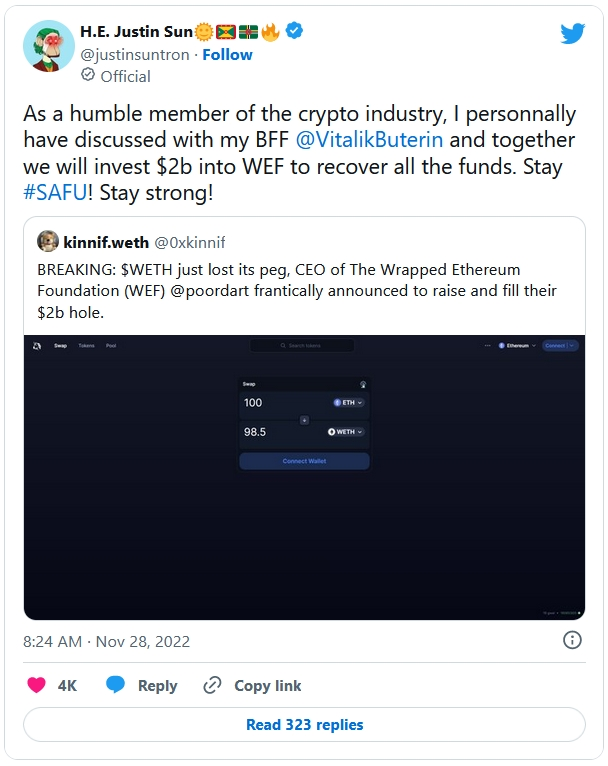
Публикация только усилила волну новых шуток и троллинга. Анонимы в Twitter делали посты, представляясь «директором Weth Foundation» и выясняли, кто именно из них стал тем самым «аналитиком», на которого ссылалось издание. Наконец, криптомиллиардер Джастин Сан в своем Twitter заявил, что «вместе со своим лучшим другом Виталиком Бутериным» открывает фонд на два миллиарда долларов в поддержку WETH, что подхватили некоторые СМИ и тематические каналы как реальную новость.
Ведущий подкаста The Daily Gwei и известный открытый сторонник Ethereum Энтони Сассано, также ранее написавший о том, что «цена ETH падает из-за несостоятельности wETH», вынужден был опубликовать разъясняющий пост, когда понял, что шутка зашла слишком далеко.
Что такое wETH
Буква “W” обозначает слово “wrapped”, что переводится с английского языка как «обернутый». При «обертывании» токен представляет собой фиксированное количество другого токена, обычно в пропорции «1:1». Термин «обертывание» чаще всего используется для описания способов передачи активов на другой блокчейн, например, когда «обернутый» BTC (wBTC) создается для передачи биткоинов на блокчейн Ethereum. Другими словами, это копия актива, выпущенная в другом блокчейне под залог оригинального токена.
Сама монета ETH не является токеном стандарта ERC-20, с которым работают DeFi-приложения, а «обернутый» ETH придуман для упрощения обмена внутри децентрализованных приложений (например, бирж или NFT-маркетплейсов), а также на других известных блокчейнах (например, BNB Chain, Polygon, Near, Solana и прочих).
Почему wETH не может «обвалиться»
Суть шуток в том, что wETH не может «обвалиться» или «стать несостоятельным». При выпуске «обернутого» ETH используется смарт-контракт, в котором блокируется токен, в любой момент доступный для обратной операции. Процедура прозрачна, и убедиться в наличии заблокированного в контракте токена можно в большинстве известных обозревателей блокчейна.
Здесь не может существовать сценария «несостоятельности», так как заблокированный токен не генерирует доход и не зависит от контрактов конкретного DeFi-проекта. В отличие от stETH («эфира» в стекинге) или протоколов-мостов, позволяющих переводить токены между разными блокчейнами, у wETH нет централизованной структуры. Именно таковые зачастую сталкиваются с проблемами. 2022 год стал рекордным по взлому «мостов», из которых хакеры выводили активы на миллиарды долларов.
Таким образом, риск «депега» у wETH фактически сводится к нулю, даже несмотря на то, что иногда wETH может торговаться с незначительным дисконтом к ETH. У wETH нет проблем, и актив продолжает работать, как и прежде.
По данным Dune Analytics, в период, когда поток шуток в Twitter стал по-настоящему вирусным, был зафиксирован всплеск количества «развертываний» wETH, то есть вывода токенов из контрактов для «обертывания». Реакция рынка показала, как массовые слухи даже о технически невозможной несостоятельности какого-либо проекта могут восприниматься в качестве сигнала к действию или нарастанию паники, особенно в период падения цены цифровых активов и краха миллиардных криптокомпаний.

Полезный материал?
Расследования
Один и тот же криптовалютный адрес получил две полностью противоположные оценки от разных аналитических систем: от обычного сервиса азартных игр до крайне тяжкого уголовного преступления. Эта история стала поводом для обсуждения того, какими должны быть научные стандарты анализа блокчейна и почему ошибки в подобных системах способны повлиять на судьбы людей
1 июл. 2026 г.
Расследования
Блокчейн помог выявить связи между криптовалютными сборами средств, обменниками в Сирии и посредниками в нескольких странах мира. Обнаружена характерная схема, при которой одни и те же адреса использовались сразу в нескольких кампаниях по сбору пожертвований
24 июн. 2026 г.
Расследования
Четыре иранские криптовалютные биржи обеспечивали около 78% всего объема цифровых активов, связанных со страной в 2025 году. Теперь они оказались в центре крупнейшей санкционной кампании США против криптовалютной инфраструктуры Ирана.
5 июн. 2026 г.
Расследования
На публичных блокчейнах уже работает финансовая система с кредитами, аналогами облигаций США и автоматическими рынками капитала. Через DeFi-протоколы прошло более $551 млрд, но большая часть этой активности связана не с экономикой, а со спекулятивным наращиванием рисков
29 мая 2026 г.
Расследования
Около 97% китайских поставщиков химических веществ для производства фентанила принимают оплату в криптовалюте. Объем таких операций продолжает расти вместе с глобальным рынком синтетических наркотиков
22 мая 2026 г.
Расследования
Новый закон впервые делает блокчейн-аналитику официальным обязательным инструментом финансового контроля в США. Власти также получат право ограничивать операции с иностранными криптосервисами, связанными с рисками отмывания денег
20 мая 2026 г.
Курсы криптовалют
-

Bitcoin
$80 770
BTC
-1.11%
-

Ethereum
$2 378.17
ETH
-0.83%
-

BNB Smart Chain
$738.85
BSC
-0.09%
-

Ripple
$1.42
XRP
+1.04%
-

TRON
$0.329774
TRX
+0.15%
-

Zcash
$1 169
ZEC
-4.77%
-

Dogecoin
$0.078591
DOGE
-1.28%
-

Cardano
$0.218269
ADA
+2.11%
-

Stellar XLM
$0.184461
XLM
+2.83%
-

Bitcoin Cash
$276.87
BCH
-3.7%