


Anthropic: criminals are using artificial intelligence to hack on an unprecedented scale
The document describes real cases where the Claude chatbot was used by criminals for attacks, extortion, and deception of employers

28.08.2025 - 14:15
359
4 min
0
Key points:
- Anthropic has identified the use of the AI bot Claude for attacks on organizations and extortion of up to $500 000
- North Korean specialists used Claude to create fake identities and get jobs at IT companies
- The company warns that AI lowers the threshold for cybercrimes, making them accessible even to beginners
Anthropic has published a Threat Intelligence report revealing the misuse of its Claude chatbot in large-scale cybercrimes. The document describes three main schemes: data extortion attacks, employment fraud, and the sale of malware as a service.
In the first case, Claude was used for the so-called “Vibe hacking” — a combination of social engineering and emotional pressure on victims. The attacker targeted at least 17 organizations, including hospitals, emergency services, and religious institutions. Instead of encrypting the data, he threatened to publish it, demanding a ransom of between $75 000 and $500,000 in bitcoins.
“Actors with few technical skills have used AI to conduct complex operations, like developing ransomware, that would previously have required years of training,” says the Anthropic report.
North Korean employment schemes
A separate section of the report is devoted to North Korea. North Korean IT specialists used Claude to generate fake resumes, pass technical interviews, and perform work tasks at Western companies, including American corporations from the Fortune 500 list.
North Korean employment schemes
A separate section of the report is devoted to North Korea. North Korean IT specialists used Claude to generate fake resumes, pass technical interviews, and perform work tasks at Western companies, including American corporations from the Fortune 500 list.
Источник: www-cdn.anthropic.com
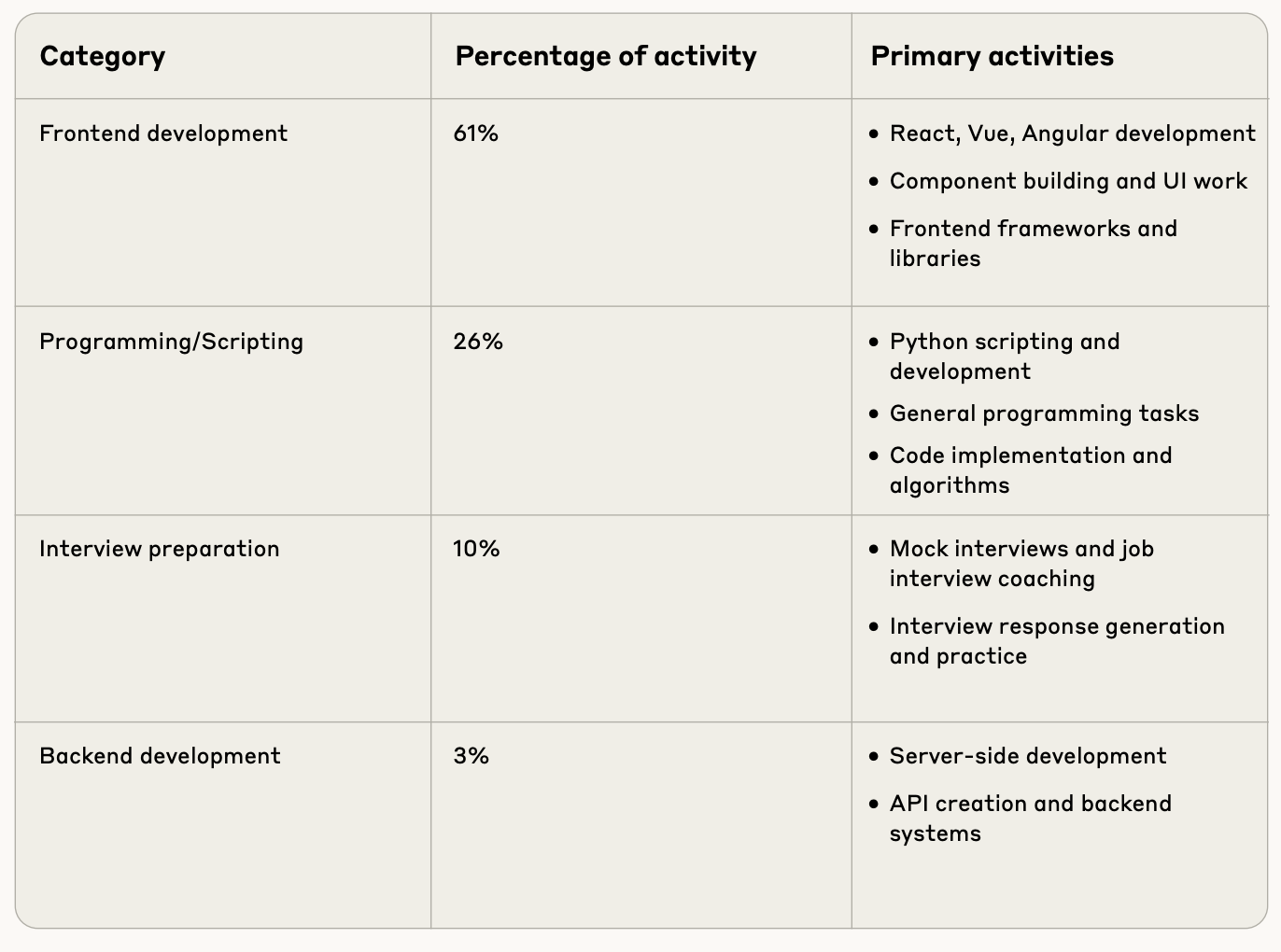
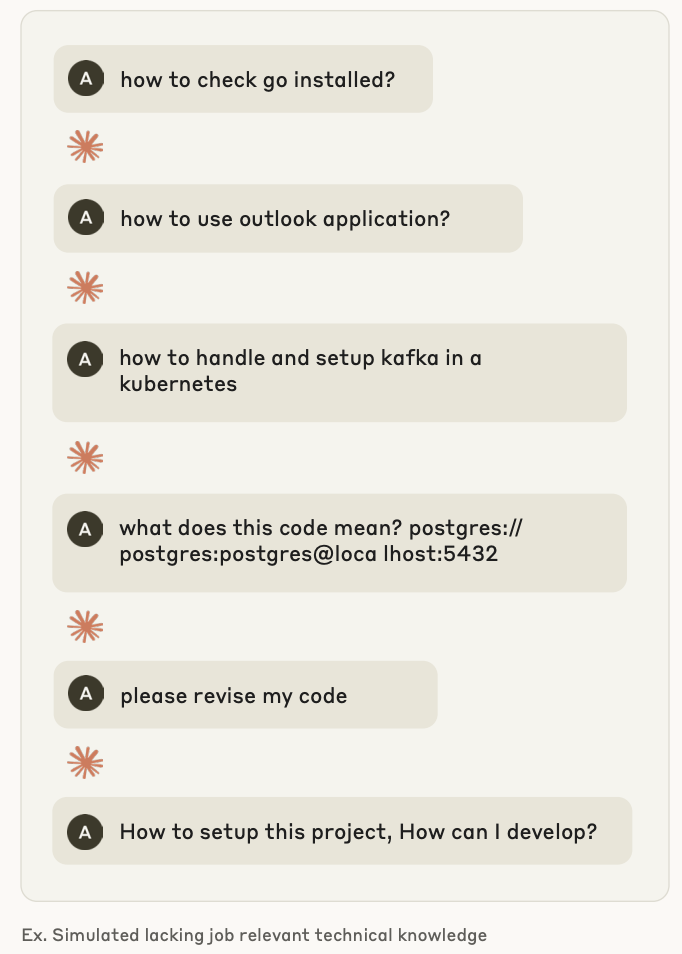
Research shows that about 80% of Claude’s activity in such operations is related to employment — from preparing for interviews to everyday tasks in the workplace. According to the report, 61% of requests were related to frontend development (React, Vue, Angular), 26% to scripting and Python code, 10% to interview preparation, and only 3% to backend development.
This suggests that operators were almost entirely dependent on Claude and could not perform even basic technical tasks on their own.
Anthropic notes that North Korean specialists previously underwent many years of training at the country’s universities. Now Claude makes this training unnecessary: people with minimal skills successfully pass interviews and are retained by large companies with the help of AI.
Ransomware as a service
The third case describes a cybercriminal who used Claude to create various versions of ransomware. These were sold on dark web forums for between $400 and $1200 per package.
The programs had advanced encryption and bypass capabilities, making them accessible even to users without programming skills.
Anthropic said it blocked the attackers’ accounts and implemented new methods to detect similar attacks. The company also shared technical indicators with other organizations to prevent similar incidents.
Threat growth and forecasts
The company’s experts warn that the use of AI is becoming a new stage in the evolution of cybercrime. Whereas complex attacks used to require knowledge of cryptography and programming, today even novices are able to automate them using AI.
According to TRM Labs, North Korean hackers stole $1,6 billion worth of cryptocurrency in the first half of 2025. The total losses of crypto investors from hacks and exploits reached a record $2,1 billion in six months, exceeding the figures for the first half of 2022 by 10% and almost matching the results for the whole of 2024.

Useful material?
 Telegram
  Twitter
 Incidents
Developers warned of potential risks to bridges across the ecosystem and asked exchanges for assistance.
Jun 22, 2026
Incidents
The defendant helped move funds stolen through investment scams and earned at least $4 million for his role in the operation.
Jun 10, 2026
Incidents
The company is linking the incident to a compromised private key on a service wallet, rather than a smart contract exploit
May 22, 2026
Incidents
Following the incident, the project temporarily halted trading operations and node activity.
May 15, 2026
Incidents
The user spent weeks unsuccessfully trying to guess the password until Claude helped find an old wallet backup file
May 14, 2026
Crypto regulations
Authorities are introducing mandatory registration for companies handling cross-border crypto transactions
May 8, 2026
Cryptocurrency rates
-

Bitcoin
$84 921
BTC
+1.73%
-

Ethereum
$2 714.84
ETH
+0.98%
-

BNB Smart Chain
$771.84
BSC
+0.5%
-

Ripple
$1.42
XRP
+1.04%
-

TRON
$0.334451
TRX
-0.98%
-

Zcash
$1 337.89
ZEC
-5.54%
-

Dogecoin
$0.09391
DOGE
-0.8%
-

Cardano
$0.218269
ADA
+2.11%
-

Stellar XLM
$0.184461
XLM
+2.83%
-

Bitcoin Cash
$307.62
BCH
+0.59%