


Токен DeFi-протокола Curve вырос на 14% после прекращения выпуска BUSD
Платформа готовится к запуску собственной стабильной монеты Curve USD

14.02.2023 - 10:30
969
4 мин
0
Что произошло? 14 февраля нативный токен DeFi-протокола Curve (CRV) подорожал на 14,81% на фоне роста спроса на децентрализованные стейблкоины. Интерес к ним вырос после того, как Департамент финансовых услуг штата Нью-Йорк (NYDFS) запретил финтех-компании Paxos выпуск новых стабильных монет Binance USD (BUSD). Интересно, что Curve пока только готовится к запуску собственного стейблкоина Curve USD (crvUSD). О планах Curve по созданию актива, привязанного к доллару, впервые стало известно в июне 2022 года, передает CoinDesk.
Что известно о Curve и BUSD? Curve.Finance — это децентрализованная биржа (DEX) и автоматизированный маркет-мейкер (AMM) для торговли стейблкоинами и обернутыми цифровыми активами, такими как wBTC. Общая сумма заблокированных средств (TVL) составляет 4,77 млрд долларов, по данным DefiLlama. CRV занимает 59 строчку в рейтинге криптовалют с капитализацией 779 млн долларов и торгуется по $1,04.
Выпускаемый Paxos под брендом криптобиржи Binance стейблкоин BUSD является третьим по величине на крипторынке после USDT и USDC и занимает седьмую строчку в общем рейтинге криптовалют с капитализацией 15,68 млрд долларов.
Подробности о запуске crvUSD. 13 февраля команда DeFi-протокола намекнула на предстоящий выпуск стейблкоина, запустив голосование по предложению, которое позволит пулам стабильных монет предоставлять данные о ценах внешним протоколам. Разработчики добавили, что его реализация «необходима для автономного функционирования crvUSD».
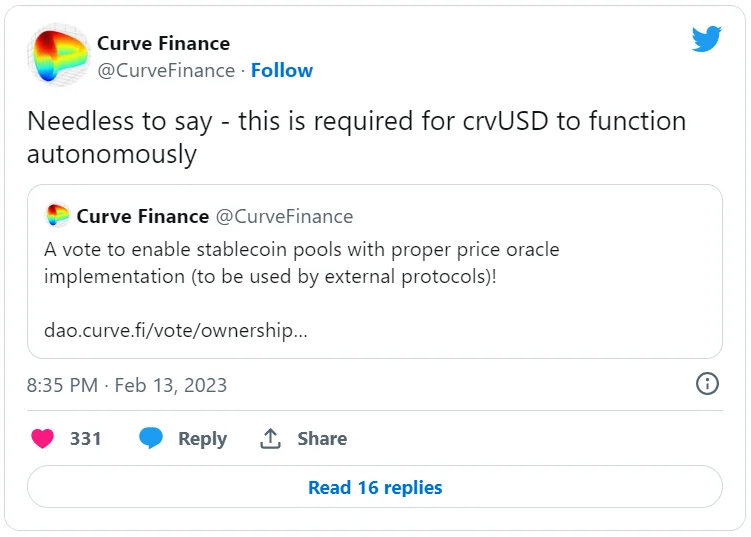
Такое развитие событий, вероятно, послужило катализатором для трейдеров, поскольку спрос на CRV вырос, и объем торгов токенами на криптобиржах превысил 770 млн долларов.
Кроме того, обвинения в адрес Paxos и BUSD со стороны Комиссии по ценным бумагам и биржам США (SEC) также могли вызвать медвежьи настроения в отношении централизованных стабильных монет, и трейдеры, вероятно, стали искать децентрализованные аналоги, которые с меньшей вероятностью столкнутся с юридическими последствиями в будущем. Так, регулятор считает BUSD незарегистрированной ценной бумагой и намерен привлечь Paxos к ответственности за эмиссию актива.
Ранее член сообщества DeFi-протокола Aave Марк Зеллер предложил заморозить BUSD на платформе после иска SEC. Он пояснил, что поскольку новые монеты больше не выпускаются, предложение актива будет стремиться к нулю. О постепенном сокращении капитализации BUSD ранее заявил глава Binance Чанпэн Чжао. Однако он добавил, что биржа будет поддерживать актив в обозримом будущем.

Полезный материал?
Происшествия
Разработчики предупредили о рисках для мостов и обратились к биржам за помощью.
22 июн. 2026 г.
Происшествия
Осужденный помогал переводить средства жертв инвестиционных афер и заработал на этом не менее $4 млн.
10 июн. 2026 г.
Происшествия
Компания связывает инцидент с компрометацией приватного ключа сервисного кошелька, а не со взломом смарт-контрактов.
22 мая 2026 г.
Происшествия
После инцидента проект временно остановил торговые операции и работу узлов.
15 мая 2026 г.
Происшествия
Пользователь безуспешно подбирал пароль несколько недель, пока ИИ не помог найти старую резервную копию кошелька
14 мая 2026 г.
Крипторегулирование
Власти вводят обязательную регистрацию для компаний, работающих с трансграничными криптопереводами
8 мая 2026 г.
Курсы криптовалют
-

Bitcoin
$86 285
BTC
+2.42%
-

Ethereum
$2 726.24
ETH
+0.43%
-

BNB Smart Chain
$778.17
BSC
+1%
-

Ripple
$1.42
XRP
+1.04%
-

TRON
$0.334432
TRX
-0.92%
-

Zcash
$1 394.04
ZEC
-3.17%
-

Dogecoin
$0.096306
DOGE
+0.47%
-

Cardano
$0.218269
ADA
+2.11%
-

Stellar XLM
$0.184461
XLM
+2.83%
-

Bitcoin Cash
$313.78
BCH
+1.59%