


Неизвестный потерял свыше $717 000 в результате фишинговой атаки с использованием поддельного сайта Blast
Ранее проект запустил основную сеть, что привлекло к нему повышенное внимание злоумышленников

01.03.2024 - 13:27
1475
4 мин
0
Последнее обновление: 5 авг. 2024 г.
Что произошло? Специалисты аналитической платформы Scam Sniffer зафиксировали крупную фишинговую атаку, реализованную с помощью поддельного сайта сети второго уровня (L2) Blast на базе блокчейна Ethereum от создателей NFT-маркетплейса Blur. Так, 1 марта неизвестный пользователь потерял $717 817 в активах Aave BTC и Pandora, подключив кошелек к фейковому сайту эйрдропа Blast.
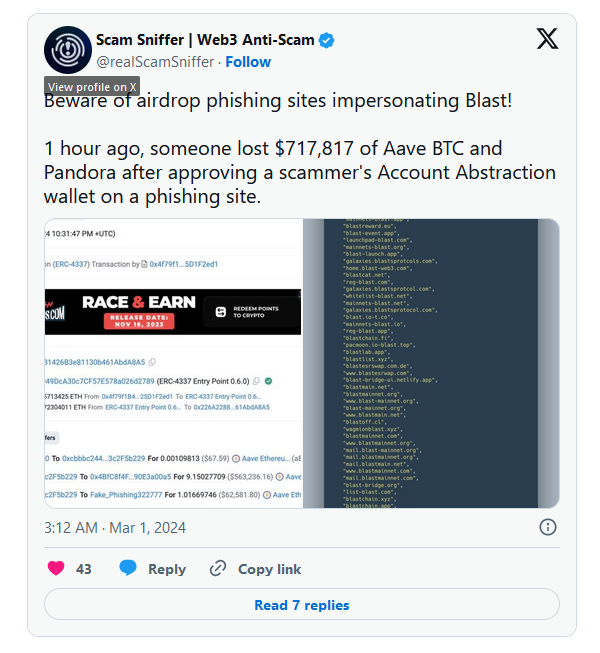
Что еще известно? В Scam Sniffer призвали проявлять бдительность, поскольку мошенники, создающие поддельные сайты Blast, активизировались в связи с недавним запуском мейннета проекта.
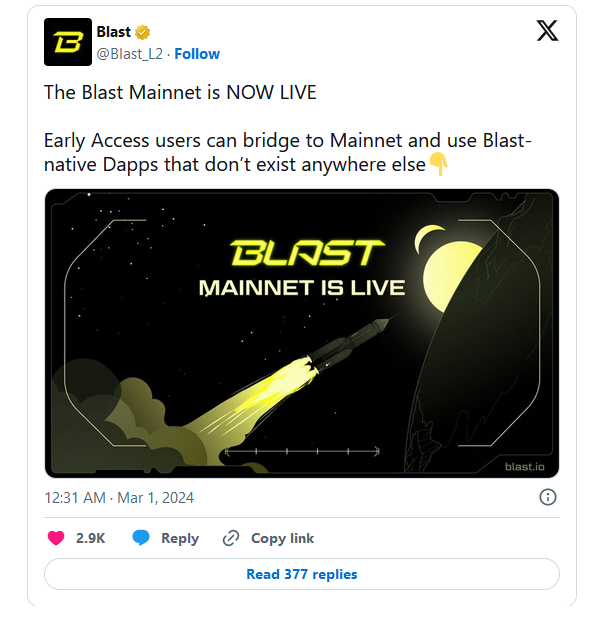
Так, запуск основной сети Blast состоялся 29 февраля, это позволило пользователям начать использовать эксклюзивные децентрализованные приложения (DApps) экосистемы, а также выводить заблокированные в протоколе средства.
Протокол работал в режиме раннего доступа с 21 ноября, к моменту запуска мейннета 181 888 пользователей заблокировали в протоколе свыше 2,3 млрд долларов, а к разработке экосистемных проектов приступили свыше 3000 команд.
В мае ожидается запуск и эйрдроп нативного токена Blast. 50% получат пользователи, исходя из заработанных за счет блокировки средств очков, еще половина будет передана 47 проектам, победившим в конкурсе Big Bang.
Также стало известно о первом случае скама проекта на базе Blast. Разработчики игровой платформы RiskOnBlast вывели 420 ETH пользователей на сумму 1,25 млн долларов, деактивировали сайт и соцсети, а средства перевели на биржи ChangeNOW, MEXC и Bybit. Пострадали свыше 750 пользователей.
22 января в результате фишинговой атаки неизвестный потерял 4,2 млн долларов в монетах Aave Ethereum WETH и Aave Ethereum UNI.
Ранее команда кошелька MetaMask заключила партнерство с Blockaid для внедрения механизма защиты пользователей от фишинговых атак.

Полезный материал?
Происшествия
Разработчики предупредили о рисках для мостов и обратились к биржам за помощью.
22 июн. 2026 г.
Происшествия
Осужденный помогал переводить средства жертв инвестиционных афер и заработал на этом не менее $4 млн.
10 июн. 2026 г.
Происшествия
Компания связывает инцидент с компрометацией приватного ключа сервисного кошелька, а не со взломом смарт-контрактов.
22 мая 2026 г.
Происшествия
После инцидента проект временно остановил торговые операции и работу узлов.
15 мая 2026 г.
Происшествия
Пользователь безуспешно подбирал пароль несколько недель, пока ИИ не помог найти старую резервную копию кошелька
14 мая 2026 г.
Крипторегулирование
Власти вводят обязательную регистрацию для компаний, работающих с трансграничными криптопереводами
8 мая 2026 г.
Курсы криптовалют
-

Bitcoin
$84 681
BTC
-2.04%
-

Ethereum
$2 683.4
ETH
-2.28%
-

BNB Smart Chain
$770.82
BSC
-0.97%
-

Ripple
$1.42
XRP
+1.04%
-

TRON
$0.336462
TRX
+0.53%
-

Zcash
$1 311.02
ZEC
-5.07%
-

Dogecoin
$0.092898
DOGE
-3.71%
-

Cardano
$0.218269
ADA
+2.11%
-

Stellar XLM
$0.184461
XLM
+2.83%
-

Bitcoin Cash
$311.5
BCH
-1.08%