

Власти США изъяли $7,7 млн у северокорейских мошенников. Детали операции
Правоохранители нашли руководителей международной сети северокорейских мошенников, которые работали на западные компании и передавали заработанные средства правительству Северной Кореи
06.06.2025
867
4 мин
0
Министерство юстиции США отчиталось об очередной успешной операции против северокорейских правительственных группировок, которые нацелены на кражу криптовалют. GetBlock AML Research публикует детали операции, которая вскрыла международную сеть законспирированных северокорейских мошенников.
В поле зрения
Правоохранительные органы США идентифицировали криптовалютные адреса Сим Хён Сопа, представителя Северокорейского банка внешней торговли (FTB) и Ким Сан Мана, исполнительного директора «Chinyong», также известной как «Jinyong IT Cooperation Company», которая подчиняется Министерству обороны Северной Кореи. На их кошельках были заморожены стейблкоины и другие активы на $7,7 млн.
Сим Хён Соп и Ким Сан Ман организовали международную схему кражи криптовалют. Они курировали различные группы северокорейских разработчиков, которые физически находились в разных странах мира (Китай, Россия и ОАЭ), и использовали поддельные документы для трудоустройства в крупные финансовые компании. После успешного трудоустройства разработчики отправляли заработанные средства на адреса Хён Сопа и Сан Мана, предварительно скрыв цепочку транзакций.
Для отмывания средств использовались:
- Фиктивные банковские счета, открытые на поддельные удостоверения личности;
- Распределение средств на небольшие суммы;
- Конвертация активов в другие блокчейны и использование кроссчейн-мостов;
- Покупка NFT-токенов и их последующая перепродажа для сокрытия прямой цепочки транзакций;
- Смешивание незаконных потоков с легитимными переводами для увеличения сложности отслеживания активов.
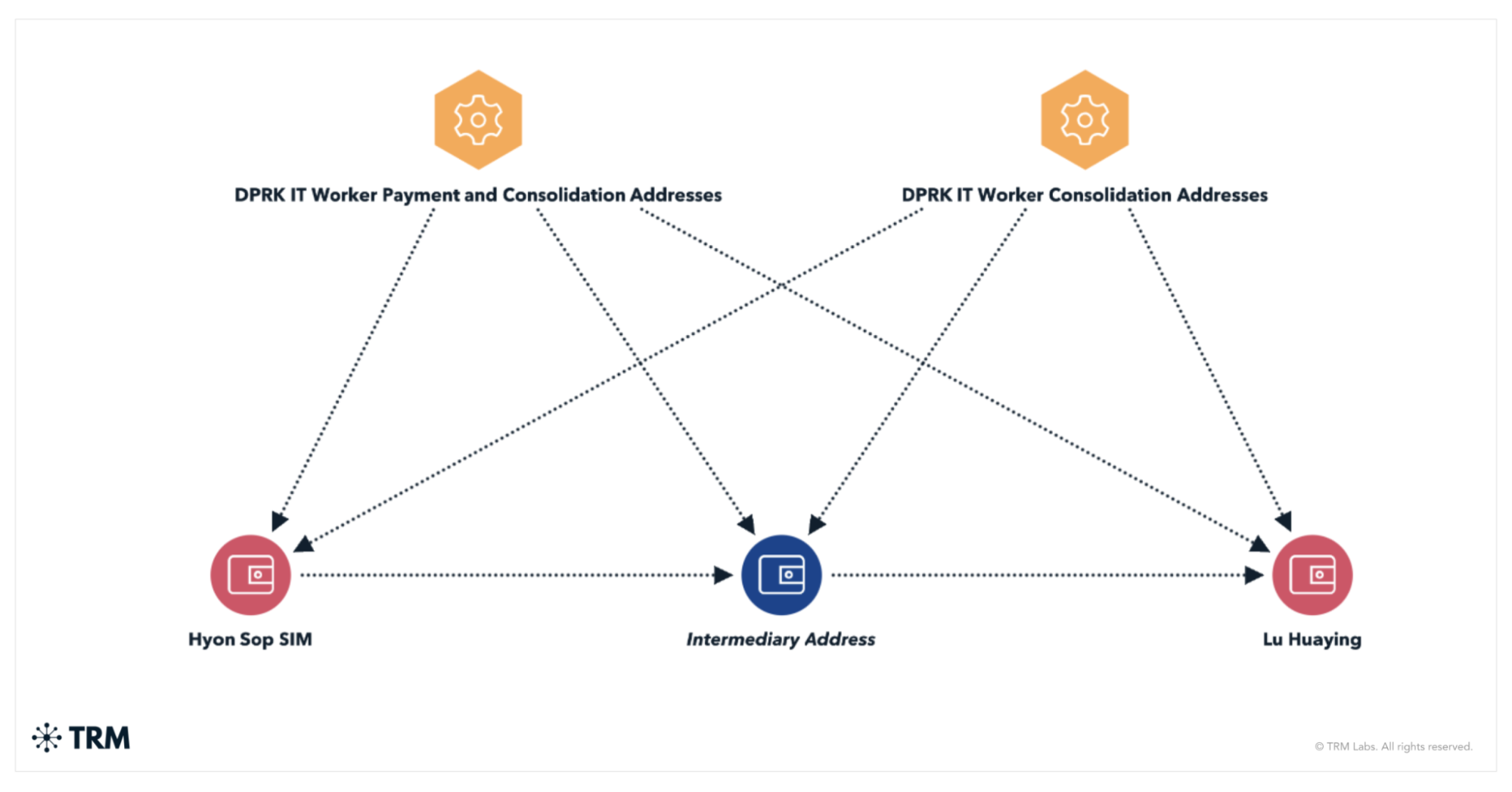
Сеть кошельков, которые использовались для сбора и отмывания криптовалюты. Данные: TRM Labs
Заблокированный кошелек Сим Хён Сопа в период с августа 2021 года по март 2023 года суммарно получил более $24 млн. Почти все эти средства были переведены Ким Сан Ману, который использовал поддельные российские документы и устройства, работающие в России и ОАЭ.
Изъятие активов
Министерство юстиции США подало иск в Окружной суд США для передачи замороженных активов в пользу американского правительства. Помимо стейблкоинов USDC и USDT правоохранительные органы завладели альткоинами, NFT-токенами и доменными именами сервиса ENS. Были обнаружены и закрыты 84 учетные записи на централизованных криптобиржах, которые использовались северокорейскими мошенниками для отмывания криптовалюты.
Как действовали руководители схемы
Сим Хён Соп и Ким Сан Ман организовали международный клиринговый центр для отмывания криптовалюты. Они принимали активы от своих подчиненных, Хён Соп находился в Дубае (ОАЭ), Сан Ман находился во Владивостоке (Россия). Далее полученные средства отмывались различными методами и перемещались на адреса правительства Северной Кореи.

Полезный материал?
Расследования
Один и тот же криптовалютный адрес получил две полностью противоположные оценки от разных аналитических систем: от обычного сервиса азартных игр до крайне тяжкого уголовного преступления. Эта история стала поводом для обсуждения того, какими должны быть научные стандарты анализа блокчейна и почему ошибки в подобных системах способны повлиять на судьбы людей
1 июл. 2026 г.
Расследования
Блокчейн помог выявить связи между криптовалютными сборами средств, обменниками в Сирии и посредниками в нескольких странах мира. Обнаружена характерная схема, при которой одни и те же адреса использовались сразу в нескольких кампаниях по сбору пожертвований
24 июн. 2026 г.
Расследования
Четыре иранские криптовалютные биржи обеспечивали около 78% всего объема цифровых активов, связанных со страной в 2025 году. Теперь они оказались в центре крупнейшей санкционной кампании США против криптовалютной инфраструктуры Ирана.
5 июн. 2026 г.
Расследования
На публичных блокчейнах уже работает финансовая система с кредитами, аналогами облигаций США и автоматическими рынками капитала. Через DeFi-протоколы прошло более $551 млрд, но большая часть этой активности связана не с экономикой, а со спекулятивным наращиванием рисков
29 мая 2026 г.
Расследования
Около 97% китайских поставщиков химических веществ для производства фентанила принимают оплату в криптовалюте. Объем таких операций продолжает расти вместе с глобальным рынком синтетических наркотиков
22 мая 2026 г.
Расследования
Новый закон впервые делает блокчейн-аналитику официальным обязательным инструментом финансового контроля в США. Власти также получат право ограничивать операции с иностранными криптосервисами, связанными с рисками отмывания денег
20 мая 2026 г.
Курсы криптовалют
-

Bitcoin
$82 628
BTC
+0.5%
-

Ethereum
$2 493.19
ETH
+0.28%
-

BNB Smart Chain
$746.75
BSC
+0.93%
-

Ripple
$1.42
XRP
+1.04%
-

TRON
$0.330676
TRX
-0.29%
-

Zcash
$1 219.53
ZEC
+0.02%
-

Dogecoin
$0.086303
DOGE
+1.75%
-

Cardano
$0.218269
ADA
+2.11%
-

Stellar XLM
$0.184461
XLM
+2.83%
-

Bitcoin Cash
$279.22
BCH
-0.09%