

Государственный биткоин-кошелек Сальвадора начал блокировать адреса для AML-проверки
Сервис обращает внимание на взаимодействие с кошельком Wasabi Wallet, использующим механизм микширования транзакций
10.04.2023 - 08:45
1525
6 мин
0
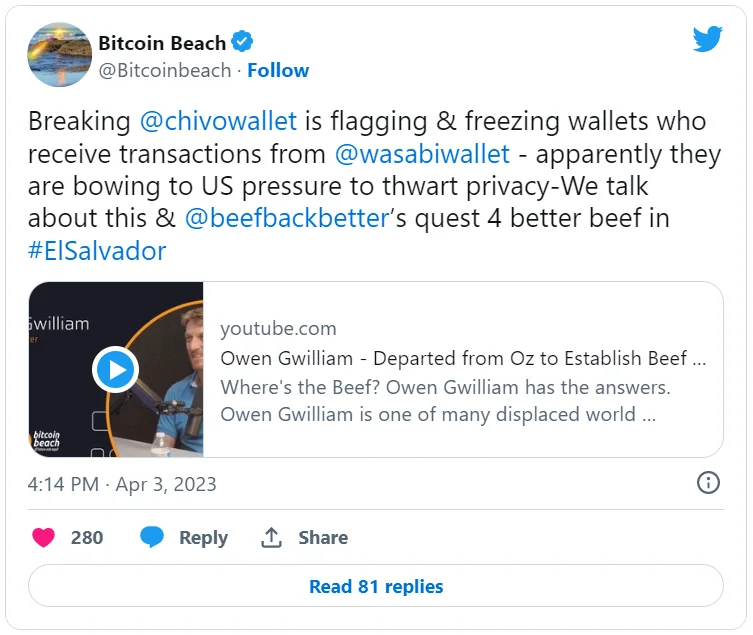
Что произошло? Выпущенный правительством Сальвадора биткоин-кошелек Chivo замораживает адреса пользователей и требует подтвердить источник средств. Так, 3 апреля основатель местного информационного проекта Bitcoin Beach Хорхе Валенсуэла заявил, что программное обеспечение государственного сервиса отмечает и замораживает адреса, получающие транзакции от некастодиального кошелька Wasabi Wallet, который использует механизм микширования CoinJoin и повышает уровень конфиденциальности транзакций.
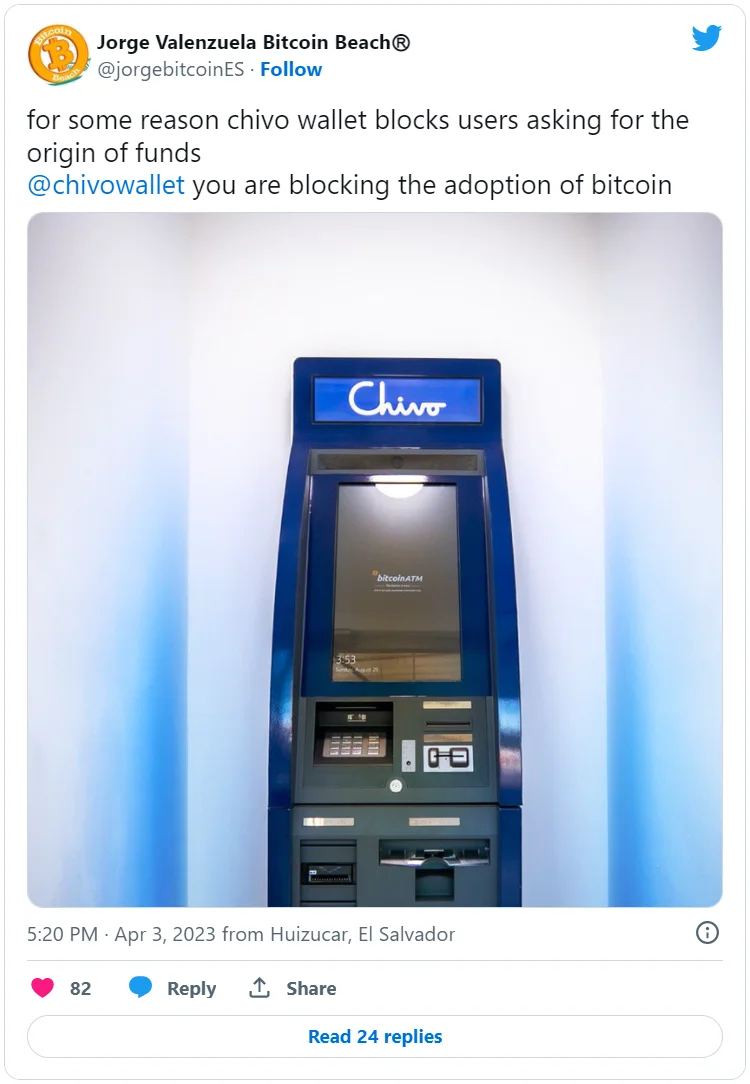
Что еще известно о ситуации? Валенсуэла рассказал, что Chivo заморозил кошелек его знакомого за транзакции на $1000, потребовав доказать происхождение средств. По его мнению, подобные ограничения подтолкнут людей вернуться к традиционной банковской системе, поскольку банковские транзакции подвергаются меньшей проверке, чем операции с BTC. Валенсуэла заявил, что подобными действиями команда Chivo препятствует массовому внедрению первой криптовалюты.
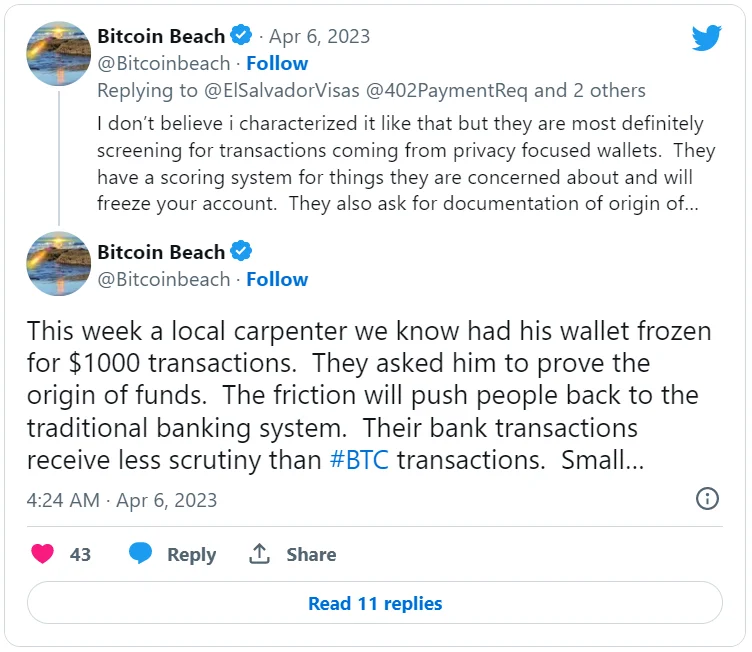
В другом твите команда Bitcoin Beach сообщила, что ПО Chivo отмечает и замораживает кошельки, которые получают транзакции от Wasabi, и разработчики государственного сервиса «склоняются перед давлением США, чтобы помешать конфиденциальности».
Кроме того, сооснователь Bitcoin Beach Майк Петерсон затронул этот вопрос во время прямой трансляции. По его словам, «пользователи биткоина должны продолжать оказывать давление на Chivo и правительство, потому что те сталкиваются с давлением с другого направления».
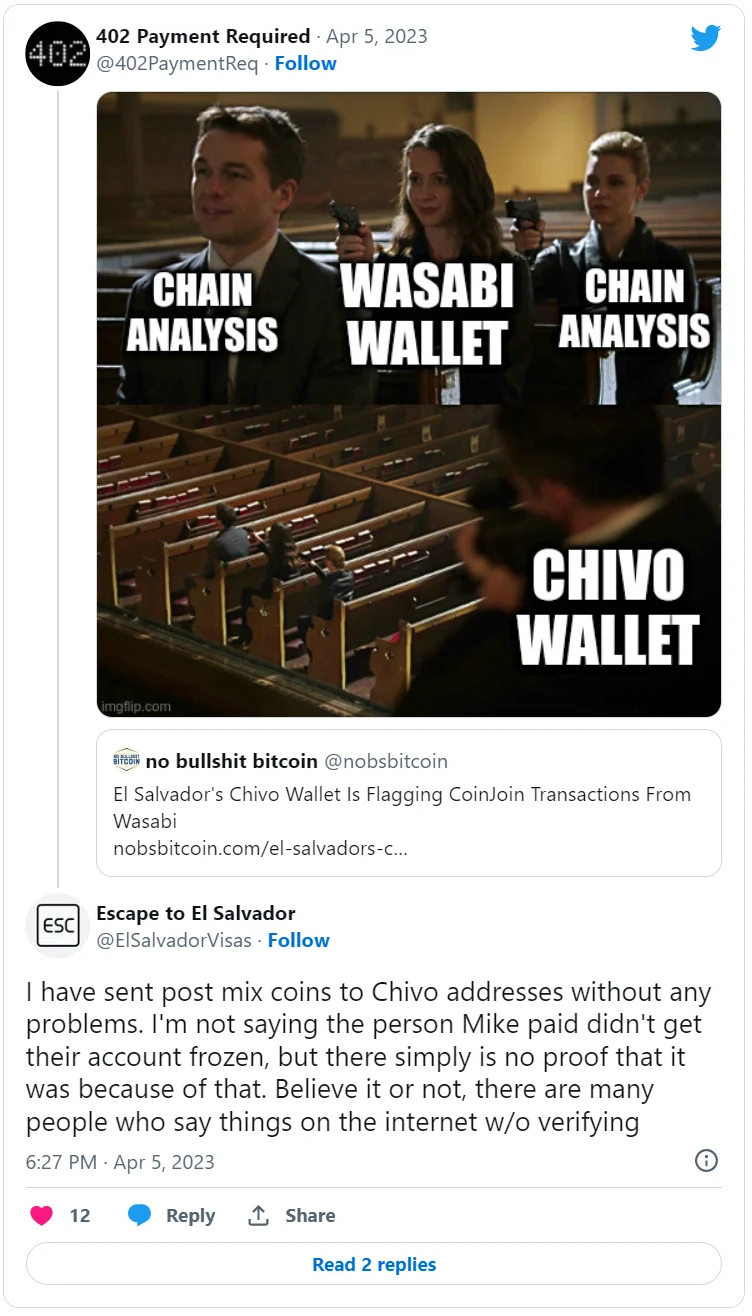
При этом не все поддерживают теорию о том, что Chivo блокирует транзакции Coinjoin, исходящие от Wasabi. Так, пользователь под ником Escape to El Salvador рассказал, что отправлял монеты после смешивания на адреса Chivo без каких-либо проблем. Он допустил, что пользователь, чей кошелек был заморожен, возможно, был подкуплен Петерсоном.
Согласно отчету Национального бюро экономических исследований США (NBER), к апрелю 2022 года Chivo загрузила треть жителей Сальвадора, однако больше половины прекратили пользоваться сервисом, потратив приветственный бонус в размере $30 в биткоинах. На тот момент Chivo ежедневно проводил от 6000 до 15 000 транзакций.
Сальвадор и биткоин. С момента легализации BTC в сентябре 2021 года власти регулярно закупали актив, к началу 2022 года убытки от вложений составили 12 млн долларов. Через год после легализации 77% граждан выступили против траты госбюджета на покупку биткоинов, а МВФ отказался предоставить Сальвадору кредит. С 18 ноября Сальвадор начал покупать по 1 BTC каждый день. В том же месяце правительство создало Национальный офис биткоина для управления криптопроектами.
В феврале власти Сальвадора открыли биткоин-посольство в Техасе. В том же месяце МВФ предложил государству отказаться от инвестиций в BTC.
В марте президент Найиб Букеле заявил, что турпоток в Сальвадор вырос почти в два раза после легализации BTC. По его словам, принятие биткоина в качестве законного платежного средства позволило государству провести «ребрендинг».

Полезный материал?
Происшествия
Разработчики предупредили о рисках для мостов и обратились к биржам за помощью.
22 июн. 2026 г.
Происшествия
Осужденный помогал переводить средства жертв инвестиционных афер и заработал на этом не менее $4 млн.
10 июн. 2026 г.
Происшествия
Компания связывает инцидент с компрометацией приватного ключа сервисного кошелька, а не со взломом смарт-контрактов.
22 мая 2026 г.
Происшествия
После инцидента проект временно остановил торговые операции и работу узлов.
15 мая 2026 г.
Происшествия
Пользователь безуспешно подбирал пароль несколько недель, пока ИИ не помог найти старую резервную копию кошелька
14 мая 2026 г.
Крипторегулирование
Власти вводят обязательную регистрацию для компаний, работающих с трансграничными криптопереводами
8 мая 2026 г.
Курсы криптовалют
-

Bitcoin
$84 688
BTC
+0.33%
-

Ethereum
$2 685.85
ETH
+1.02%
-

BNB Smart Chain
$785.2
BSC
+2.68%
-

Ripple
$1.42
XRP
+1.04%
-

TRON
$0.335387
TRX
+0.35%
-

Zcash
$1 314.63
ZEC
+3%
-

Dogecoin
$0.092871
DOGE
+1.64%
-

Cardano
$0.218269
ADA
+2.11%
-

Stellar XLM
$0.184461
XLM
+2.83%
-

Bitcoin Cash
$316.79
BCH
+3.5%