

ЕС ввел санкции против эмитента рублевого стейблкоина A7A5. Что важно знать
Киргизская компания A7, связанная с российским банком ПСБ, помогла подсанкционной криптобирже Garantex вывести ликвидность с заблокированных адресов
16.07.2025
1718
5 мин
0
15 июля Европейский союз ввел санкции против киргизской компании А7, которая является эмитентом рублевого стейблкоина A7A5. GetBlock AML Research объясняет, как, кем и для каких целей используется эмитент рублевого стейблкоина.
Что известно
Киргизская компания A7 появилась в поле зрения финансовых контролеров еще в январе 2025 года. Тогда компания выпустила более 8 млрд монет A7A5 на блокчейне Tron. Курс монеты привязан к стоимости российского рубля и обеспечен валютными вкладами в российском банке ПСБ (экс-Промсвязьбанк). Владельцем A7 является олигарх молдавского происхождения Илан Шор, ныне живущий в России.
ПСБ принадлежит российскому правительству и с 2019 года является опорным банком для оборонно-промышленного комплекса. Это позволяет банку выполнять роль основного финансового института, обслуживающего предприятия ОПК, в том числе в рамках государственного оборонного заказа.
Большая часть из выпущенных монет A7A5 (более 5 млрд) была передана российской подсанкционной криптобирже Garantex (ныне Grinex). Уже в марте 2025 года рублевый стейблкоин был использовал для вывода ликвидности с адресов, которые были внесены компанией Tether (эмитент USDT) в черный список. В результате блокировки адресов Garantex потеряла около $60 млн USDT. Но уже в следующем месяце биржа возобновила деятельность и перевела операционные потоки в A7A5.
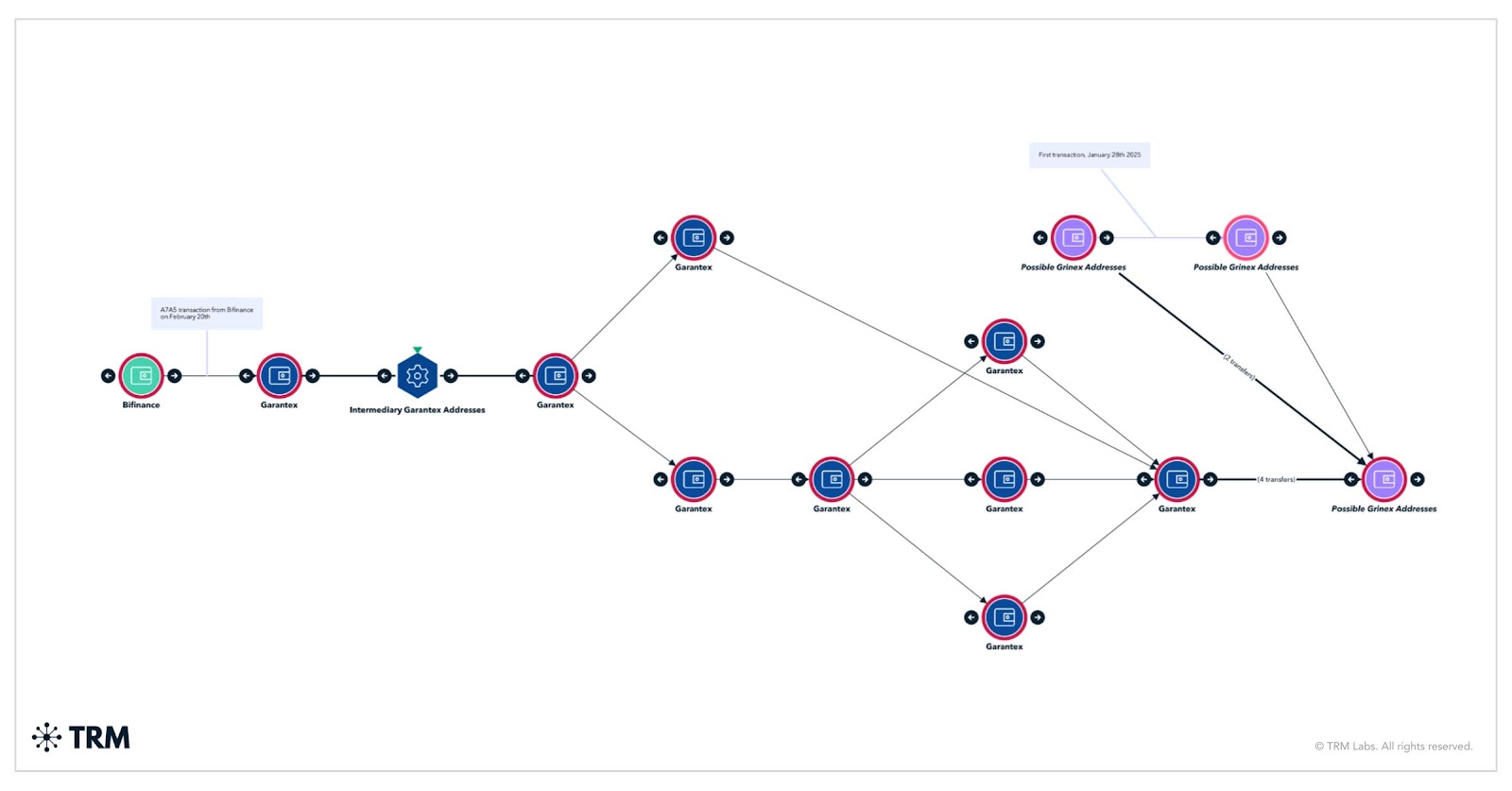
Миграция ликвидности с кошельков Garantex при помощи рублевого стейблкоина A7A5.
Внимание ЕС
Внесение компании A7 в санкционный список Европейского союза связано с тем, что организация пыталась повлиять на президентские выборы и референдум о вступлении в ЕС в республике Молдова в 2024 году. В ЕС утверждают, что Шор использовал платформу A7 для подкупа избирателей.
По данным TRM Labs, помимо незаконной деятельности в Молдове, компания A7 и биржа Grinex связаны с импортом товаров двойного назначения из Китая в Россию через страны центральной Азии.
Шторм-1516
Европейский союза также включил в санкционный список Семёна Бойкова, известного под псевдонимом “Австралийский казак”. По данным ЕС, Бойков распространял дезинформацию об американских президентских выборах 2024 года, а также связан с операцией “Шторм-1516”.
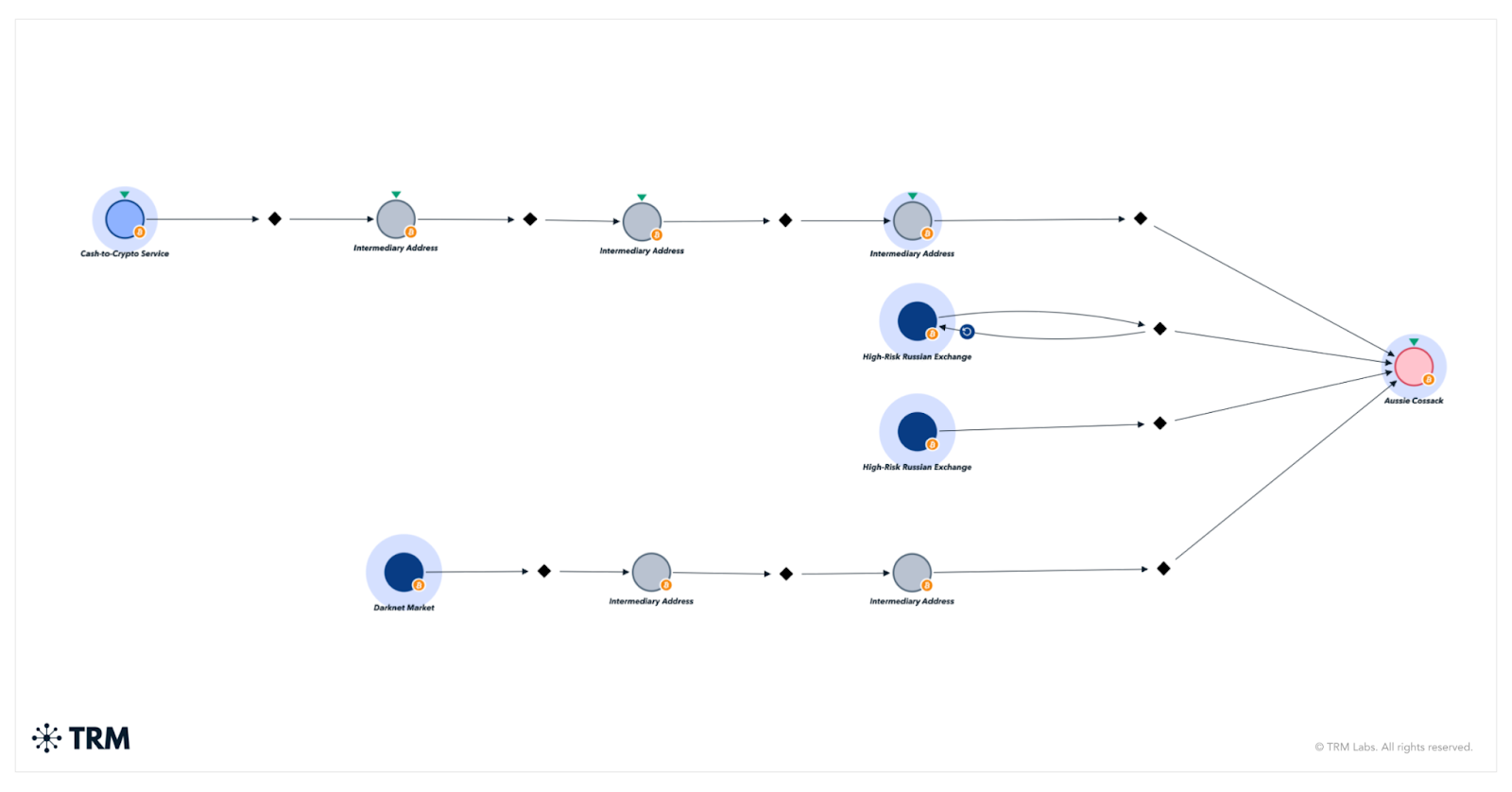
Связь адресов для пожертвований Бойкова с российскими криптобиржами.
Операция “Шторм-1516” была организована российским “Фондом борьбы с несправедливостью” (R-FBI), которую в 2021 году основал бизнесмен и глава ЧВК “Вагнер” Евгений Пригожин. В рамках операции в европейском информационном пространстве создавались сотни поддельных новостных сайтов, которые продвигали российскую пропаганду. Также в рамках “Шторм-1516” вербовались инфлюенсеры, которые распространяли дезинформацию и фейки.
Последствия санкций
Пользователи, которые использовали свои адреса в сети Tron для операций с рублевым стеблкоином A7A5, могут столкнуться с блокировкой активов на торговых платформах, которые исполняют требования MiCA и предоставляют услуги на территории Европейского союза. На июль 2025 года такие лицензии уже получили биржи Coinbase, Kraken, OKX, Bitstamp и Bybit.
Важно: комплаенс-службы этих платформ могут идентифицировать адреса, совершавшие операции с A7A5, как высокорискованные и блокировать транзакции, которые исходят от этих кошельков в адрес бирж.

Полезный материал?
Расследования
Один и тот же криптовалютный адрес получил две полностью противоположные оценки от разных аналитических систем: от обычного сервиса азартных игр до крайне тяжкого уголовного преступления. Эта история стала поводом для обсуждения того, какими должны быть научные стандарты анализа блокчейна и почему ошибки в подобных системах способны повлиять на судьбы людей
1 июл. 2026 г.
Расследования
Блокчейн помог выявить связи между криптовалютными сборами средств, обменниками в Сирии и посредниками в нескольких странах мира. Обнаружена характерная схема, при которой одни и те же адреса использовались сразу в нескольких кампаниях по сбору пожертвований
24 июн. 2026 г.
Расследования
Четыре иранские криптовалютные биржи обеспечивали около 78% всего объема цифровых активов, связанных со страной в 2025 году. Теперь они оказались в центре крупнейшей санкционной кампании США против криптовалютной инфраструктуры Ирана.
5 июн. 2026 г.
Расследования
На публичных блокчейнах уже работает финансовая система с кредитами, аналогами облигаций США и автоматическими рынками капитала. Через DeFi-протоколы прошло более $551 млрд, но большая часть этой активности связана не с экономикой, а со спекулятивным наращиванием рисков
29 мая 2026 г.
Расследования
Около 97% китайских поставщиков химических веществ для производства фентанила принимают оплату в криптовалюте. Объем таких операций продолжает расти вместе с глобальным рынком синтетических наркотиков
22 мая 2026 г.
Расследования
Новый закон впервые делает блокчейн-аналитику официальным обязательным инструментом финансового контроля в США. Власти также получат право ограничивать операции с иностранными криптосервисами, связанными с рисками отмывания денег
20 мая 2026 г.
Курсы криптовалют
-

Bitcoin
$81 233
BTC
+3.93%
-

Ethereum
$2 639.57
ETH
+5.01%
-

BNB Smart Chain
$766.02
BSC
+2.06%
-

Ripple
$1.42
XRP
+1.04%
-

TRON
$0.337559
TRX
+0.22%
-

Zcash
$1 575.58
ZEC
+6.49%
-

Dogecoin
$0.0873
DOGE
+1.36%
-

Cardano
$0.218269
ADA
+2.11%
-

Stellar XLM
$0.184461
XLM
+2.83%
-

Polkadot
$3.32
DOT
+5.27%