

В Европе накрыли очередную банду криптомошенников: как это было
В скоординированной операции участвовали правоохранительные органы Франции, Бельгии, Кипра, Германии и Испании
10.11.2025
521
8 мин
0
Европейское агентство Eurojust объявило о результатах крупной международной операции, в ходе которой была разоблачена преступная сеть, стоявшая за одной из крупнейших схем мошенничества с инвестициями в криптовалюту. GetBlock AML Research раскрывает детали масштабной операции против криптомошенников.
Совместные действия проходили сразу в нескольких странах — Франции, Бельгии, Кипре, Германии и Испании. В ходе операции были проведены 9 арестов, 60 обысков, а также изъято более 1,5 млн евро наличными и в криптоактивах. По оценкам следователей, мошенники сумели обмануть людей по всему миру на сумму свыше 600 миллионов евро.

«Разделка свиней»: заблокированы очередные $47 млн, принадлежащие мошенникам
Вскрыта схема по отмыванию преступных доходов, которые получали мошенники через изощренную схему мошенничества
Как действовали мошенники
С 2020 по 2023 год подозреваемые создали десятки фейковых онлайн-платформ, которые внешне выглядели как настоящие сайты для торговли и инвестиций в криптовалюту. Они использовали яркую рекламу, поддельные отзывы, а также вымышленные «рекомендации» известных личностей.
Людей заманивали обещаниями гарантированных доходов и минимальных рисков. На сайтах показывались графики и «балансы» с якобы растущими суммами на счетах, чтобы вызвать доверие. После того как жертвы переводили деньги, им либо запрещали вывод средств, либо требовали оплатить дополнительные «налоги» или «комиссии». После этого связь с ними полностью прекращалась, а сайты исчезали.
Пресечена деятельность сети по отмыванию криптовалюты «Black Jack». Как это было
Колумбийские преступники решили использовать криптовалюту для сокрытия финансовых потоков вместо наличных средств. Объясняем, почему эта стратегия оказалась неудачной
Как отмывались украденные деньги
Следствие установило, что украденные средства быстро переводились в стейблкоины и проходили через сложные цепочки — неофициальные обменники, анонимные биржи и посредников. Затем криптовалюта обналичивалась.
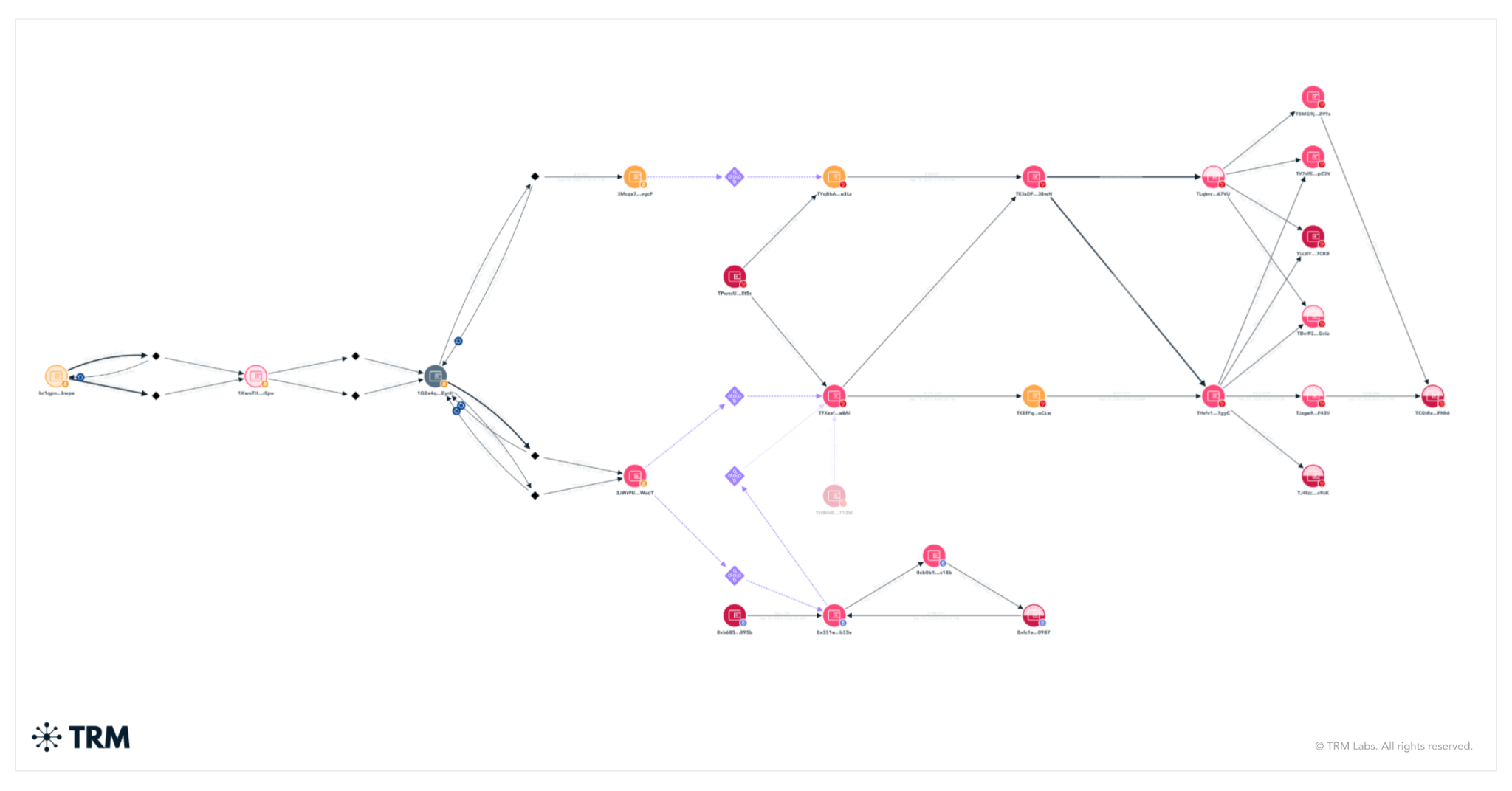
Схема отмывания похищенной криптовалюты. Визуализация: TRM Labs
Такой подход похож на схемы под названием «pig butchering» и «романтические инвестиционные мошенничества», где злоумышленники используют манипуляции и обман, а не технические взломы. Обычно схема выглядит так:
- мошенники знакомятся с жертвами через мессенджеры или сайты знакомств;
- убеждают их инвестировать в «прибыльную» платформу;
- заставляют вкладывать все больше денег, пока человек не теряет все.
Следователи отмечают, что подобные преступления — одни из самых массовых и быстрорастущих в сфере криптовалют. По разным оценкам, общий ущерб от таких схем достигает десятков миллиардов долларов, хотя большинство пострадавших даже не обращаются в полицию.

Почему не стоит доверять рекламе криптовалют в соцсетях: топ-5 случаев скама
В соцсети X часто взламывают аккаунты звезд и знаменитостей, чтобы продвигать скам-токены
Как проходило расследование
Расследование началось после многочисленных жалоб граждан из разных стран Европейского союза. Его координировал Eurojust, создав специальную Совместную следственную группу (JIT) между Францией и Бельгией. Позже к делу присоединились Кипр, Германия и Испания.
- Во Франции расследованием занимались Киберподразделение Национальной жандармерии и судебные органы Парижа.
- В Бельгии — Федеральная судебная полиция.
- На Кипре — Прокуратура, финансовая разведка MOKAS и национальная полиция.
- В Германии — Прокуратура Кельна и уголовная полиция Кельна.
- В Испании — Прокуратура Барселоны и подразделения по киберпреступлениям полиции Каталонии и Национальной полиции.
Eurojust организовал одновременные аресты и обыски, обеспечил обмен доказательствами между странами и помог наладить взаимодействие с государствами вне ЕС.
В результате операции были изъяты:
- более 800 000 евро на банковских счетах,
- 415 000 евро в криптовалюте,
- 300 000 евро наличными,
- а также компьютеры, телефоны и другое оборудование, использовавшееся в мошеннической сети.
Волна взломов криптокошельков: как защитить свои активы от ИИ и хакеров
В 2025 году значительно участились случаи атак на криптовалютные кошельки. Злоумышленники используют огромный инструментарий для обхода защитных механизмов
Почему это важно
Эта операция показала, что классические схемы обмана теперь активно используют цифровые технологии и криптовалюты, что делает их масштабнее и сложнее для отслеживания.
Также операция подчеркнула важность международного сотрудничества — обмена данными в реальном времени, партнерства между частным сектором и государственными структурами, а также совместных расследований между странами.

Полезный материал?
Расследования
Один и тот же криптовалютный адрес получил две полностью противоположные оценки от разных аналитических систем: от обычного сервиса азартных игр до крайне тяжкого уголовного преступления. Эта история стала поводом для обсуждения того, какими должны быть научные стандарты анализа блокчейна и почему ошибки в подобных системах способны повлиять на судьбы людей
1 июл. 2026 г.
Расследования
Блокчейн помог выявить связи между криптовалютными сборами средств, обменниками в Сирии и посредниками в нескольких странах мира. Обнаружена характерная схема, при которой одни и те же адреса использовались сразу в нескольких кампаниях по сбору пожертвований
24 июн. 2026 г.
Расследования
Четыре иранские криптовалютные биржи обеспечивали около 78% всего объема цифровых активов, связанных со страной в 2025 году. Теперь они оказались в центре крупнейшей санкционной кампании США против криптовалютной инфраструктуры Ирана.
5 июн. 2026 г.
Расследования
На публичных блокчейнах уже работает финансовая система с кредитами, аналогами облигаций США и автоматическими рынками капитала. Через DeFi-протоколы прошло более $551 млрд, но большая часть этой активности связана не с экономикой, а со спекулятивным наращиванием рисков
29 мая 2026 г.
Расследования
Около 97% китайских поставщиков химических веществ для производства фентанила принимают оплату в криптовалюте. Объем таких операций продолжает расти вместе с глобальным рынком синтетических наркотиков
22 мая 2026 г.
Расследования
Новый закон впервые делает блокчейн-аналитику официальным обязательным инструментом финансового контроля в США. Власти также получат право ограничивать операции с иностранными криптосервисами, связанными с рисками отмывания денег
20 мая 2026 г.
Курсы криптовалют
-

Bitcoin
$84 444
BTC
+1.76%
-

Ethereum
$2 483.9
ETH
+1.14%
-

BNB Smart Chain
$748.13
BSC
+0.85%
-

Ripple
$1.42
XRP
+1.04%
-

TRON
$0.330964
TRX
+0.02%
-

Zcash
$1 342.45
ZEC
+6.27%
-

Dogecoin
$0.082217
DOGE
+0.28%
-

Cardano
$0.218269
ADA
+2.11%
-

Stellar XLM
$0.184461
XLM
+2.83%
-

Bitcoin Cash
$287.66
BCH
+1.55%