

Вскрыта международная сеть отмывания доходов от наркоторговли. Замешаны три мексиканских банка
CIBanco, Intercam Banco и Vector Casa de Bolsa содействовали мексиканским наркокартелям, которые США приравняли с международным террористическим организациям
27.06.2025
723
3 мин
0
Правоохранители обнаружили очередную схему, которая позволяла наркокартелям легализовывать незаконно полученные доходы при помощи криптовалюты. GetBlock AML Research публикует детали расследования.
25 июня Департамент по борьбе с финансовыми преступлениями Министерства финансов США (FinCEN) ввел санкции против трех мексиканских банков (CIBanco, Intercam Banco и Vector Casa de Bolsa). Организации помогали наркокартелям отмывать средства, полученные в результате продажи наркотических веществ.
По данным FinCEN, банки CIBanco, Intercam Banco и Vector Casa de Bolsa помогали скрывать преступные доходы крупным международным наркокартелям CJNG, Gulf Cartel, Beltran-Leyva Organization и Sinaloa Cartel. Финансовые организации также содействовали денежным потокам, которые направлялись китайским поставщикам прекурсоров, используемых в производстве фентанила.
Фентанил — наркотический опиоидный анальгетик, который был разработан в 1960-х. Используется в медицине как сильное обезболивающее средство.
Финансовая структура
Наркокартели в последнее время значительно нарастили использование стейблкоинов в операционной деятельности. Чтобы оставаться незамеченными они используют сложные схемы с дроблением активов, кросс-чейн обменами, обширными сетями дропов и торговыми платформами без AML и KYC процедур. Отмытые средства переводились в мексиканские банки для дальнейшего использования в обороте.
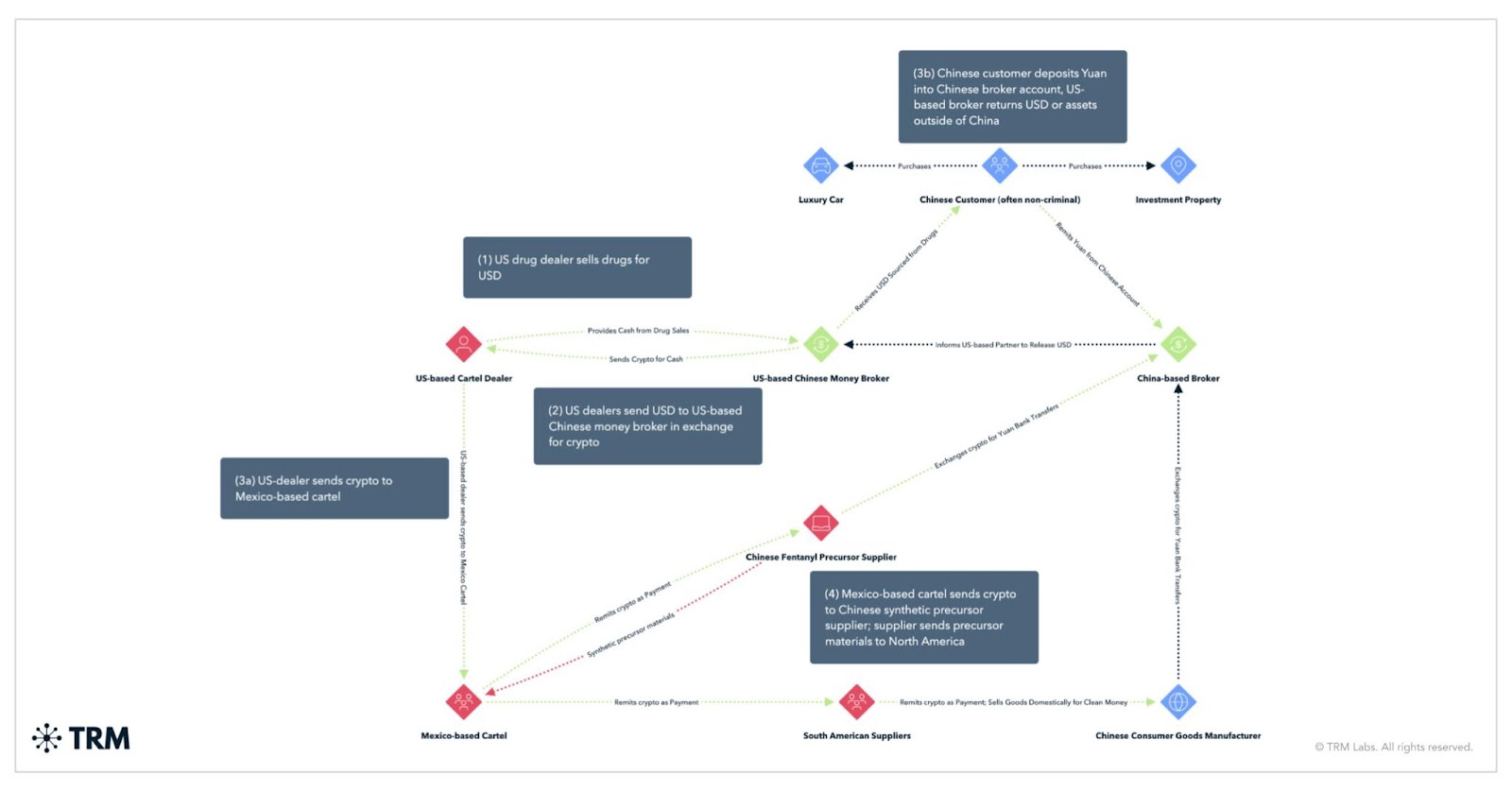
Схема отмывания доходов от наркоторговли через мексиканские банки. Данные: TRM Labs
После легализации незаконно полученных доходов картели использовали их для закупки реагентов в китайском Ухане.
В начале 2025 года администрация президента США Дональда Трампа поручила правоохранительным органам приравнять мексиканские наркокартели к международным террористическим организациям и усилить противодействие им.

Полезный материал?
Расследования
Один и тот же криптовалютный адрес получил две полностью противоположные оценки от разных аналитических систем: от обычного сервиса азартных игр до крайне тяжкого уголовного преступления. Эта история стала поводом для обсуждения того, какими должны быть научные стандарты анализа блокчейна и почему ошибки в подобных системах способны повлиять на судьбы людей
1 июл. 2026 г.
Расследования
Блокчейн помог выявить связи между криптовалютными сборами средств, обменниками в Сирии и посредниками в нескольких странах мира. Обнаружена характерная схема, при которой одни и те же адреса использовались сразу в нескольких кампаниях по сбору пожертвований
24 июн. 2026 г.
Расследования
Четыре иранские криптовалютные биржи обеспечивали около 78% всего объема цифровых активов, связанных со страной в 2025 году. Теперь они оказались в центре крупнейшей санкционной кампании США против криптовалютной инфраструктуры Ирана.
5 июн. 2026 г.
Расследования
На публичных блокчейнах уже работает финансовая система с кредитами, аналогами облигаций США и автоматическими рынками капитала. Через DeFi-протоколы прошло более $551 млрд, но большая часть этой активности связана не с экономикой, а со спекулятивным наращиванием рисков
29 мая 2026 г.
Расследования
Около 97% китайских поставщиков химических веществ для производства фентанила принимают оплату в криптовалюте. Объем таких операций продолжает расти вместе с глобальным рынком синтетических наркотиков
22 мая 2026 г.
Расследования
Новый закон впервые делает блокчейн-аналитику официальным обязательным инструментом финансового контроля в США. Власти также получат право ограничивать операции с иностранными криптосервисами, связанными с рисками отмывания денег
20 мая 2026 г.
Курсы криптовалют
-

Bitcoin
$81 513
BTC
+0.47%
-

Ethereum
$2 404.52
ETH
+1.09%
-

BNB Smart Chain
$743.51
BSC
+1.97%
-

Ripple
$1.42
XRP
+1.04%
-

TRON
$0.329491
TRX
+0.38%
-

Zcash
$1 249.41
ZEC
+3.79%
-

Dogecoin
$0.079701
DOGE
+1.84%
-

Cardano
$0.218269
ADA
+2.11%
-

Stellar XLM
$0.184461
XLM
+2.83%
-

Bitcoin Cash
$285.59
BCH
+4.5%