


Существуют ли «грязные» USDT? Детально разбираемся в вопросе
Каким статусом обладают стейблкоины USDT, замешанные в преступной деятельности? И каким образом Tether борется с незаконным оборотом своих монет? Рассказываем в этой статье

22.12.2025
1061
9 мин
0
В 2025 году уже никого не удивишь, что биткоины или Ethereum могут быть «грязными». AML-практики плотно интегрировались в криптоиндустрию и теперь их соблюдает большинство пользователей цифровых активов. Но бывают ли «грязные» USDT? Мы в GetBlock AML Research тоже задались этим вопросом и попытались разобраться.
Суть вопроса
Конечно, на первый взгляд, USDT могут быть «грязными». То есть стейблкоины могут быть использованы в незаконной деятельности и AML-провайдеры внесут такие монеты и связанные с ними адреса в особую группу риска.
Но эмитент USDT — компания Tether предусмотрела подобные ситуации. Поэтому в смарт-контракте USDT есть возможность централизованного управления, то есть блокировки стейблкоинов на определенном адресе. Если в Tether получат подтверждение, что определенный адрес со стейблкоинами был использован в незаконных операциях, то компания может внести этот адрес в черный список.
Что будет, если Tether внесет адрес с USDT в черный список:
- Это никак не повлияет на сам адрес в блокчейне, поскольку технология децентрализована;
- Владелец адреса сможет производить любые операции в сети (отправку/получение) средств в любых других монетах, кроме USDT;
- Хранящиеся на адресе USDT полностью блокируются, их нельзя отправить/потратить/обменять.
Зачем это нужно?
Таким образом в Tether предусмотрели не только механизм блокировки, а и сжигания. Заблокированные USDT, которые находятся в черном списке, признаются выбывшими из оборота (недействительными). Поэтому Tether взамен них выпускает новые монеты.
По данным Dune Analystics, на 22 декабря 2025 года за все время было заблокировано более $1,65 млрд USDT на 2654 адресах.
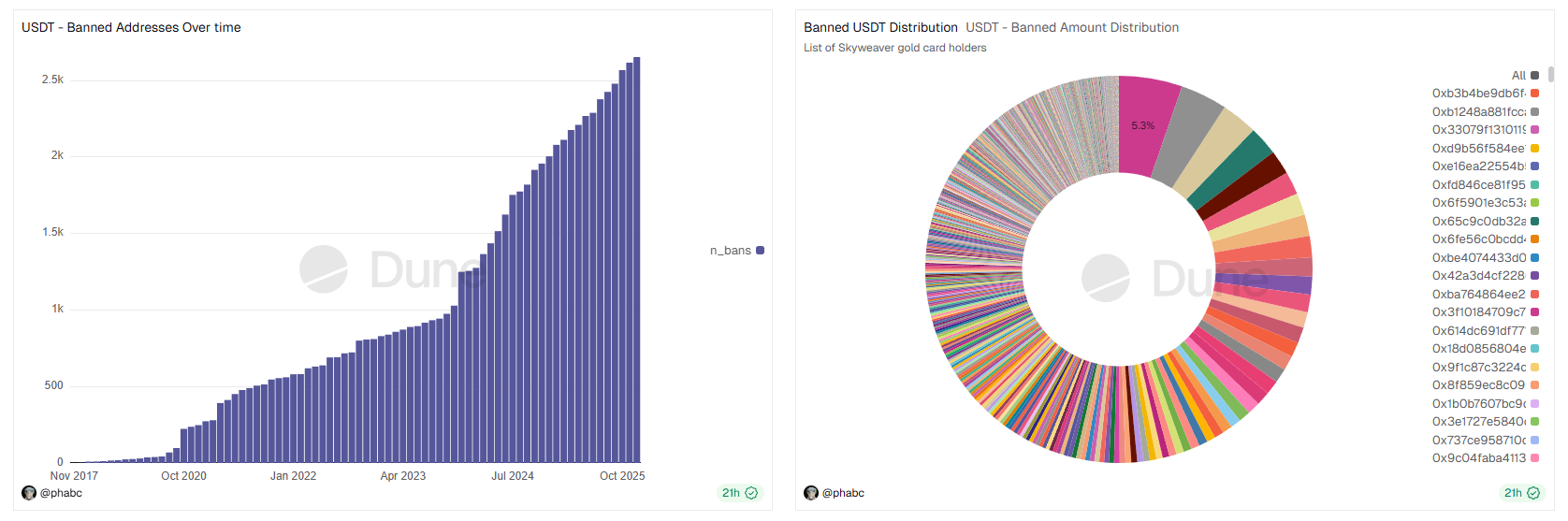
Статистика блокировки USDT.
Как работает механизм блокировки
Внесение незаконных адресов в черный список — не быстрая процедура. Сначала AML-провайдерам нужно подтвердить связь адреса с преступной деятельностью. Затем передать данные в Tether. И только после этого в Tether примут решение о блокировке. Для исполнения такого решения нужно сразу несколько сотрудников, поскольку внесение адреса в черный список требует мультиподписи (multisig).
Из-за всех организационных и бюрократических издержек этот процесс в лучшем случае занимает несколько дней. Иногда подобные решения затягиваются на недели и месяцы.
Лазейка для преступника: как обойти блокировку USDT от Tether
Внезапно оказалось, что операции в блокчейне происходят не мгновенно. Tether пришлось за это оправдываться
Приоритет на объемы
Как правило, имеется положительная корреляция между скоростью блокировки «грязных» USDT и объемами украденных денежных средств. Другими словами, чем больше денег было украдено, тем быстрее AML-провайдеры и Tether попытаются предотвратить отмывание этих средств. Например, летом 2025 года Tether заморозила $1,6 млн USDT, которые использовались террористами в секторе Газа.
Но есть и исключения. Одним из них стал самый громкий взлом 2025 года — компрометация кошелька Bybit на $1,5 млрд. Тогда удалось заморозить всего 3% украденных средств, остальные были отмыты в течение 10 дней и в Tether не смогли этому помешать. Профессиональные хакеры предпочитают в кратчайшие сроки переводить средства из USDT и других подобных стейблкоинов в ETH, чтобы избежать блокировки активов.

Как отмыть крипту на $1,5 млрд за 5 простых шагов. Кейс Lazarus Group
Криптобирже Bybit удалось заблокировать только $42,8 млн. Это менее 3% от общей стоимости украденных активов
Открытый вопрос
После того, как хакеры быстро «сливают» украденные USDT — они не перестают быть «грязными», но вопрос их блокировки уже не стоит, поскольку такие монеты попадают ничего не подозревающим пользователям или поставщикам услуг. В итоге Tether оказывается в непростом положении: ведь заблокировать такие средства уже нельзя, но и отменить транзакции в блокчейне — тоже невозможно. У AML-провайдеров до сих пор нет единого алгоритма действий в таких ситуациях, поэтому в каждом отдельном кейсе решение принимается индивидуально, исходя из различных условий.
Мосты для преступников
В 2025 году для отмывания незаконно полученной криптовалюты стали массово использоваться кросс-чейн мосты.
Кросс-чейн мост используется для пересылки активов из одного блокчейна в другой. Технология реализована так: в одном блокчейне (из которого нужно переслать активы) средства блокируются в специальном смарт-контракте и далее используются в качестве обеспечение. В другом блокчейне (в который нужно переслать активы) выпускаются новые монеты.
При отмывании средств, украденных у Bybit, десятки миллионов USDT были перемещены в кросс-чейн мосты и заблокированы в качестве обеспечения. Взамен этих монет хакеры получили абсолютно чистые активы в другой сети. Но далее «грязные» USDT, которые использовались в качестве залога не были заблокированы и помечены AML-провайдерами как «опасные». На это есть несколько причин:
- Активы были заблокированы в смарт-контракте и недоступны ни для каких операций;
- Средства попали к поставщику услуг, который не подозревал об их незаконном происхождении.
Главный тренд 2025 года в отмывании криптовалюты: кросс-чейн переводы
Киберпреступники значительно усложнили процесс легализации незаконно полученной криптовалюты в 2025 году.
Кейс обывателя
Будут ли мои 100/1000 USDT считаться «грязными», если у меня их украли хакеры или мошенники?
Ответ: вероятно, нет. Даже в случае обращения в правоохранительные органы, где откроют производственное дело и обратятся в Tether, этот процесс займет недели и возможно, месяцы. За это время злоумышленники обменяют украденные USDT на другие криптовалюты. А ваши USDT попадут к другому пользователю, который ничего не подозревает об их происхождении.
Это открывает возможности для преступников в отмывании средств, полученных незаконным путем. Особенно, если речь идет об относительно небольших суммах и обычных физических лицах.

Полезный материал?
Расследования
Один и тот же криптовалютный адрес получил две полностью противоположные оценки от разных аналитических систем: от обычного сервиса азартных игр до крайне тяжкого уголовного преступления. Эта история стала поводом для обсуждения того, какими должны быть научные стандарты анализа блокчейна и почему ошибки в подобных системах способны повлиять на судьбы людей
1 июл. 2026 г.
Расследования
Блокчейн помог выявить связи между криптовалютными сборами средств, обменниками в Сирии и посредниками в нескольких странах мира. Обнаружена характерная схема, при которой одни и те же адреса использовались сразу в нескольких кампаниях по сбору пожертвований
24 июн. 2026 г.
Расследования
Четыре иранские криптовалютные биржи обеспечивали около 78% всего объема цифровых активов, связанных со страной в 2025 году. Теперь они оказались в центре крупнейшей санкционной кампании США против криптовалютной инфраструктуры Ирана.
5 июн. 2026 г.
Расследования
На публичных блокчейнах уже работает финансовая система с кредитами, аналогами облигаций США и автоматическими рынками капитала. Через DeFi-протоколы прошло более $551 млрд, но большая часть этой активности связана не с экономикой, а со спекулятивным наращиванием рисков
29 мая 2026 г.
Расследования
Около 97% китайских поставщиков химических веществ для производства фентанила принимают оплату в криптовалюте. Объем таких операций продолжает расти вместе с глобальным рынком синтетических наркотиков
22 мая 2026 г.
Расследования
Новый закон впервые делает блокчейн-аналитику официальным обязательным инструментом финансового контроля в США. Власти также получат право ограничивать операции с иностранными криптосервисами, связанными с рисками отмывания денег
20 мая 2026 г.
Курсы криптовалют
-

Bitcoin
$81 215
BTC
+3.86%
-

Ethereum
$2 642.83
ETH
+5.01%
-

BNB Smart Chain
$766.43
BSC
+1.96%
-

Ripple
$1.42
XRP
+1.04%
-

TRON
$0.337504
TRX
+0.08%
-

Zcash
$1 567.78
ZEC
+5.45%
-

Dogecoin
$0.087867
DOGE
+1.81%
-

Cardano
$0.218269
ADA
+2.11%
-

Stellar XLM
$0.184461
XLM
+2.83%
-

Polkadot
$3.32
DOT
+5.27%