


OpenSea starts deleting Cuban users to comply with US sanctions
The platform’s representative clarified that the measures comply with the terms of service
23.12.2022 - 17:20
518
3 min
0
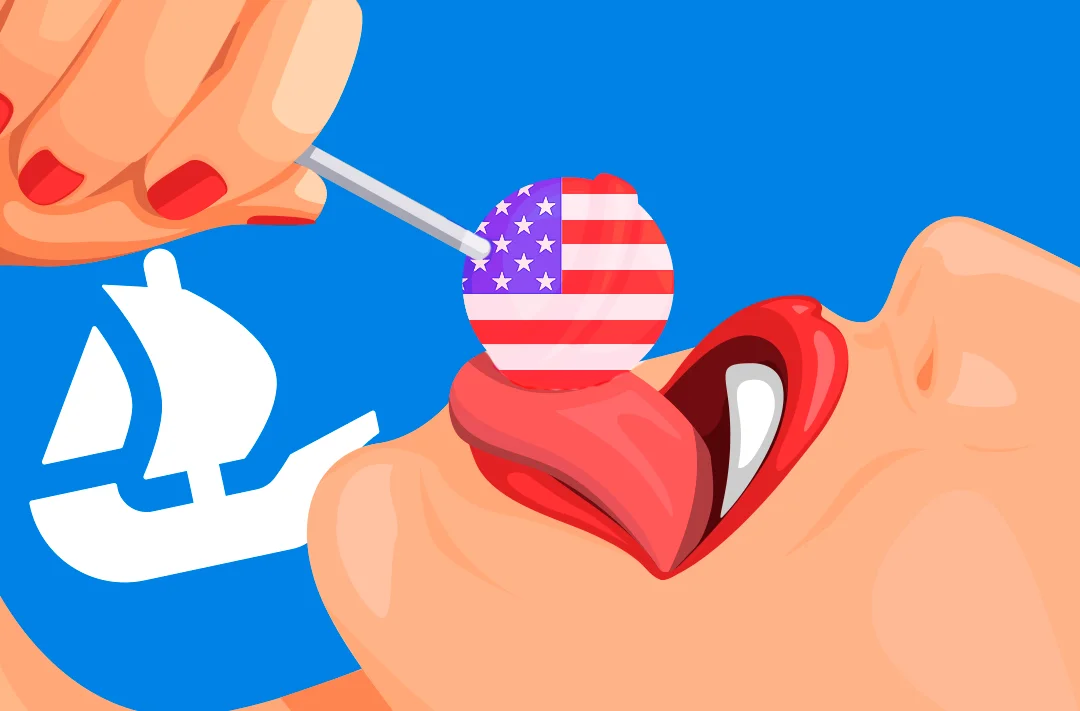
The internet’s biggest NFT marketplace OpenSea is delisting Cuban artist and collector accounts from its platform in order to comply with U.S. sanctions law.
Suspicions that OpenSea had been specifically targeting Cuban accounts had lingered in recent months—a stance the New York-headquartered company holds in respect to countries such as Venezuela, Iran, and Syria—but Artnet News can now confirm the policy extends to Cuban artists, following an exchange with the platform.
“We comply with U.S. sanctions law,” an OpenSea spokesperson told Artnet News via email. “Our terms of service explicitly prohibit sanctioned individuals, individuals in sanctioned jurisdictions, or services from using OpenSea.”
The development is a blow to Cuban artists who began minting work on the blockchain during the great NFT boom of early 2021, a time that coincided with the height of pandemic travel restrictions that deprived the island of valuable tourist dollars.
One such artist is Gabriel Bianchini, a photographer whose work has appeared at the Havana Biennial and Milan’s MIA Photo Fair. After learning about NFTs on social audio app Clubhouse, he promptly minted Hotel Havana, a multilayered image juxtaposing the capital’s colorful and decaying buildings. It sold out in days.
“We were locked in a pandemic, with an increasingly difficult economic, political, and social situation,” Bianchini told Artnet News. “This technology was a liberation, not only economically but creatively, a bridge that allowed us Cuban artists to connect with the world.”
Bianchini encouraged other Cuban artists to take the digital plunge and a vibrant community duly followed. It stretched from downtown Havana, with local club and gallery Fábrica de Arte Cubano bringing artists online, to the diaspora with groups such as the Miami-based NFTcuba.ART creating a veritable network.
NFTcuba.ART is now being systematically blocked from a marketplace that receives more than 120 million visitors a month. To date, more than 30 Cuban artists have had their OpenSea accounts delisted. The technology underpinning NFTs may be transparent and decentralized, but the companies platforming their exchange are not.
To Cuban artists, OpenSea’s decision is no surprise. It follows a 60-year history of U.S. sanctions on the country, one that has continued into the digital age with the likes of Zoom, MailChimp, WeTransfer, and Gitlab all inaccessible from within Cuba (sometimes even when using a VPN).
“I saw it coming,” Cuban NFT artist Yordanis García Delgado told Artnet News. “It is very difficult to be decentralized and not be accountable to government authorities, thanks to the blockade that the USA maintains against Cuba.”
One point of confusion rests with the fact OpenSea has rapidly pivoted from celebrating and platforming Cuban artists—they featured during National Hispanic Heritage Month with Bianchini serving as a co-host—to a blanket ban, irrespective of a user’s other nationalities. Bianchini, for example, is Swiss-Italian, currently lives in Spain. The founder of NFTcuba.ART Gianni D’Alerta, who has also been targeted, lives in the U.S.
The move is also counterintuitive in that it bars political messages unwelcome in Cuban galleries from reaching the wider world. It’s a point Ted Henken, a professor at Baruch College who has written widely about Cuba’s digital culture, makes. “Quite ironically, in this case, those impacted both financially and in terms of their free cultural expression are Cuban artists who often use their art to challenge government censorship or critically comment on Cuba’s difficult social and artistic reality,” he said.
So what next for Cuba’s budding NFT art scene? In the short-term, Bianchini expects artists will focus on other platforms such as Foundation and SuperRare. Still, he remains optimistic when it comes to Web3’s future.
“I’m still betting that this technology will bring freedom to countries like mine,” Bianchini said. “I’m not just talking about financial freedom, but creative freedom and freedom of expression.”
This material is taken from the website news.artnet.com.

Useful material?
 Telegram
  Twitter
 Incidents
Developers warned of potential risks to bridges across the ecosystem and asked exchanges for assistance.
Jun 22, 2026
Incidents
The defendant helped move funds stolen through investment scams and earned at least $4 million for his role in the operation.
Jun 10, 2026
Incidents
The company is linking the incident to a compromised private key on a service wallet, rather than a smart contract exploit
May 22, 2026
Incidents
Following the incident, the project temporarily halted trading operations and node activity.
May 15, 2026
Incidents
The user spent weeks unsuccessfully trying to guess the password until Claude helped find an old wallet backup file
May 14, 2026
Crypto regulations
Authorities are introducing mandatory registration for companies handling cross-border crypto transactions
May 8, 2026
Cryptocurrency rates
-

Bitcoin
$85 736
BTC
-0.88%
-

Ethereum
$2 712.05
ETH
-0.51%
-

BNB Smart Chain
$786.88
BSC
-1.04%
-

Ripple
$1.42
XRP
+1.04%
-

TRON
$0.336191
TRX
+0.14%
-

Zcash
$1 331.43
ZEC
-1.51%
-

Dogecoin
$0.095433
DOGE
-0.46%
-

Cardano
$0.218269
ADA
+2.11%
-

Stellar XLM
$0.184461
XLM
+2.83%
-

Bitcoin Cash
$316.46
BCH
-0.72%