

Crypto fraud in 2025: AI, deepfakes, and $17 billion losses
According to Chainalysis, such schemes generate many times more profit than hacks.

15.01.2026 - 10:45
391
2 min
0
Key points:
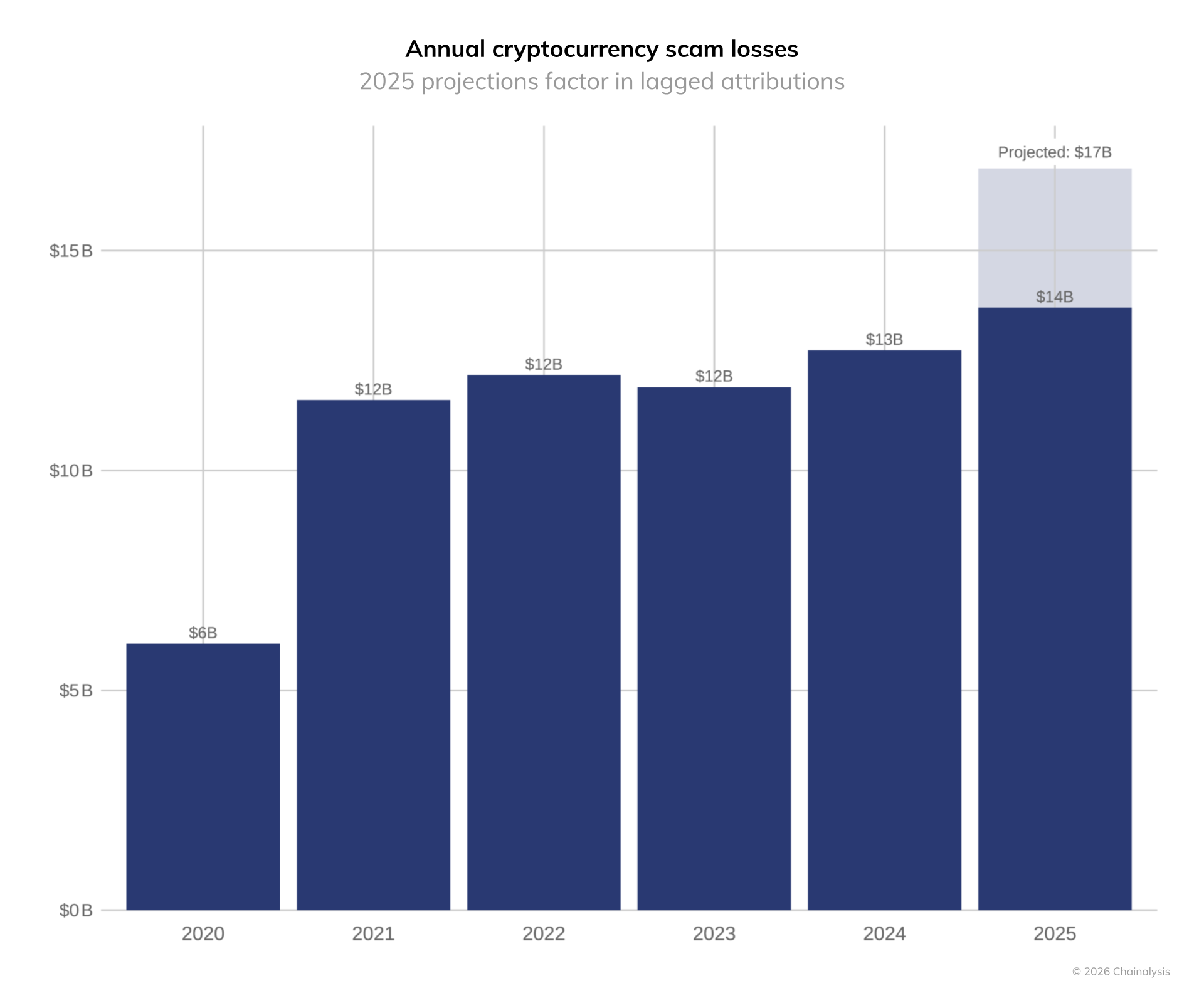
- In 2025, losses from crypto fraud will reach approximately $17 billion, and the main threat will no longer be hacks, but deception.
- Scammers are actively using identity spoofing, deepfakes, and AI, making their attacks more targeted and profitable.
Chainalysis analysts estimate that users will lose up to $17 billion to crypto fraud in 2025. And the main problem is no longer hacks, but sophisticated deception.
According to a crypto crime report published on January 13, attackers are increasingly using identity spoofing and artificial intelligence. These methods are gradually replacing traditional cyberattacks and becoming the primary method of stealing funds.
One notable case occurred in the UK. In 2025, a man lost almost $2.5 million in Bitcoin. Police said the scammers used pressure, fear, and panic, using sophisticated social engineering techniques capable of deceiving even experienced cryptocurrency holders.
Scammers are focusing on trust, not hacks.
According to British authorities, from 2020 to the end of 2023, nearly 100,000 people fell victim to investment fraud. Total losses reached approximately £13 million per week, and these are only officially recorded cases. Law enforcement believes the actual damage is significantly higher.
Chainalysis emphasizes that such cases are no longer uncommon. Fraud involving fake IDs has increased by 1,400% year-on-year. At the same time, the average theft size has increased: criminals have abandoned mass mailings and focused on a smaller, but more "high-value" number of victims.
Analysts also note AI-based schemes. They generate 4.5 times more revenue than traditional scams. Deepfakes and automation make it possible to quickly create fake support staff, "official notices," and fictitious proxies.
Analysts have also identified close ties to criminal networks in East and Southeast Asia, particularly through forced labor centers in Cambodia, Myanmar, and other regions where victims of human trafficking are forced to engage in fraud.

Useful material?
 Telegram
  Twitter
 Incidents
In 104 minutes, the attacker emptied 1,404 addresses before validators halted the network and froze almost all of the loot.
Oct 19, 2026
Incidents
Developers warned of potential risks to bridges across the ecosystem and asked exchanges for assistance.
Jun 22, 2026
Incidents
The defendant helped move funds stolen through investment scams and earned at least $4 million for his role in the operation.
Jun 10, 2026
Incidents
The company is linking the incident to a compromised private key on a service wallet, rather than a smart contract exploit
May 22, 2026
Incidents
Following the incident, the project temporarily halted trading operations and node activity.
May 15, 2026
Incidents
The user spent weeks unsuccessfully trying to guess the password until Claude helped find an old wallet backup file
May 14, 2026
Cryptocurrency rates
-

Bitcoin
$84 085
BTC
+1.48%
-

Ethereum
$2 470.21
ETH
+0.96%
-

BNB Smart Chain
$747.47
BSC
+0.81%
-

Ripple
$1.42
XRP
+1.04%
-

TRON
$0.330385
TRX
-0.19%
-

Zcash
$1 323.86
ZEC
+4.11%
-

Dogecoin
$0.081888
DOGE
-0.01%
-

Cardano
$0.218269
ADA
+2.11%
-

Stellar XLM
$0.184461
XLM
+2.83%
-

Bitcoin Cash
$286.58
BCH
+0.83%