

How to pass KYC verification?
We'll tell you how to quickly and easily verify your identity.
01.12.2025
1265
11 min
0
KYC (Know Your Customer) is a procedure for confirming a user’s identity. It is used by financial companies, exchanges, and crypto services to ensure that the customer is a real person and that their data is not linked to fraudulent activity.
You need to pass KYC for the following services:
- cryptocurrency exchanges (e.g., Bybit, OKX, Binance, and others);
- crypto wallets with the ability to buy or exchange cryptocurrency;
- financial platforms and investment services;
- money transfer services.
KYC is often confused with AML. However, there is a difference between them: KYC verifies the identity of the user. Meanwhile, AML (Anti-Money Laundering) is a broader set of procedures aimed at combating money laundering, where KYC is only part of the verification process.
Content:
- What is KYC, and why is it necessary?
- How KYC verification works: step-by-step instructions
- How to pass KYC on popular exchanges
- Why it is important to pass KYC
How KYC verification works: step-by-step instructions
The process may vary in detail, but it usually consists of the same set of steps:
- Uploading an identity document.
- Confirming your residential address.
- Face verification (Face ID).
- Additional verification by the security service (if necessary).
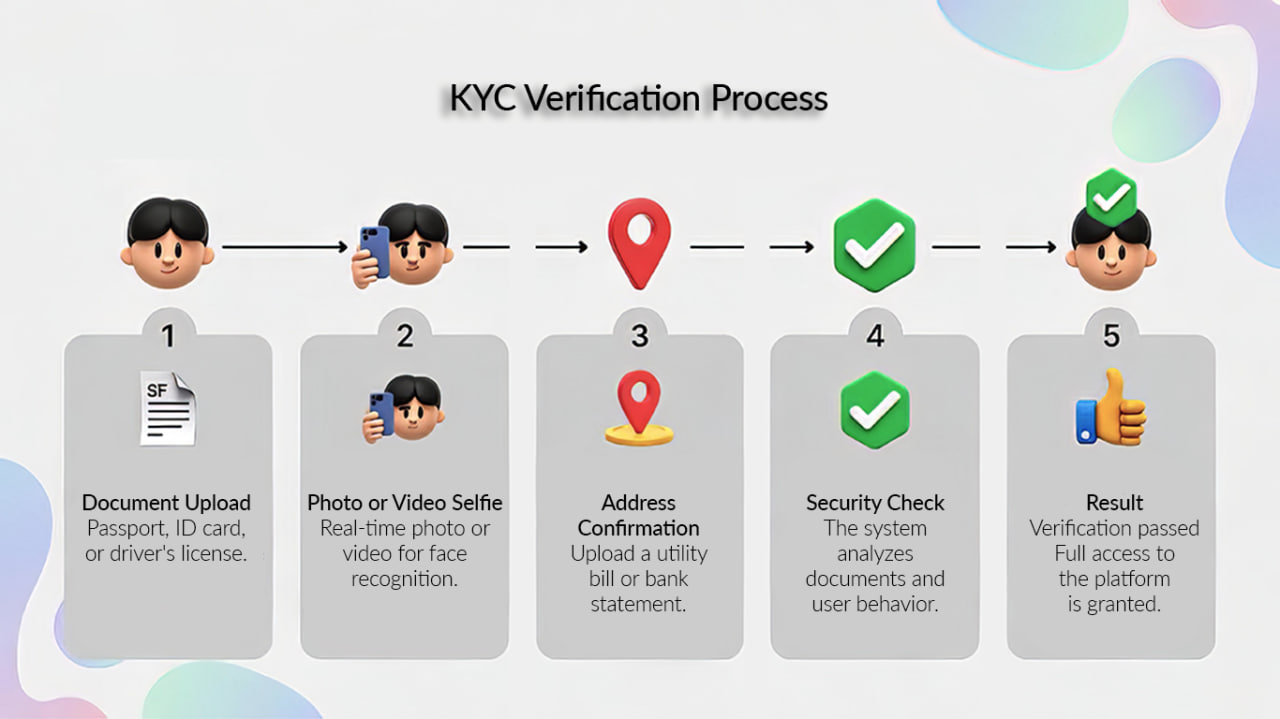
We will tell you what data is required for verification and show you the main stages of KYC on popular platforms.

What are KYC and CDD? Complete guide to compliance and AML risk assessment
We have compiled a complete guide on how to organize the process of customer verification and financial risk assessment for financial service providers
Uploading documents for KYC
Three types of documents are usually accepted for identity verification:
- Passport — the main and most universal document.
- ID card — suitable for most countries if it has a photo, date of birth, and expiration date.
- Driver’s license — not accepted everywhere, but many exchanges accept it.
Image quality requirements:
- the text must be clear and legible;
- the photo must not be blurry or dark;
- the entire document must be in the frame;
- no data may be covered by fingers or unnecessary objects;
- digital image alterations are not allowed.
Face verification via Face ID
This step is necessary for the service to verify that the document belongs to you.
Verification formats:
- Face photo. The user takes a photo in real time.
- Video selfie. You need to turn your head to the left and right, blink, or perform other simple actions.
- Live verification. Some services require a short video recording where you say numbers or repeat a specified phrase.
Tips:
- Take photos/videos in daylight.
- Keep your face in the center of the frame.
- Do not use filters or masks.
- Take photos without hats or glasses.

FBI urges not to use crypto services without KYC system to avoid loss of funds
Funds can be seized by law enforcers due to links to illegal activity
Proof of address
According to established rules, exchanges are required to request information about their customers’ addresses to verify their identity. Providing an address also plays an important role in ensuring account security.
Acceptable documents include:
- bank statement;
- utility bill;
- document from the tax office;
- official letter from a government agency;
- rental agreement (if it contains the address and owner’s details).
The information in the document must be correctly worded. It must contain your full name, current address, date of issue (usually no older than three months), and the logo or stamp of the organization that issued the document. Scans must be clear, and pages must be fully visible.
Final check by the security service
After all data has been uploaded, the system runs a final check. There are two types of checks:
- Automatic — always used. Checks the accuracy of the data, the match between the photo and the document, and the absence of errors.
- Manual — activated if the automatic system detects a discrepancy or additional analysis is required.
Automatic verification usually takes 1 to 10 minutes, while manual verification takes 1 hour to 48 hours, or in rare cases, up to several days.
Common reasons for rejection:
- blurry or unclear photos;
- cropped edges of documents;
- outdated address or document older than three months;
- poor lighting during Face ID;
- data in the document does not match the information entered;
- screenshots uploaded instead of original images.
What data do exchanges store after KYC?
After verification, most centralized exchanges store the following information:
- copies of documents (passport, ID card, etc.);
- selfie or video selfie;
- address confirmation;
- verification history;
- data specified in the questionnaires.
This data is stored in encrypted form and may be transferred to government agencies upon request, in accordance with the laws of the exchange’s jurisdiction.
How to pass KYC on popular exchanges
Most platforms request verification to comply with international standards and, at the same time, protect user accounts from identity theft. Here’s how the procedure works on two major exchanges.
Six months after the $1,5 billion Bybit hack. How the incident changed the industry
North Korean hackers behind the Bybit hack had to invent new ways to launder cryptocurrency because they found themselves in a situation unique to the industry
Comparison of KYC on popular crypto exchanges: terms, documents, levels.
| Exchange | Verification time | KYC levels | Documents | Face ID | Source |
| Binance | From 1 minute to 24 hours | Basic / Intermediate / Advanced | Passport / ID / Driver’s license | Yes (photo/video) | Binance Help |
| Bybit | From 1 minute to several hours | Standard / Advanced / Pro | Passport / ID card | Yes (via camera/mobile) | Bybit KYC |
| OKX | Up to 72 hours | Level 1 / Level 2 / Level 3 | Passport / ID / Driver’s license | Yes (video selfie) | OKX Guide |
| KuCoin | Up to 5 days | KYC1 / KYC2 | Passport / ID | Yes | KuCoin KYC |
| MEXC | From 10 minutes to 24 hours | Basic / Advanced | Passport / ID | Yes (video) | MEXC KYC |
Verification time may vary depending on the workload, country, and document status.
How to pass KYC on Bybit
The individual KYC verification process on the exchange is divided into three categories: Standard, Advanced, and Pro. Each of these categories has its own characteristics, including various privileges and withdrawal limits. Detailed information about the differences between KYC levels can be found in the section dedicated to the advantages of each.
- Select your country and document type. At this stage, you must specify your country of residence: the verification steps depend on this information.
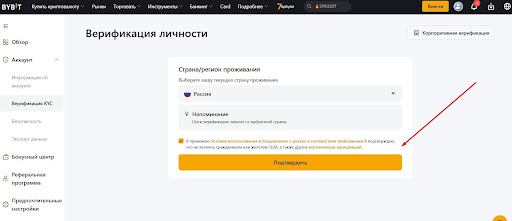
- Upload photos of the front and back of your document.
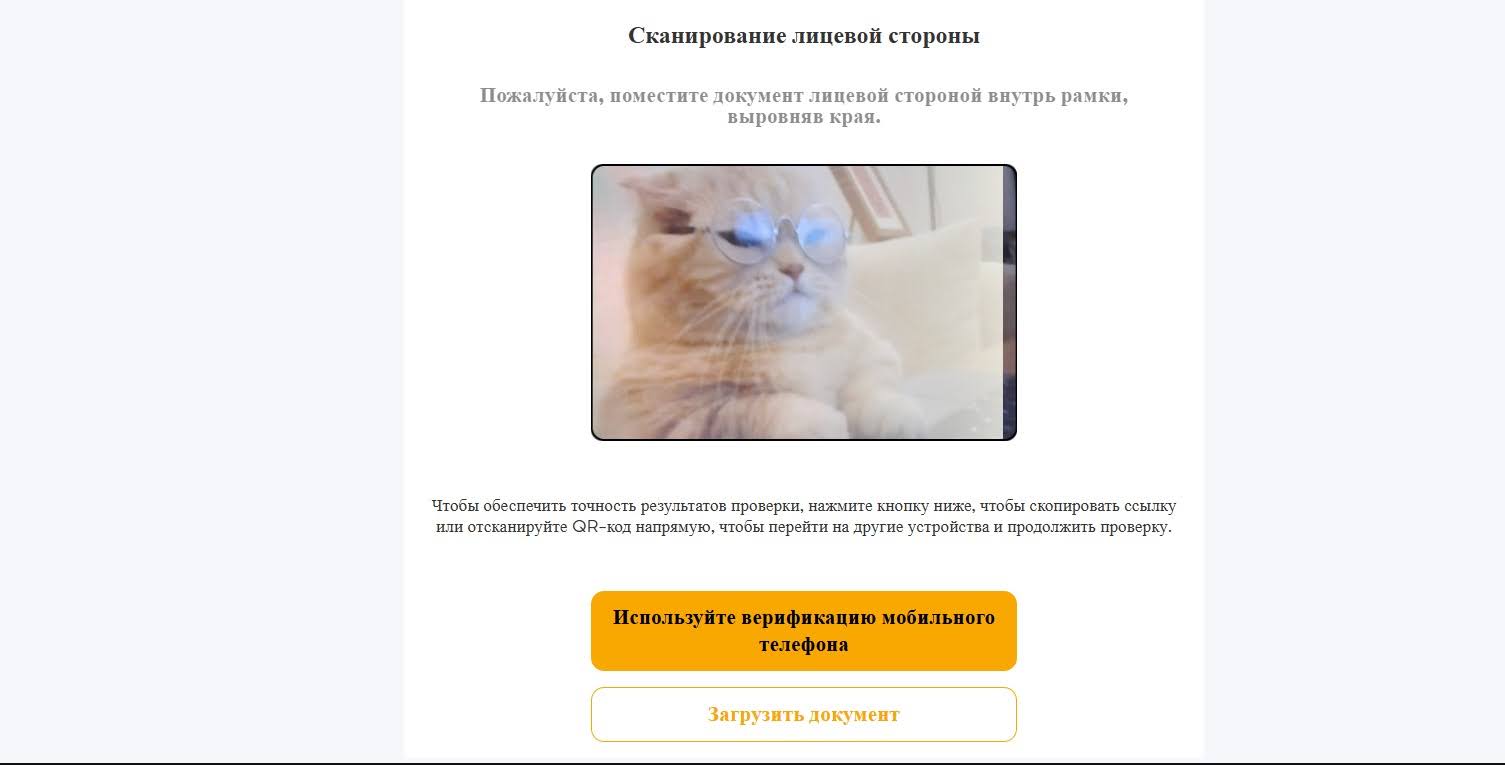
- The system will automatically evaluate the quality of the images. If there is an error, it will prompt you to upload again.
- After uploading the document, the user proceeds to Face ID. The face recognition process is performed using the laptop camera. Alternatively, the user can scan a QR code from a mobile device to complete the face recognition process.
Under standard conditions, the identity verification process will be carried out automatically immediately after confirmation of identification. However, some users may need to fill out a special questionnaire to pass the KYC verification. It is important to note that users are fully responsible for the accuracy and authenticity of all information provided.
The exchange also requests address verification. Bybit only accepts certain documents for verification. These include utility bills, bank statements, and official documents confirming your place of residence issued by government authorities. It is important to remember that the date on these documents must not be older than three months.
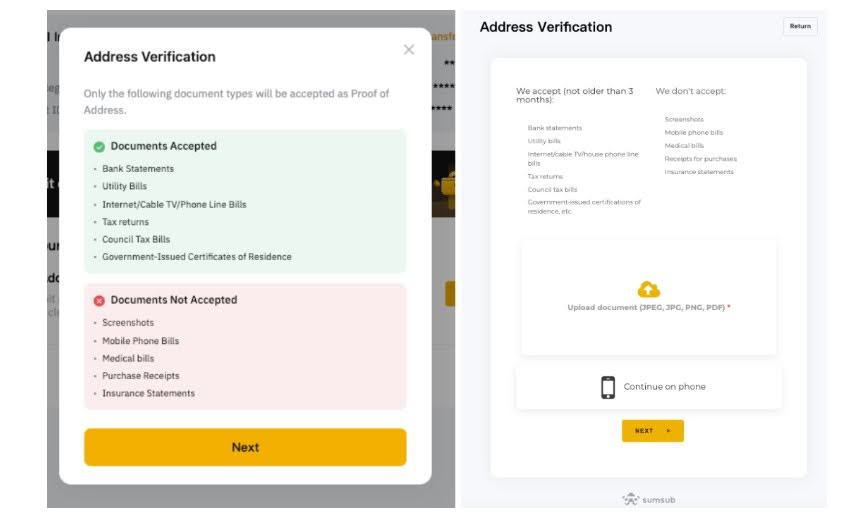
You can check the information you have submitted on the verification page. It will also indicate whether the verification was successful.
How to pass KYC on OKX
Verification allows you to increase your deposit and withdrawal limits. To do this, you will need to follow a few simple steps:
- Select the type of document and country of residence. You can specify your passport, driver’s license, or ID card.
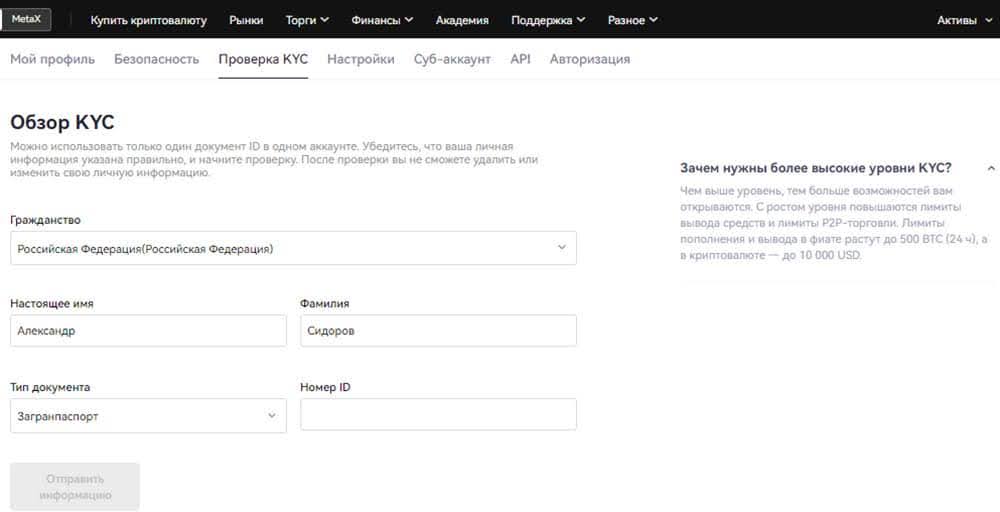
- Upload a photo of your document. The verification service will ask you to take a photo with your PC webcam or mobile phone.
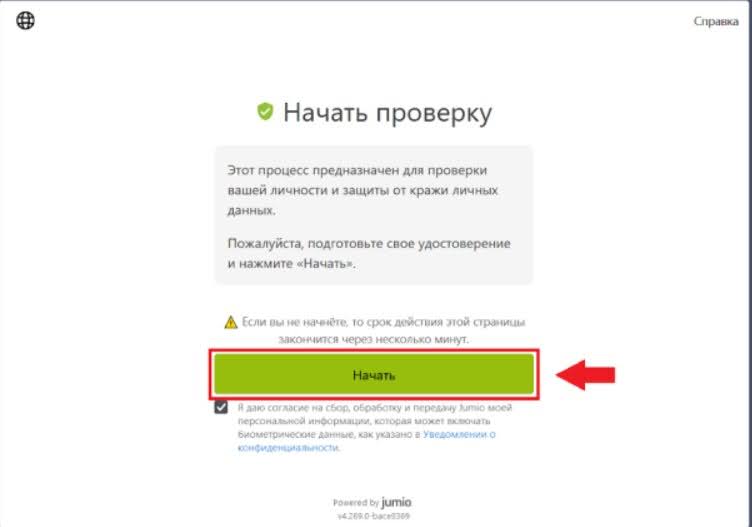
- Complete a video selfie or live verification.
- Sometimes, OKX may request an additional document if the main one does not pass automatic verification.
- Address confirmation. After the documents have been sent for verification, you need to fill out a form indicating your country, city, and residential address.
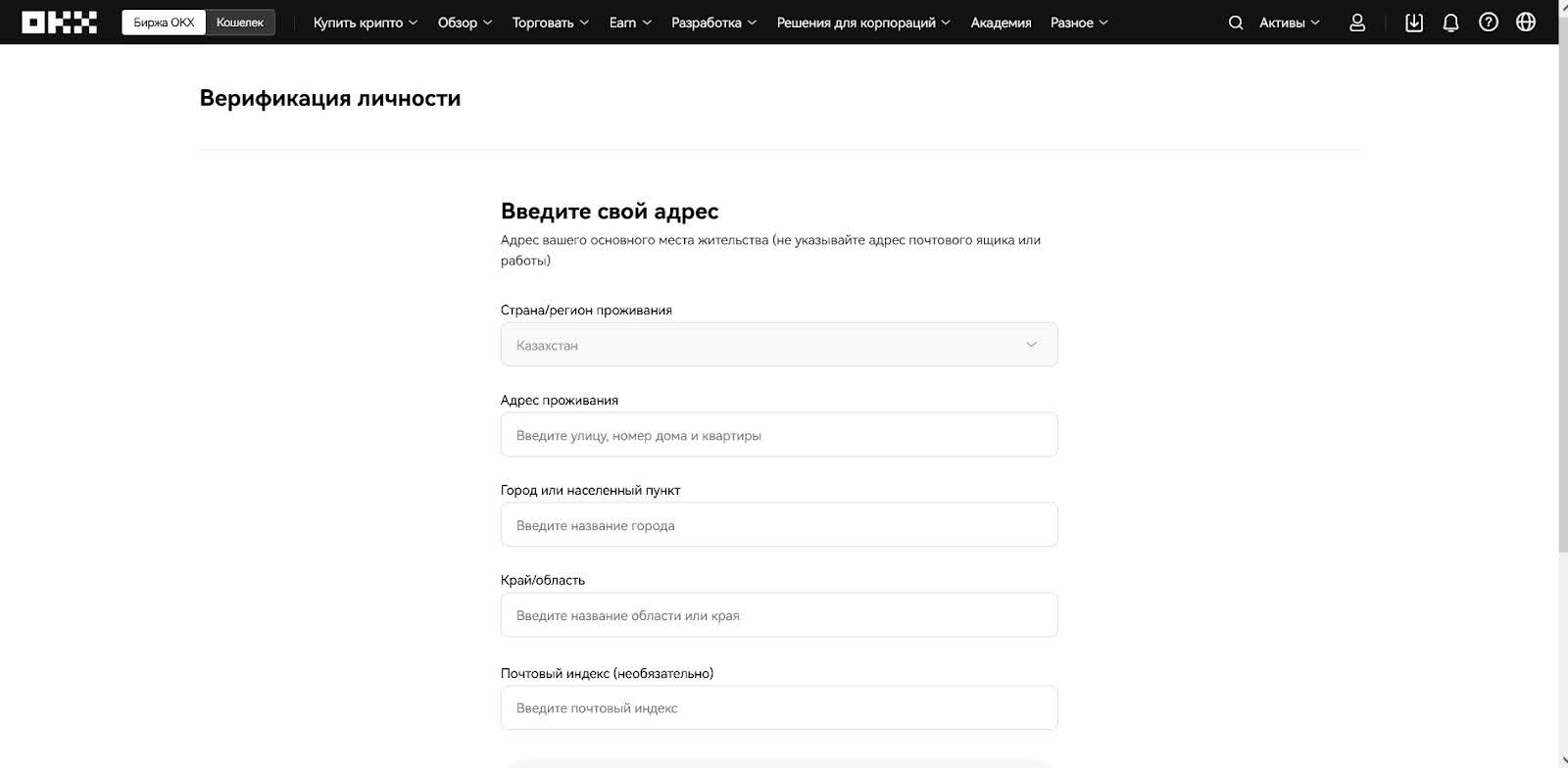
OKX uses a more stringent algorithm, so the images must be of the highest quality possible. If everything is done correctly, the “Verified” mark will appear in your account within three days.
Binance will restrict access to Binance Link services to users without KYC
Users have until May 20 to complete verification
Why is it important to go through KYC?
KYC is a mandatory part of working with modern exchanges and financial services. Successful verification gives you access to withdrawals, increased limits, and additional features.
To pass KYC quickly, it is essential to prepare in advance: take high-quality photos of your documents, choose the appropriate format for address confirmation, and follow the exchange’s instructions.
If you approach the process carefully, you can pass the verification in a few minutes, and in the future, this will free you from restrictions when working with services.

Useful material?
 Telegram
  Twitter
 Basics
Why Satoshi Nakamoto’s technical manifesto for a decentralized money system matters
Oct 31, 2022
Basics
Experts evaluated the development prospects of the new ecosystem and the investment attractiveness of its token
Oct 20, 2022
Basics
How to track fluctuations correctly and create an effective income strategy
Sep 13, 2022
Basics
Review of the most profitable offers from proven trading platforms
Aug 29, 2022
Basics
The Ethereum Foundation team has published a breakdown of major misconceptions about the upcoming network upgrade
Aug 18, 2022
Basics
What benefits the exchange offers, and what else is in the near future
Aug 4, 2022
Cryptocurrency rates
-

Bitcoin
$81 793
BTC
-1.66%
-

Ethereum
$2 436.81
ETH
-2.8%
-

BNB Smart Chain
$730.03
BSC
-1.65%
-

Ripple
$1.42
XRP
+1.04%
-

TRON
$0.334304
TRX
+2.06%
-

Zcash
$1 157.96
ZEC
-4.08%
-

Dogecoin
$0.082347
DOGE
-2.36%
-

Cardano
$0.218269
ADA
+2.11%
-

Stellar XLM
$0.184461
XLM
+2.83%
-

Bitcoin Cash
$270.45
BCH
-0.52%