

Indonesia’s Ministry of Finance to raise taxes on crypto transactions and mining from August 1
The changes will affect sellers of assets on domestic and foreign exchanges
30.07.2025 - 13:30
470
3 min
0
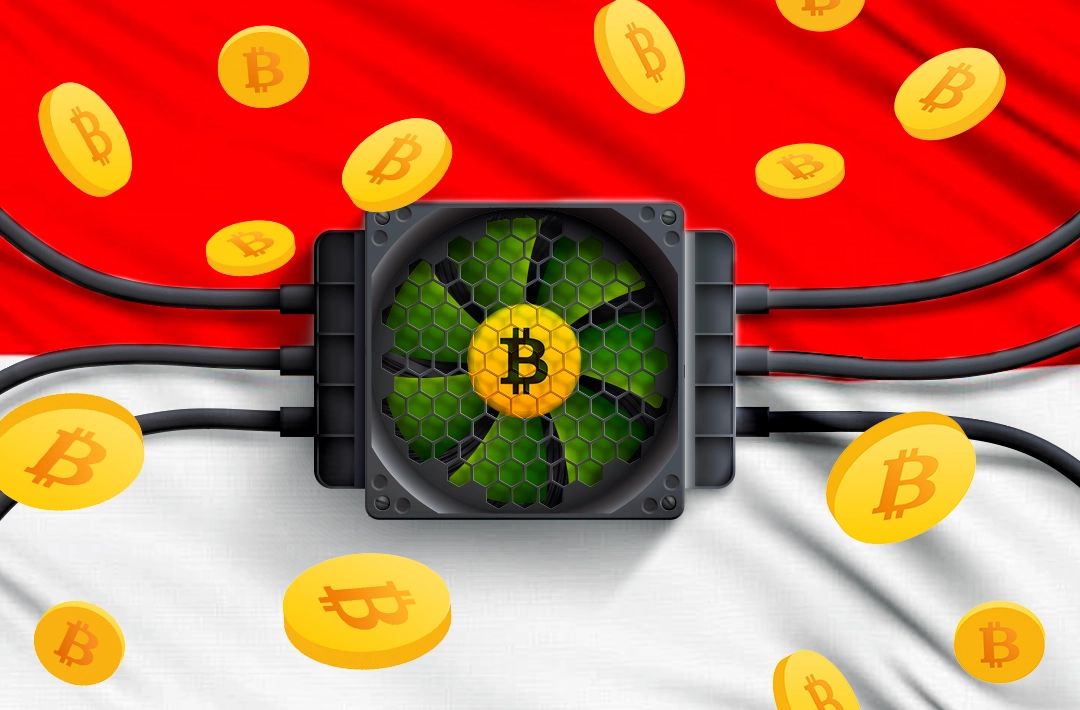
What’s new? Indonesia will raise taxes on cryptocurrency transactions from August 1, including a higher rate for transactions conducted on foreign exchanges, according to a new decree from the Ministry of Finance. Cryptocurrencies have become a popular investment option in Southeast Asia’s largest economy, where they are legally traded but cannot be used as a means of payment.
What else is known? According to the Ministry of Finance, the total value of transactions with crypto assets tripled in 2024 compared to 2023 and exceeded 650 trillion rupiah ($39,67 billion). In 2024, the number of crypto exchange users in the country exceeded 20 million, which is more than the number of investors in the stock market.
According to the new resolution, for sellers of crypto assets on domestic exchanges, the tax increases from 0,1% to 0,21% of the transaction amount, and for sellers on foreign exchanges, from 0,2% to 1%.

South Korea will give crypto venture firms tax incentives
The companies will be able to receive a 50% income tax rebate
At the same time, buyers will no longer be subject to value-added tax (VAT). Under the previous rules, buyers paid VAT at a rate of 0,11–0,22%.
The Ministry of Finance also increased the VAT rate on crypto asset mining from 1,1% to 2,2%. A special income tax rate of 0,1% on cryptocurrency mining has been abolished, and from 2026, such income will be subject to either personal income tax or corporate tax.

Slovenia plans to introduce a 25% tax on crypto profits in 2026
The levy is to be paid on digital assets converted to fiat
Tokocrypto, a company supported by Binance, welcomed the changes as they reflect Indonesia’s transition to classifying cryptocurrencies as financial assets and away from treating them as commodities, but suggested a grace period of at least one month to allow companies to adapt.
The company called for tax incentives to promote innovation in the industry, as the new tax rate on cryptocurrencies is higher than the capital gains tax rate on stock market investments.

Useful material?
 Telegram
  Twitter
 Incidents
In 104 minutes, the attacker emptied 1,404 addresses before validators halted the network and froze almost all of the loot.
Oct 19, 2026
Incidents
Developers warned of potential risks to bridges across the ecosystem and asked exchanges for assistance.
Jun 22, 2026
Incidents
The defendant helped move funds stolen through investment scams and earned at least $4 million for his role in the operation.
Jun 10, 2026
Incidents
The company is linking the incident to a compromised private key on a service wallet, rather than a smart contract exploit
May 22, 2026
Incidents
Following the incident, the project temporarily halted trading operations and node activity.
May 15, 2026
Incidents
The user spent weeks unsuccessfully trying to guess the password until Claude helped find an old wallet backup file
May 14, 2026
Cryptocurrency rates
-

Bitcoin
$84 618
BTC
+2.32%
-

Ethereum
$2 513.09
ETH
+2.72%
-

BNB Smart Chain
$750.47
BSC
+1.83%
-

Ripple
$1.42
XRP
+1.04%
-

TRON
$0.332815
TRX
+0.63%
-

Zcash
$1 362.66
ZEC
+11.8%
-

Dogecoin
$0.083261
DOGE
+2.57%
-

Cardano
$0.218269
ADA
+2.11%
-

Stellar XLM
$0.184461
XLM
+2.83%
-

Bitcoin Cash
$286.95
BCH
+3.07%