

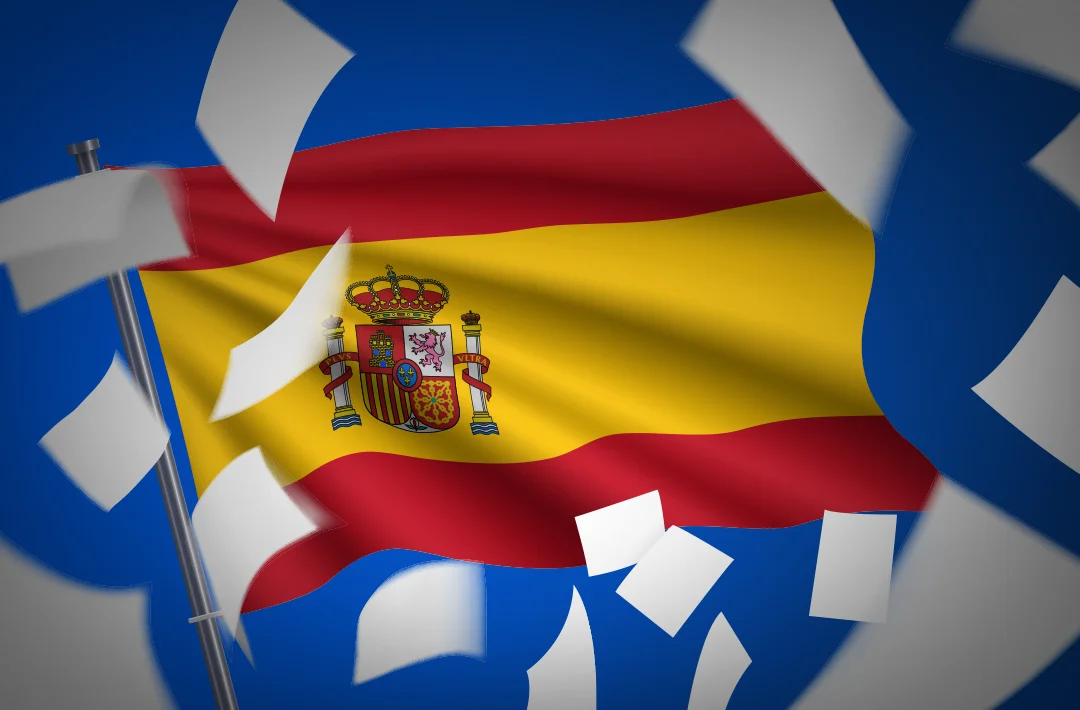
Spain will tighten crypto market regulation through MiCA and DAC8 in 2026
New rules will affect the licensing of crypto services and the transfer of user data to tax authorities
24.12.2025 - 08:20
789
3 min
0
Key points:
- As of July 1, 2026, crypto service providers in Spain will only be permitted to operate if they hold a MiCA license.
- From January 1, 2026, DAC8 will come into force with the automatic transfer of data on user transactions and balances.
- Tax authorities will receive expanded powers to control and collect debts in crypto assets.
Spain is preparing for the full implementation of two key European regulations: MiCA and DAC8. Both initiatives will come into force in 2026 and will significantly change the rules of the crypto market, strengthening regulatory and tax control.
MiCA aims to license and standardize the activities of crypto companies, while DAC8 introduces the automatic exchange of tax information between EU countries.

Everything you need to know about cryptocurrency regulation in Europe. MiCA overview
We describe how the new pan-European set of rules for operating in the cryptocurrency market works.
MiCA licensing
The MiCA regulation will be fully applicable in Spain from July 1, 2026. From that moment on, only companies that have obtained a European crypto service provider license will be able to continue operating. The regulator is the National Securities Market Commission (CNMV).
The authorities have provided for a transition period that will allow companies already operating in the market to temporarily continue operating under the old rules. However, after July 2026, not having a MiCA license will mean a ban on operating.
Tax control through DAC8
The DAC8 directive will come into force on January 1, 2026. It obliges crypto exchanges and other providers to automatically transfer data on user transactions, balances, and transfers to EU tax authorities.
The reporting covers transactions for 2026 and will be transmitted as part of a pan-European data exchange. This expands the ability of tax authorities to identify unpaid liabilities and apply enforcement measures.
Experts note that the amount of information disclosed on crypto assets will exceed the standard requirements applicable to bank accounts.
The combined effect of MiCA and DAC8 is creating a stricter and more formalized model of crypto market regulation in Spain. Companies will face increased compliance requirements, and users will see the effective disappearance of anonymity when working through centralized platforms.
Regulators view the new rules as a tool to combat tax evasion and illegal activities. At the same time, market participants warn of the risk of crypto companies and capital flowing to more lenient EU jurisdictions.

Useful material?
 Telegram
  Twitter
 Incidents
In 104 minutes, the attacker emptied 1,404 addresses before validators halted the network and froze almost all of the loot.
Oct 19, 2026
Incidents
Developers warned of potential risks to bridges across the ecosystem and asked exchanges for assistance.
Jun 22, 2026
Incidents
The defendant helped move funds stolen through investment scams and earned at least $4 million for his role in the operation.
Jun 10, 2026
Incidents
The company is linking the incident to a compromised private key on a service wallet, rather than a smart contract exploit
May 22, 2026
Incidents
Following the incident, the project temporarily halted trading operations and node activity.
May 15, 2026
Incidents
The user spent weeks unsuccessfully trying to guess the password until Claude helped find an old wallet backup file
May 14, 2026
Cryptocurrency rates
-

Bitcoin
$80 194
BTC
-0.75%
-

Ethereum
$2 331.82
ETH
-1.01%
-

BNB Smart Chain
$739.58
BSC
+0.09%
-

Ripple
$1.42
XRP
+1.04%
-

TRON
$0.330657
TRX
+0.51%
-

Zcash
$1 212.47
ZEC
+0.46%
-

Dogecoin
$0.077
DOGE
-0.86%
-

Cardano
$0.218269
ADA
+2.11%
-

Stellar XLM
$0.184461
XLM
+2.83%
-

Bitcoin Cash
$280.12
BCH
+0.92%