

Cryptocurrency bill to clarify SEC and CFTC powers
The document provides additional protection for DeFi developers and touches on new blockchain sectors
08.09.2025 - 10:20
451
2 min
0
Key points:
- The updated 2025 cryptocurrency bill proposes clear functions for the SEC and CFTC.
- The document protects DeFi developers, validators, and wallet creators, provided there is no centralized control over protocols.
- Airdrops, staking rewards, and DePIN tokens will be exempt from securities laws.
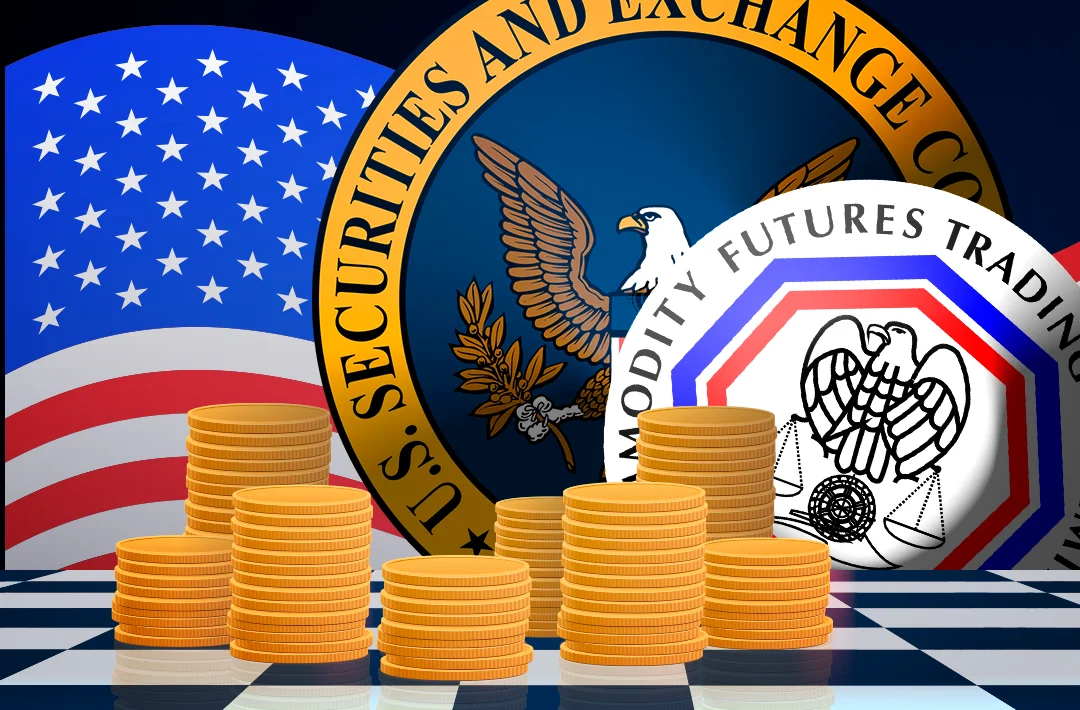
US senators have released a new draft of the Responsible Financial Innovation Act of 2025, clarifying the responsibilities of the Securities and Exchange Commission (SEC) and the Commodity Futures Trading Commission (CFTC). The document also introduces safeguards for decentralized finance (DeFi) developers and emerging blockchain sectors such as DePIN. Additionally, the bill proposes the establishment of a Joint Advisory Committee on Digital Assets, comprising representatives from the SEC and CFTC.
SEC and CFTC need to work in the same direction
Both agencies also plan to hold a public roundtable on September 29 to discuss regulatory harmonization efforts further.
SEC Chairman Paul S. Atkins and CFTC Acting Chairman Caroline D. Pham noted:
“By working together to align our regulatory frameworks, the SEC and CFTC can reduce unnecessary barriers, enhance market efficiency, and create space for innovation to thrive. Our shared goal is to ensure that America remains the global leader in capital markets.”
Protection for developers and infrastructure participants
The document notes that developers of decentralized protocols, validators, liquidity providers, wallet creators, and infrastructure participants will not automatically be subject to traditional financial regulations unless the protocol is centrally controlled.
The bill responds to growing concerns following court cases, including the conviction of Tornado Cash co-founder Roman Storm. Critics have argued that such cases blur the line between software development and criminal liability.
The document clarifies that airdrops and staking rewards are considered “gratuitous distributions” and do not qualify as securities. This reduces legal risks for users and market participants.

Useful material?
 Telegram
  Twitter
 Incidents
In 104 minutes, the attacker emptied 1,404 addresses before validators halted the network and froze almost all of the loot.
Oct 19, 2026
Incidents
Developers warned of potential risks to bridges across the ecosystem and asked exchanges for assistance.
Jun 22, 2026
Incidents
The defendant helped move funds stolen through investment scams and earned at least $4 million for his role in the operation.
Jun 10, 2026
Incidents
The company is linking the incident to a compromised private key on a service wallet, rather than a smart contract exploit
May 22, 2026
Incidents
Following the incident, the project temporarily halted trading operations and node activity.
May 15, 2026
Incidents
The user spent weeks unsuccessfully trying to guess the password until Claude helped find an old wallet backup file
May 14, 2026
Cryptocurrency rates
-

Bitcoin
$84 444
BTC
+1.76%
-

Ethereum
$2 483.9
ETH
+1.14%
-

BNB Smart Chain
$748.13
BSC
+0.85%
-

Ripple
$1.42
XRP
+1.04%
-

TRON
$0.330964
TRX
+0.02%
-

Zcash
$1 342.45
ZEC
+6.27%
-

Dogecoin
$0.082217
DOGE
+0.28%
-

Cardano
$0.218269
ADA
+2.11%
-

Stellar XLM
$0.184461
XLM
+2.83%
-

Bitcoin Cash
$287.66
BCH
+1.55%