

Former IMF chief economist: BTC’s popularity in the shadow economy reduces demand for the dollar
The specialist estimated the volume of the shadow economy at $25 trillion
27.05.2025 - 09:20
626
3 min
0
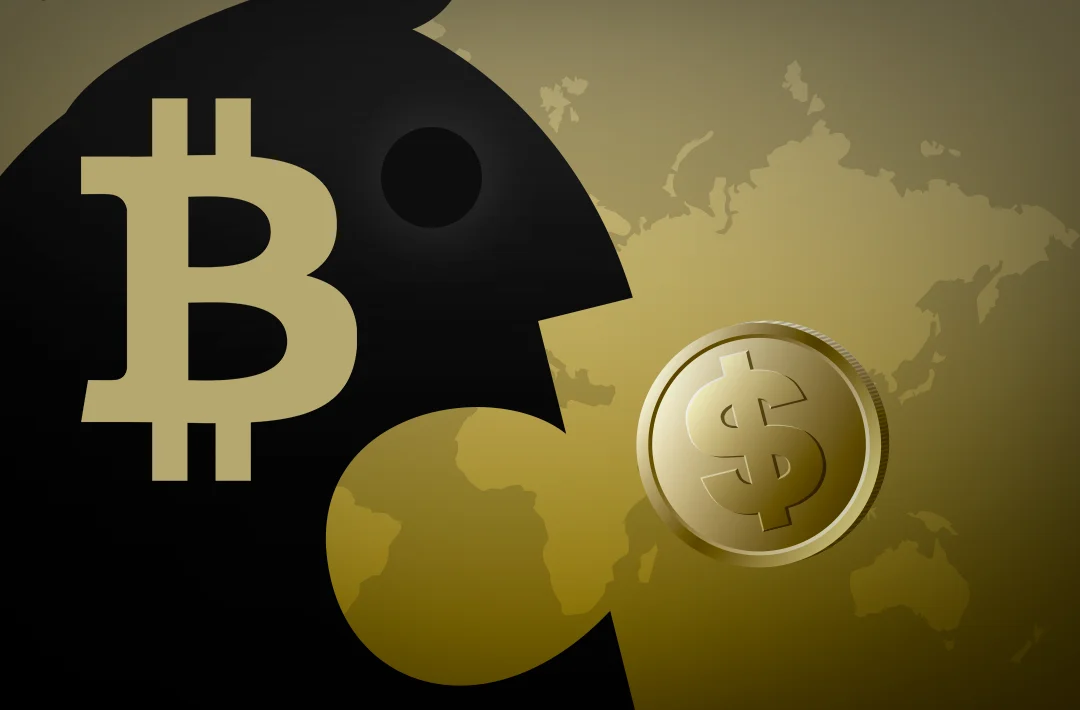
What’s new? Kenneth Rogoff, former chief economist of the International Monetary Fund (IMF), argues that bitcoin flows are already affecting the use of the dollar in the $25 trillion shadow economy. This, in turn, is causing problems for the US economy by reducing demand for the dollar in developing countries.
What else is known? In a recent interview, Rogoff explained that while the dominance of the US dollar has strengthened since World War II, its hegemony has recently been threatened by the Chinese yuan and the euro.
Although cryptocurrencies are just beginning to be considered part of the legal economy, Rogoff argues that they are convenient for the underground economy because the government cannot control all the flows in which they are involved.

IMF bans El Salvador from buying bitcoins in exchange for granting a loan
Earlier this year, the country’s parliament had already stripped the first cryptocurrency of its legal tender status
The shadow economy encompasses gray areas, which can account for up to a third of the gross domestic product in developing countries, and consists mainly of flows aimed at tax evasion. It is for these purposes that bitcoin is currently most useful.
Speaking about the real value of bitcoin and other cryptocurrencies, Rogoff emphasized the fallacy of the claim that cryptocurrencies have no “fundamental value” for use in transactions. There are also several countries that use cryptocurrency to circumvent financial sanctions imposed by the United States.
This use means that 20% of GDP, an estimate of the size of the shadow economy, is increasingly generated by cryptocurrency rather than the dollar, reducing demand for the currency worldwide and directly impacting the US economy.
Decentralization vs. the system: why the US lifted sanctions on Tornado Cash
The US Treasury Department’s restrictive measures had little effect on the crypto mixer, which continued to process user transactions
“Lower demand for dollars in the underground economy is driving up interest rates in the US, although that is just one of several factors driving up interest rates today,” Rogoff explained.
He emphasized that this use case for cryptocurrencies will become increasingly popular, and it will be difficult for governments to control it even with the gradual introduction of regulation.

Useful material?
 Telegram
  Twitter
 Incidents
In 104 minutes, the attacker emptied 1,404 addresses before validators halted the network and froze almost all of the loot.
Oct 19, 2026
Incidents
Developers warned of potential risks to bridges across the ecosystem and asked exchanges for assistance.
Jun 22, 2026
Incidents
The defendant helped move funds stolen through investment scams and earned at least $4 million for his role in the operation.
Jun 10, 2026
Incidents
The company is linking the incident to a compromised private key on a service wallet, rather than a smart contract exploit
May 22, 2026
Incidents
Following the incident, the project temporarily halted trading operations and node activity.
May 15, 2026
Incidents
The user spent weeks unsuccessfully trying to guess the password until Claude helped find an old wallet backup file
May 14, 2026
Cryptocurrency rates
-

Bitcoin
$80 579
BTC
-0.83%
-

Ethereum
$2 356.77
ETH
-1.14%
-

BNB Smart Chain
$734.27
BSC
+0.49%
-

Ripple
$1.42
XRP
+1.04%
-

TRON
$0.329301
TRX
+0.48%
-

Zcash
$1 162.01
ZEC
-3.86%
-

Dogecoin
$0.077585
DOGE
-1.37%
-

Cardano
$0.218269
ADA
+2.11%
-

Stellar XLM
$0.184461
XLM
+2.83%
-

Bitcoin Cash
$276.13
BCH
+0.6%