

India has abandoned global crypto regulation due to concerns about systemic risks
Despite restrictions, cryptocurrency adoption in the country remains high

11.09.2025 - 10:10
349
3 min
0
Key points:
- The Reserve Bank of India is skeptical about the need for legislation for the crypto market.
- Despite restrictions, cryptocurrency adoption remains high.
The Indian government has decided not to adopt comprehensive laws regulating cryptocurrencies, opting instead for selective control over this area. According to Reuters, the Reserve Bank of India (RBI) believes that managing the risks of the cryptocurrency market through regulation will be an extremely difficult task.
Current rules regarding cryptocurrencies in India
Although India does not have a separate law on cryptocurrencies, it already has a 30% tax on digital asset gains and requires foreign cryptocurrency exchanges to register with local regulators.
At the end of 2023, India’s Financial Intelligence Unit (FIU) demanded that Binance, KuCoin, Huobi, Kraken, Gate.io, Bittrex, Bitstamp, MEXC Global, and Bitfinex blocked for not being registered.
Binance and KuCoin returned to the country in 2024 after receiving FIU approval to provide their services in India. Regulators are also introducing anti-money laundering (AML) rules for local crypto companies.
The growing prevalence of cryptocurrencies in India
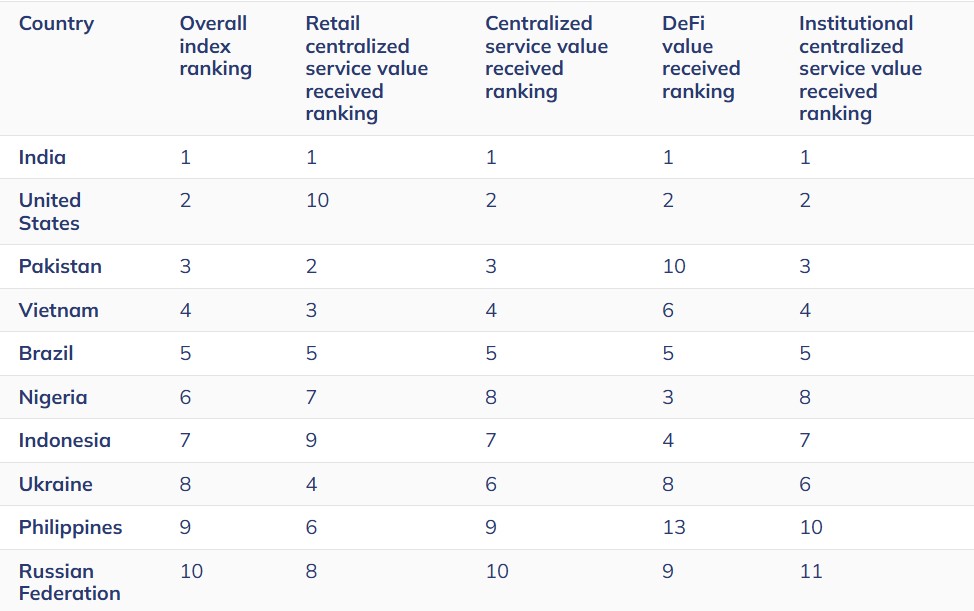
Despite the cautious stance of the authorities, India is a global leader in the prevalence of cryptocurrencies. Chainalysis’ “2025 Geography of Cryptocurrency Report” showed that India leads in terms of cryptocurrency prevalence in all categories.
Government officials have also disclosed information about their assets. Minister Jayant Chaudhary reported that his crypto portfolio grew by 19% to approximately $25 500.
However, industry analysts point to a gap between adoption rates and actual cryptocurrency usage. Mithil Thakore, CEO of crypto platform Velar, noted:
“The fact that metrics say one thing, and reality presents a contrasting image, suggests that India stands at a paradoxical crossroads.”
Earlier, India’s Central Board of Direct Taxes (CBDT) tightened control over cryptocurrency taxation, identifying undeclared assets and liquidity shortages.

Useful material?
 Telegram
  Twitter
 Incidents
In 104 minutes, the attacker emptied 1,404 addresses before validators halted the network and froze almost all of the loot.
Oct 19, 2026
Incidents
Developers warned of potential risks to bridges across the ecosystem and asked exchanges for assistance.
Jun 22, 2026
Incidents
The defendant helped move funds stolen through investment scams and earned at least $4 million for his role in the operation.
Jun 10, 2026
Incidents
The company is linking the incident to a compromised private key on a service wallet, rather than a smart contract exploit
May 22, 2026
Incidents
Following the incident, the project temporarily halted trading operations and node activity.
May 15, 2026
Incidents
The user spent weeks unsuccessfully trying to guess the password until Claude helped find an old wallet backup file
May 14, 2026
Cryptocurrency rates
-

Bitcoin
$84 456
BTC
+2.08%
-

Ethereum
$2 509.41
ETH
+2.44%
-

BNB Smart Chain
$749.65
BSC
+1.78%
-

Ripple
$1.42
XRP
+1.04%
-

TRON
$0.333069
TRX
+0.61%
-

Zcash
$1 352.54
ZEC
+10.71%
-

Dogecoin
$0.083147
DOGE
+2.5%
-

Cardano
$0.218269
ADA
+2.11%
-

Stellar XLM
$0.184461
XLM
+2.83%
-

Bitcoin Cash
$287.29
BCH
+3.14%