


Bitcoin on guard of the law: how BTC helped to identify the criminal
Law enforcers conducted an operation to detect and identify criminals who were stealing and selling other people’s personal data
23.07.2025
441
2 min
0
Recently, there was an event that once again proves that the anonymity of cryptocurrencies is a myth. Law enforcers managed to track the movement of funds in BTC and identify the criminal. GetBlock AML Research publishes the details of the operation.
Your data is no longer yours
In June 2025, with international cooperation, law enforcement agencies from different countries shut down BreachForum, one of the largest trading platforms for stolen identities. Five administrators of the platform (known by their aliases: Shinyhunter, Noct, and Depressed) were detained and arrested.
Also in February 2025, Kai West, the head of the IntelBroker fraud group that owned the BreachForum platform, was arrested in France. West’s identity and his whereabouts were helped by a coordinated law enforcement operation using bitcoin.
How bitcoin led to criminals
In 2023, IntelBrokers wanted to sell a voluminous database of stolen data. Law enforcers seized the moment and planned an operation in which an undercover operative attempted to buy the database. All IntelBroker transactions were conducted in Monero (XMR), but the operative managed to convince the scammers to accept payment in BTC. It was this mistake by the attackers that led to their identification and subsequent arrest.

Kai West’s (IntelBroker) profile on the BreachForum platform.
Thanks to the BTC transaction, law enforcers were able to find out the attacker’s blockchain address and then track the movement of funds. It turned out that cryptocurrency from the Ramp crypto exchange was transferred to the address. The account on the crypto exchange, from which the withdrawal transactions were made, contained the attacker’s real name (Kai Logan West) and his real date of birth.
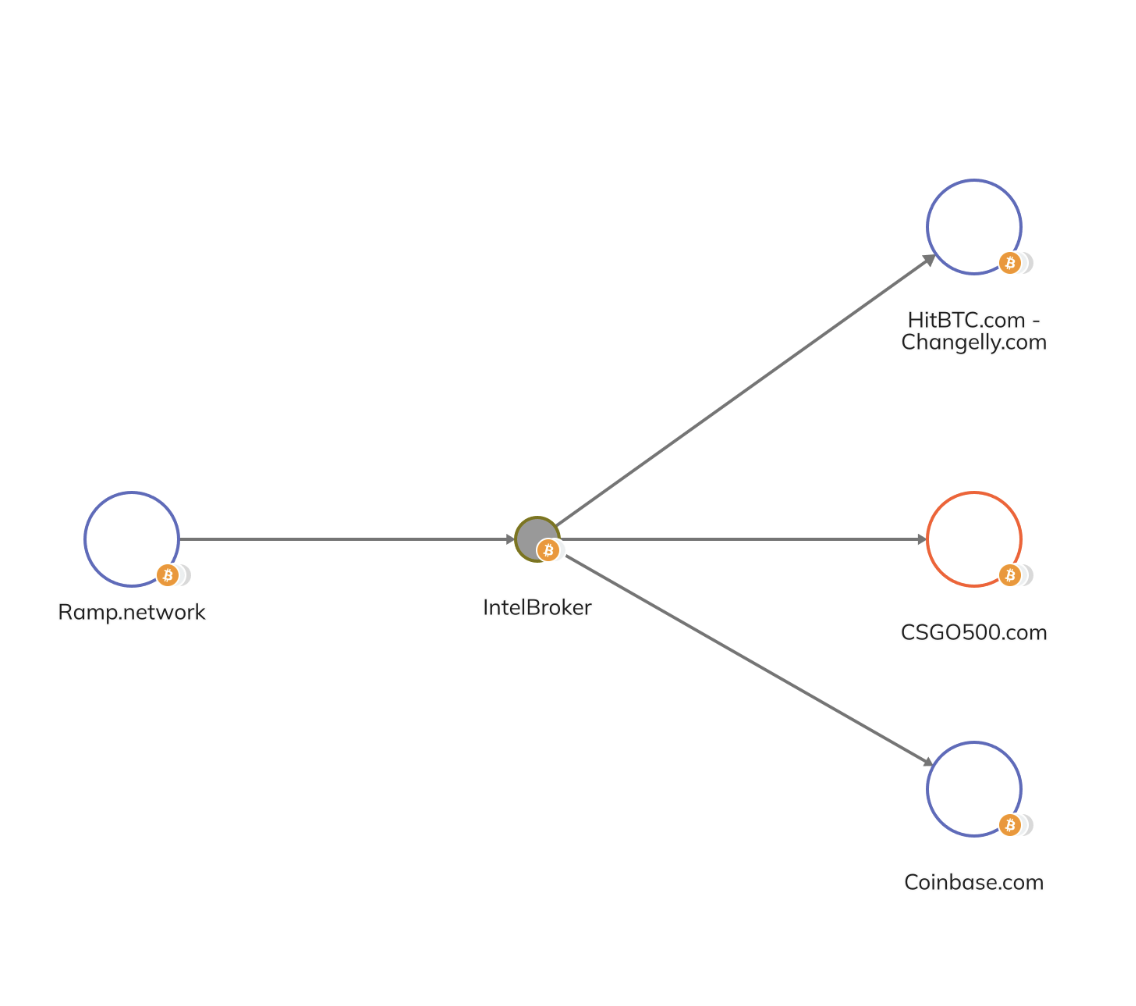
Movement of funds through Kai West’s wallet. Visualization: Chainalysis
Some of the funds received from the transaction were sent to Coinbase. An account on the exchange was opened in the name of Kyle Northern, but this data also eventually led law enforcement to Kai Logan West. An IntelBroker group-affiliated email address ([email protected]) was later discovered to have also been used to register Kai West’s LinkedIn account. West’s profile revealed that he had previously worked as a security researcher for the National Crime Agency.

Useful material?
 Telegram
  Twitter
 Research
One and the same cryptocurrency address received two completely opposite assessments from different analytics systems: from an ordinary gambling service to an extremely severe criminal offense. This story has become the starting point for a broader conversation about what the scientific standards of blockchain analysis should look like — and why errors in systems like these can shape the fates of real people.
Jul 1, 2026
Research
The blockchain has helped uncover the ties between cryptocurrency fundraising campaigns, exchangers in Syria, and intermediaries in several countries around the world. A telltale pattern has emerged in which the same addresses were used across multiple donation drives at once
Jun 24, 2026
Research
Four Iranian cryptocurrency exchanges accounted for roughly 78% of all digital asset volume tied to the country in 2025. They have now become the focal point of the largest U.S. sanctions campaign against Iran's cryptocurrency infrastructure.
Jun 5, 2026
Research
A financial system is already up and running on public blockchains, with loans, analogues of U.S. Treasuries, and automated capital markets. More than $551 billion has flowed through DeFi protocols — but most of that activity has nothing to do with the real economy and everything to do with the speculative build-up of risk.
May 29, 2026
Research
Around 97% of Chinese suppliers of chemicals used to make fentanyl accept payment in cryptocurrency. The volume of such transactions continues to grow alongside the global market for synthetic drugs
May 22, 2026
Research
For the first time, the new law makes blockchain analytics an officially mandatory tool of financial oversight in the United States. Authorities will also gain the power to restrict transactions with foreign crypto services tied to money-laundering risks.
May 20, 2026
Cryptocurrency rates
-

Bitcoin
$84 545
BTC
-2.39%
-

Ethereum
$2 674.98
ETH
-2.31%
-

BNB Smart Chain
$766.36
BSC
-1.91%
-

Ripple
$1.42
XRP
+1.04%
-

TRON
$0.334257
TRX
-0.26%
-

Zcash
$1 314.51
ZEC
-4.16%
-

Dogecoin
$0.092995
DOGE
-3.47%
-

Cardano
$0.218269
ADA
+2.11%
-

Stellar XLM
$0.184461
XLM
+2.83%
-

Bitcoin Cash
$309.77
BCH
-1.37%