


“Intelligence equals wealth”: How the Xinkangjia DGCX Ponzi scheme made $1,8 billion
More than two million Chinese lost money while trying to get high returns from cryptocurrency investments. The scammers lured with daily returns of 2%

01.08.2025
604
4 min
0
In June 2025, investment platform Xinkangjia DGCX ceased operations and disabled withdrawals. It turned out that the company, operating as a Ponzi scheme, had stolen more than 13 billion Chinese yuan ($1,8 billion). GetBlock AML Research explains how more than two million people were deceived by scammers.
How Xinkangjia DGCX was created
Data about Xinkangjia first appears in publicly available registries in 2019. At that time, the organization sold 200 thousand yuan worth of oil filtration equipment to an unnamed company. A short time later, Xinkangjia used the deal and reclassified it as a “five-year strategic cooperation agreement with PetroChina.” In 2021, a new subsidiary, Guizhou Xinkangjia Big Data Co., Ltd., was formed. In May 2023, the Xinkangjia DGCX data exchange was launched, positioned as “a branch of the Dubai Gold and Commodities Exchange (DGCX) in China.”
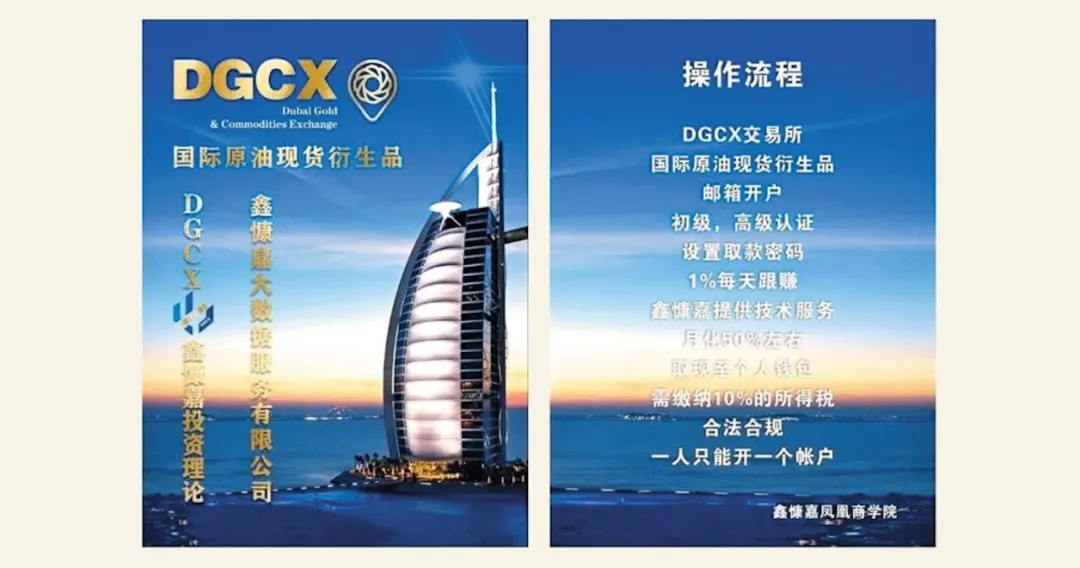
Xinkangjia DGCX announcement of its affiliation with the Dubai Gold and Commodities Exchange
Xinkangjia DGCX immediately after its formation announced partnerships with several state-owned enterprises such as PetroChina and COSCO Shipping. The scammers used fake contracts, letters, and screenshots to prove cooperation with large government organizations. At the same time, the Dubai Gold and Commodities Exchange (DGCX) denied opening its branch in China.
How the Ponzi scheme worked
Referral mechanism. Xinkangjia DGCX used a multi-level system of attracting new members. To become a member of the Ponzi scheme, you had to invite 3 people to it. For each of them, a newcomer received $10. To get the 10th level (the maximum), a minimum of at least 50 direct referrals and at least 20 000 indirect referrals is required. A Level 10 scheme participant received $150 for each referral and a monthly salary of $12 000.
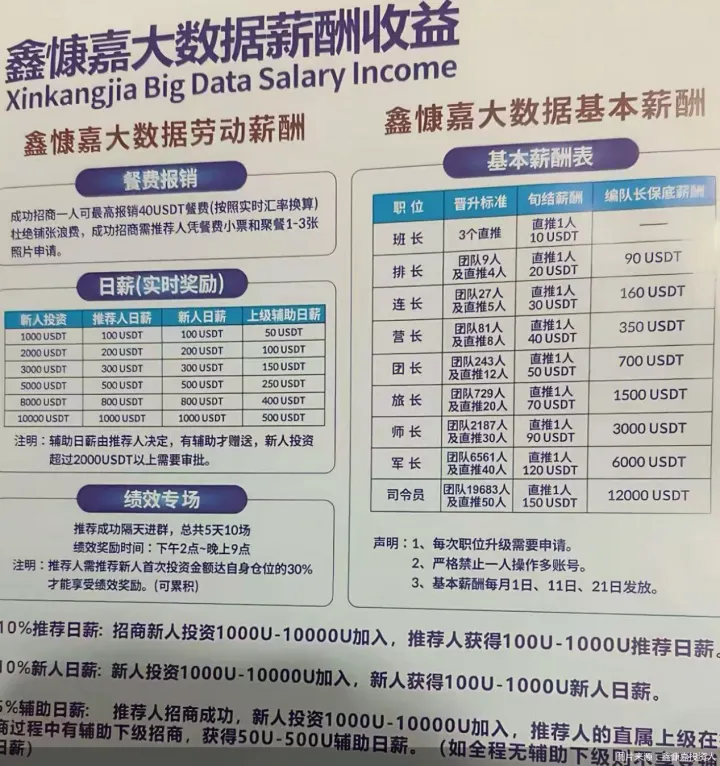
Xinkangjia DGCX referral structure
Simulated trading. The Xinkangjia DGCX website posted trading information on various assets. The company claimed to provide data and trading infrastructure to multinational corporations.
The promise of high returns. Xinkangjia DGCX claimed to utilize big data for high-frequency trading of oil, gold, and currency futures. The company claimed that with its services, investors could earn 2% of their investment every day. The platform regularly published fake screenshots of withdrawals of large sums to encourage the influx of new customers.
Making withdrawals more difficult. Xinkangjia DGCX regularly introduced new restrictions for withdrawals from the platform. Shortly before its closure, the Ponzi scheme had the following restrictions: payment of 10% tax on the withdrawal amount, a queue for 30 business days if the withdrawal amount exceeded 100 000 yuan, and a minimum withdrawal amount of 100 USDT.
Marketing tricks. To attract new referrals, Xinkangjia DGCX regularly introduced new marketing promotions. Shortly before the termination, the platform launched a new advertising campaign, “Invest $500 000 to get a Tesla.”
How it ended
Xinkangjia DGCX used a pyramid scheme model with a multi-level marketing (MLM) structure. The scammers convinced users that they could earn high returns by properly investing in digital assets. The platform accepted stablecoins from victims and then accumulated them in its network of addresses. When Xinkangjia DGCX ceased operations, a message from the pyramid scheme’s leader circulated in messengers:
“Hello, comrades! This is Mr. Huang. I’m already overseas. Everyone’s intelligence is matched to their wealth. Since your wealth didn’t match your intelligence, I had to correct that mismatch. I simply took away the wealth that didn’t correspond to your IQ. I hope you can thank me for that — be grateful. Remember the lesson I’ve given you,” the Xinkangjia DGCX executive wrote.
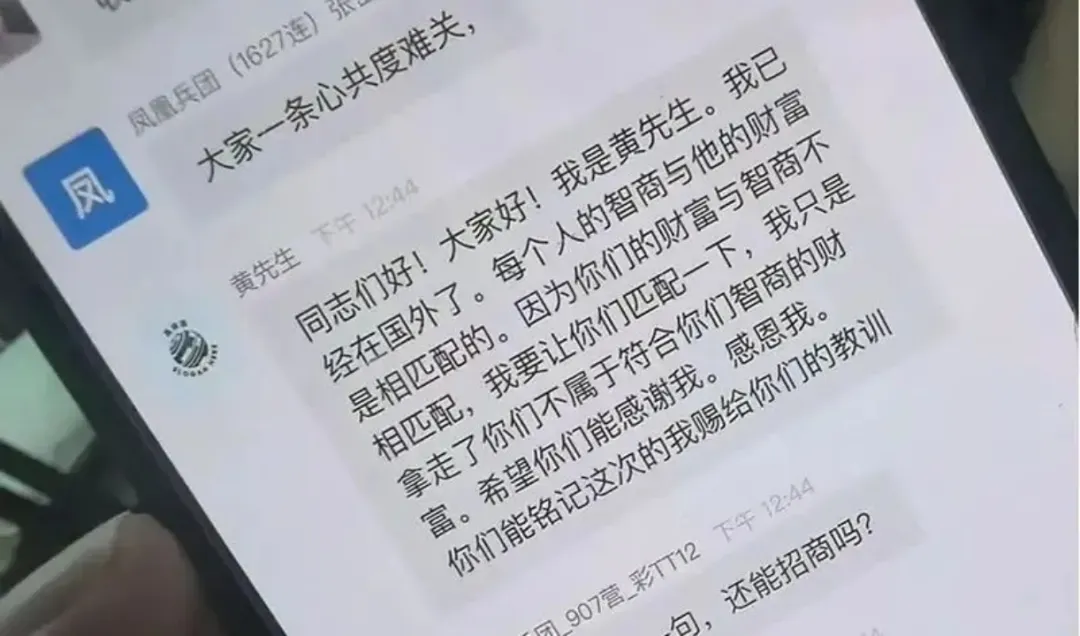
A screenshot of the message from the pyramid scheme leader
48 hours before the termination, Xinkangjia DGCX wallets began transferring all assets to Tornado Cash. After that, assets were redirected to a fictitious organization registered in the Cayman Islands.
The on-chain structure of the pyramid
In most cases, centralized exchanges are the source of funds. From the exchanges, USDT stablecoins were sent to the pyramid scheme’s primary fundraising wallets. In some cases, when victims were unable to purchase USDT on their own and send them to fundraising addresses, the scammers provided a paid service to purchase the stablecoins.
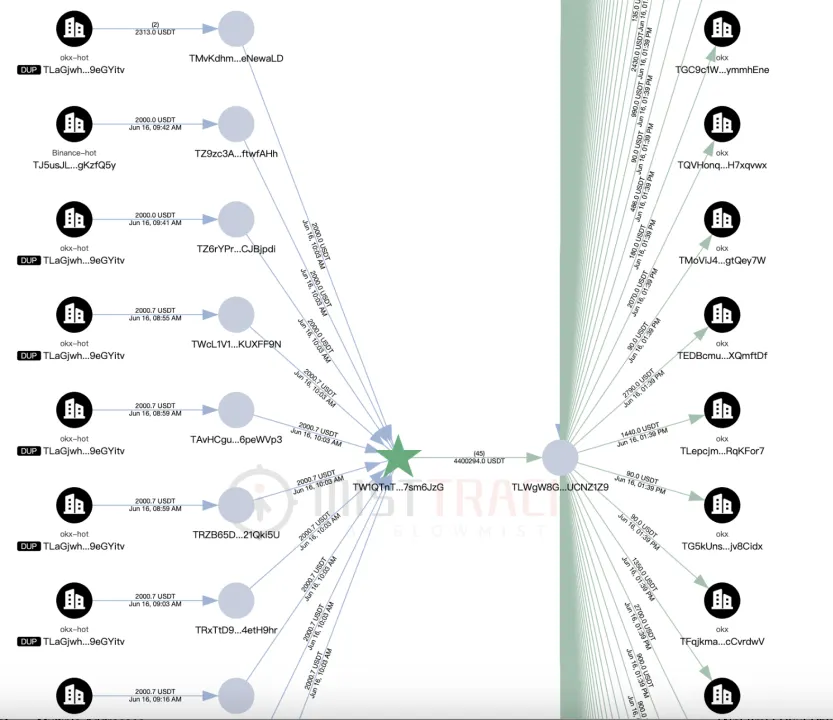
Moving funds to asset-storage wallets. Visualization: MistTrack
The primary fundraising wallets sent cryptocurrency to special storage addresses, which are characterized by having a large number of incoming transactions and few outgoing transactions. In total, more than 800 000 addresses were found to be used by the pyramid scheme in its operational activities.

Useful material?
 Telegram
  Twitter
 Research
One and the same cryptocurrency address received two completely opposite assessments from different analytics systems: from an ordinary gambling service to an extremely severe criminal offense. This story has become the starting point for a broader conversation about what the scientific standards of blockchain analysis should look like — and why errors in systems like these can shape the fates of real people.
Jul 1, 2026
Research
The blockchain has helped uncover the ties between cryptocurrency fundraising campaigns, exchangers in Syria, and intermediaries in several countries around the world. A telltale pattern has emerged in which the same addresses were used across multiple donation drives at once
Jun 24, 2026
Research
Four Iranian cryptocurrency exchanges accounted for roughly 78% of all digital asset volume tied to the country in 2025. They have now become the focal point of the largest U.S. sanctions campaign against Iran's cryptocurrency infrastructure.
Jun 5, 2026
Research
A financial system is already up and running on public blockchains, with loans, analogues of U.S. Treasuries, and automated capital markets. More than $551 billion has flowed through DeFi protocols — but most of that activity has nothing to do with the real economy and everything to do with the speculative build-up of risk.
May 29, 2026
Research
Around 97% of Chinese suppliers of chemicals used to make fentanyl accept payment in cryptocurrency. The volume of such transactions continues to grow alongside the global market for synthetic drugs
May 22, 2026
Research
For the first time, the new law makes blockchain analytics an officially mandatory tool of financial oversight in the United States. Authorities will also gain the power to restrict transactions with foreign crypto services tied to money-laundering risks.
May 20, 2026
Cryptocurrency rates
-

Bitcoin
$84 545
BTC
-2.39%
-

Ethereum
$2 674.98
ETH
-2.31%
-

BNB Smart Chain
$766.36
BSC
-1.91%
-

Ripple
$1.42
XRP
+1.04%
-

TRON
$0.334257
TRX
-0.26%
-

Zcash
$1 314.51
ZEC
-4.16%
-

Dogecoin
$0.092995
DOGE
-3.47%
-

Cardano
$0.218269
ADA
+2.11%
-

Stellar XLM
$0.184461
XLM
+2.83%
-

Bitcoin Cash
$309.77
BCH
-1.37%