

Binance talks about the use of AI technology to bypass KYC
The platform’s chief security officer warned that over time, deepfakes will become more advanced
24.05.2023 - 10:40
858
2 min
0
Deepfake technology used by crypto fraudsters to bypass Know Your Customer (KYC) verification on crypto exchanges such as Binance is only going to get more advanced, Binance’s chief security officer has warned.
Deepfakes are made using artificial intelligence tools that use machine learning to create convincing audio, images or videos featuring a person’s likeness. While there are legitimate use cases for the technology, it can also be used for scams and hoaxes.
Speaking to Cointelegraph, Binance Chief Security Officer Jimmy Su said there had been a rise in fraudsters using the tech to try and get past the exchange’s customer verification processes.
“The hacker will look for a normal picture of the victim online somewhere. Based on that, using deepfake tools, they’re able to produce videos to do the bypass.”
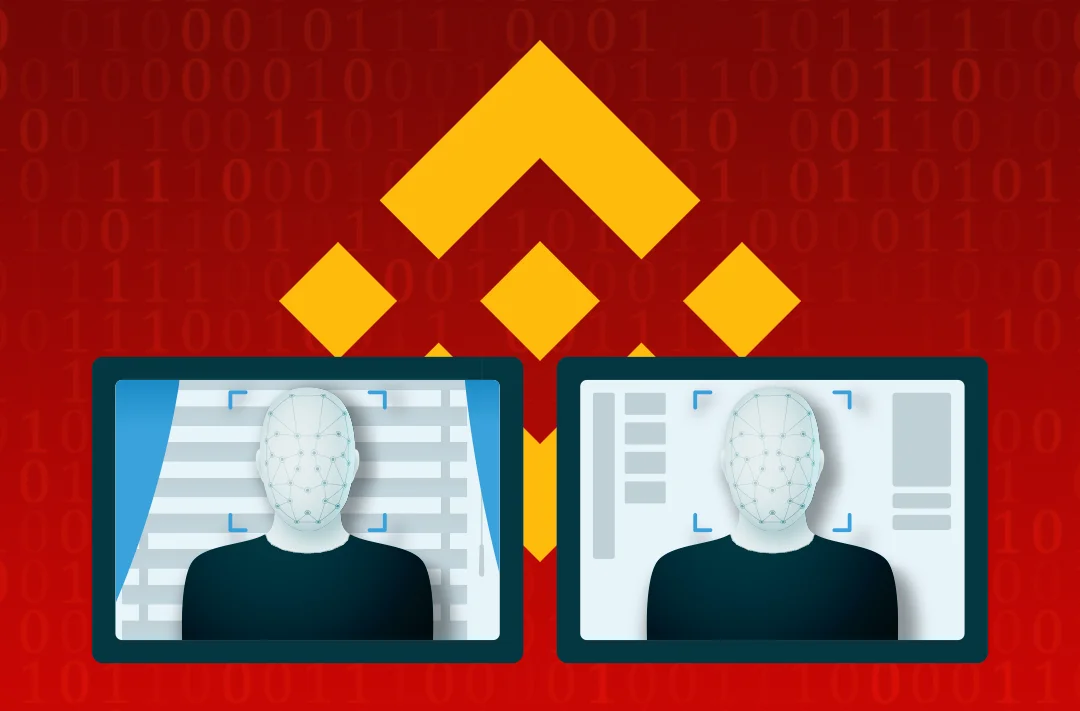
Su said the tools have become so advanced that they can even correctly respond to audio instructions designed to check whether the applicant is a human and can do so in real-time.
“Some of the verification requires the user, for example, to blink their left eye or look to the left or to the right, look up or look down. The deepfakes are advanced enough today that they can actually execute those commands,” he explained.
However, Su believes the faked videos are not at the level yet where they can fool a human operator.
“When we look at those videos, there are certain parts of it we can detect with the human eye,” for example, when the user is required to turn their head to the side, said Su.
“AI will overcome [them] over time. So it's not something that we can always rely on.”
In August 2022, Binance’s chief communications officer, Patrick Hillmann, warned that a “sophisticated hacking team” was using his previous news interviews and TV appearances to create a “deepfake” version of him.
The deepfake version of Hillmann was then deployed to conduct Zoom meetings with various crypto project teams, promising an opportunity to list their assets on Binance — for a price, of course.
“That’s a very difficult problem to solve,” said Su, when asked about how to combat such attacks.
“Even if we can control our own videos, there are videos out there that are not owned by us. So one thing, again, is user education.”
Binance is planning to release a blog post series aimed at educating users about risk management.
In an early version of the blog post featuring a section on cybersecurity, Binance said that it uses AI and machine learning algorithms for its own purposes, including detecting unusual login patterns and transaction patterns and other “abnormal activity on the platform.”
This material is taken from the website https://cointelegraph.com.

Useful material?
 Telegram
  Twitter
 Incidents
In 104 minutes, the attacker emptied 1,404 addresses before validators halted the network and froze almost all of the loot.
Oct 19, 2026
Incidents
Developers warned of potential risks to bridges across the ecosystem and asked exchanges for assistance.
Jun 22, 2026
Incidents
The defendant helped move funds stolen through investment scams and earned at least $4 million for his role in the operation.
Jun 10, 2026
Incidents
The company is linking the incident to a compromised private key on a service wallet, rather than a smart contract exploit
May 22, 2026
Incidents
Following the incident, the project temporarily halted trading operations and node activity.
May 15, 2026
Incidents
The user spent weeks unsuccessfully trying to guess the password until Claude helped find an old wallet backup file
May 14, 2026
Cryptocurrency rates
-

Bitcoin
$81 762
BTC
-1.15%
-

Ethereum
$2 402.31
ETH
-1.42%
-

BNB Smart Chain
$741.35
BSC
+0.34%
-

Ripple
$1.42
XRP
+1.04%
-

TRON
$0.3293
TRX
-0.29%
-

Zcash
$1 223.94
ZEC
-3.2%
-

Dogecoin
$0.079786
DOGE
-0%
-

Cardano
$0.218269
ADA
+2.11%
-

Stellar XLM
$0.184461
XLM
+2.83%
-

Bitcoin Cash
$285.4
BCH
+2.69%