


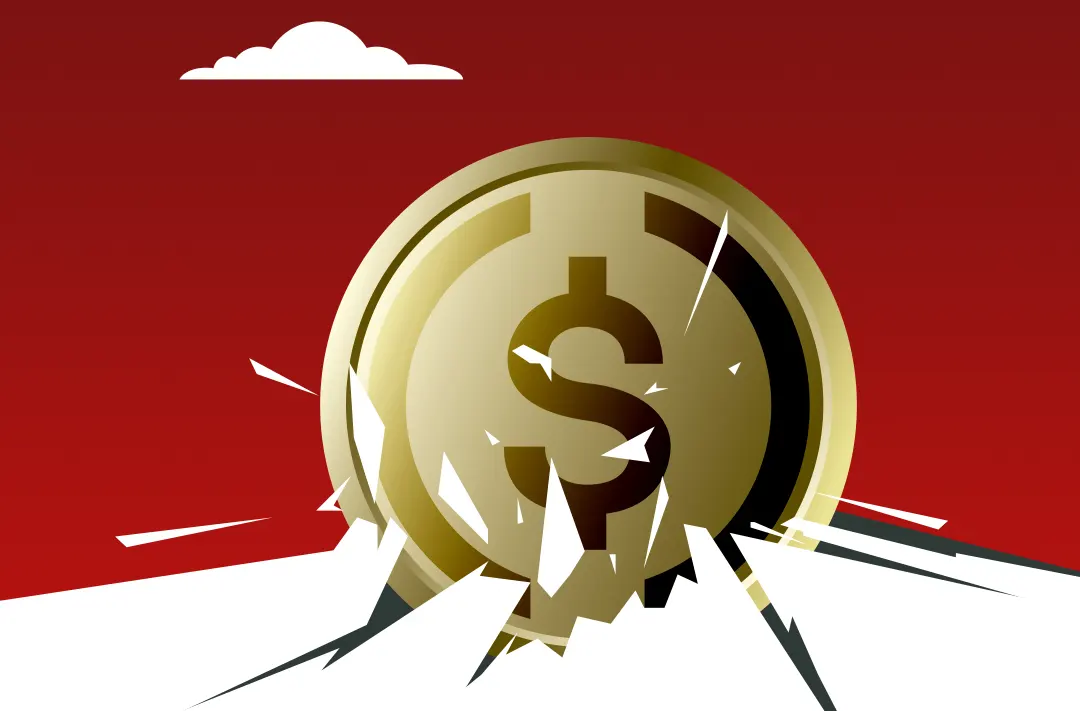
BIS has rejected the possibility of stablecoins acting as money
According to analysts at the bank, stablecoins do not meet the key criteria for the basis of a monetary system
25.06.2025 - 11:10
676
3 min
0
What’s new? The Bank for International Settlements (BIS) has said in a new report that fiat-pegged stablecoins fail to meet three key criteria that would allow them to act as the foundation of a monetary system: singleness, elasticity, and integrity.
What else is known?
“It remains to be seen what role innovations like stablecoins will play in the future monetary system. They do offer novel programmability functions, easy access for new users and pseudonymity features. But stablecoins do not stack up well against the three desirable characteristics of sound monetary arrangements and thus cannot be the mainstay of the future monetary system,” the BIS authors wrote in an annual report exploring next-generation finance.
Stablecoins do offer some advantages, the authors said, such as programmability and easy access for new users. They can also provide lower costs and faster transaction speeds, especially for cross-border payments.
However, when compared to gold standard central bank issuances and instruments issued by commercial banks and other private sector entities, stablecoins can pose risks to the global financial system by undermining state monetary sovereignty (sometimes through “hidden dollarization”) as well as facilitating crime, the authors argue.
US Treasury chief: Trump’s support for stablecoins will reinforce dollar dominance
A day earlier, the Senate passed legislation to regulate stablecoins called GENIUS
While stablecoins are important as a means of entering and withdrawing funds from the crypto ecosystem, as well as a hedge in countries with high inflation and limited access to banking services, these assets should not be treated as cash.
The authors of the report write that stablecoins fail the elasticity test because of their design. Because such assets are backed by a “nominally equivalent amount of assets,” any “additional issuance requires full upfront payment by holders,” which imposes restrictions.
Also, unlike central bank reserves, stablecoins lack singleness, where money can be issued by different banks and accepted by all without hesitation. Because stablecoins are issued by organizations that may set different standards and may not always use the same settlement guarantees.
Stablecoins also have “significant shortcomings when it comes to promoting the integrity of the monetary system,” as not all issuers will follow standardized KYC/AML guidelines or protect against financial crime.
However, the BIS remains optimistic about the potential for tokenization to transform cross-border payments and securities markets:
“Tokenised platforms with central bank reserves, commercial bank money and government bonds at the centre can lay the groundwork for the next-generation monetary and financial system.”

Useful material?
 Telegram
  Twitter
 Incidents
Developers warned of potential risks to bridges across the ecosystem and asked exchanges for assistance.
Jun 22, 2026
Incidents
The defendant helped move funds stolen through investment scams and earned at least $4 million for his role in the operation.
Jun 10, 2026
Incidents
The company is linking the incident to a compromised private key on a service wallet, rather than a smart contract exploit
May 22, 2026
Incidents
Following the incident, the project temporarily halted trading operations and node activity.
May 15, 2026
Incidents
The user spent weeks unsuccessfully trying to guess the password until Claude helped find an old wallet backup file
May 14, 2026
Crypto regulations
Authorities are introducing mandatory registration for companies handling cross-border crypto transactions
May 8, 2026
Cryptocurrency rates
-

Bitcoin
$85 736
BTC
-0.88%
-

Ethereum
$2 712.05
ETH
-0.51%
-

BNB Smart Chain
$786.88
BSC
-1.04%
-

Ripple
$1.42
XRP
+1.04%
-

TRON
$0.336191
TRX
+0.14%
-

Zcash
$1 331.43
ZEC
-1.51%
-

Dogecoin
$0.095433
DOGE
-0.46%
-

Cardano
$0.218269
ADA
+2.11%
-

Stellar XLM
$0.184461
XLM
+2.83%
-

Bitcoin Cash
$316.46
BCH
-0.72%