

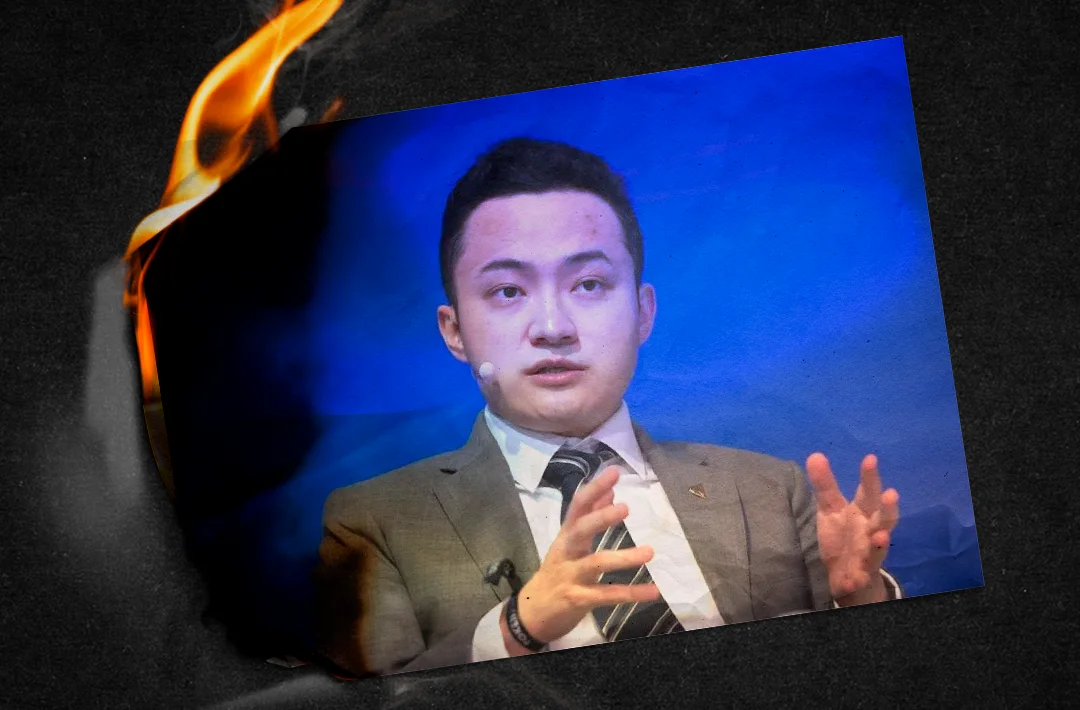
Justin Sun has been blacklisted by WLFI
Critics say that such unilateral actions undermine the principles of decentralization
05.09.2025 - 13:45
417
3 min
0
Key points:
- World Liberty Financial has frozen 540 million tokens in Justin Sun’s wallet.
- Sun claims that the freeze violates investors’ rights and undermines confidence in the project.
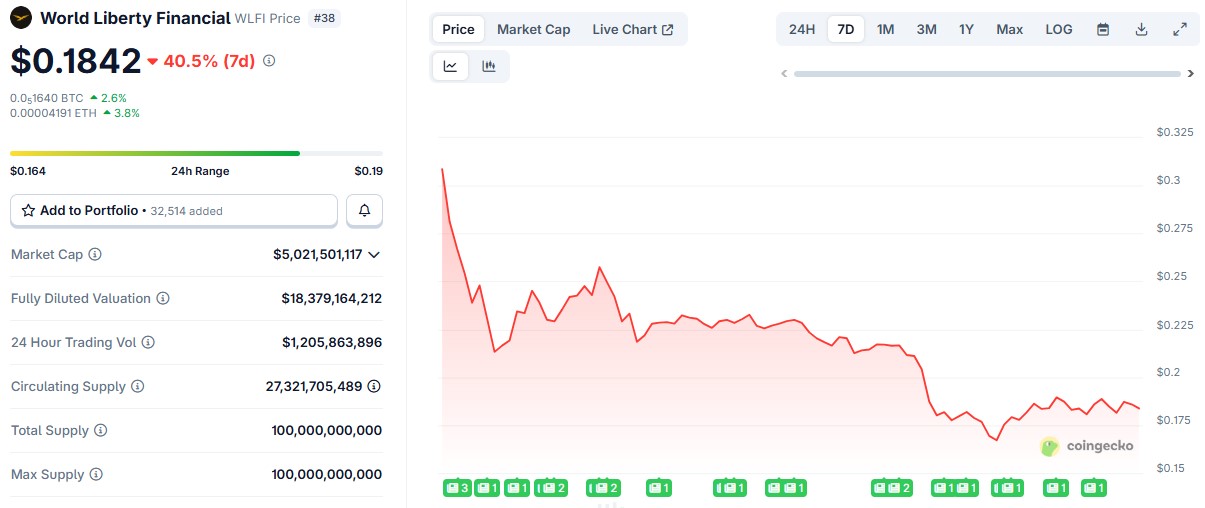
- The price of WLFI has fallen from $0,46 at launch to $0,18.
The De-Fi project World Liberty Financial, supported by Donald Trump’s family, blacklisted Tron founder Justin Sun’s address, freezing 540 million tokens in his wallet. This happened after about 50 million WLFI tokens were transferred to the HTX exchange.
Justin Sun is WLFI’s largest investor. He invested $75 million and accumulated 3 billion tokens, which were valued at nearly $900 million last week. At the end of 2024, he became a consultant for World Liberty Financial. At the launch of the project, he already had 600 million tokens unlocked, but Sun emphasized that he did not intend to sell them.
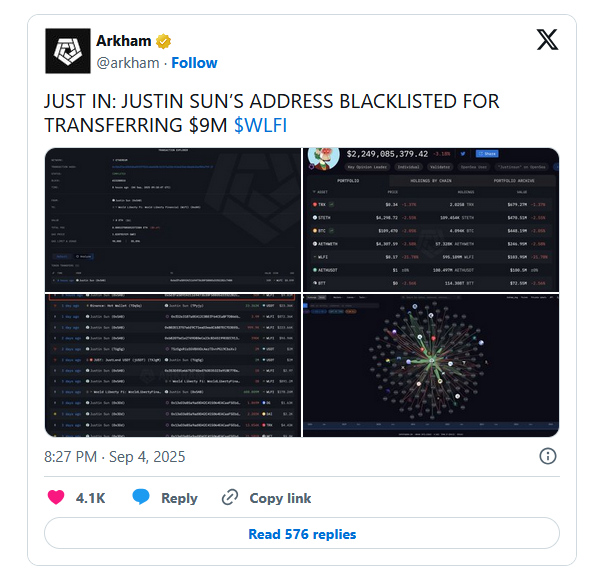
According to the founder of Tron, the transactions on the HTX exchange were nothing more than small trial deposits. He emphasized that these transactions did not involve any purchases or sales that could significantly affect the market.
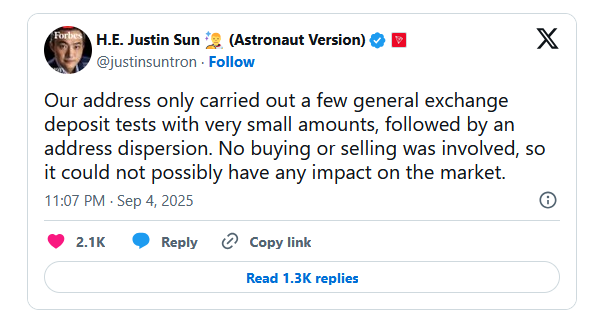
In response to the address being blocked, Sun called on the WLFI team to immediately unfreeze his tokens and respect the rights of all investors. He expressed concern that unilateral freezing could undermine confidence in the project and undermine the community’s trust in it:
“I believe that a truly great financial brand must be built on fairness, transparency, and trust—not on unilateral actions that freeze investor assets.”
Market volatility and governance issues
According to CoinGecko, the WLFI token started at $0,46 on September 1, but fell to $0,25 within two hours due to strong selling pressure on major exchanges, including Binance, OKX, and Gate. It has continued to fall since then: at the time of publication, its price is $0,18.
The controversy surrounding Sun’s wallet has heightened concerns about WLFI’s governance structure. Despite the project’s positioning as decentralized, the ability of the project team to blacklist wallets and freeze investors’ tokens raises serious questions.
Critics argue that such unilateral actions undermine the very principles of decentralization that projects such as WLFI are supposed to adhere to.

Useful material?
 Telegram
  Twitter
 Incidents
In 104 minutes, the attacker emptied 1,404 addresses before validators halted the network and froze almost all of the loot.
Oct 19, 2026
Incidents
Developers warned of potential risks to bridges across the ecosystem and asked exchanges for assistance.
Jun 22, 2026
Incidents
The defendant helped move funds stolen through investment scams and earned at least $4 million for his role in the operation.
Jun 10, 2026
Incidents
The company is linking the incident to a compromised private key on a service wallet, rather than a smart contract exploit
May 22, 2026
Incidents
Following the incident, the project temporarily halted trading operations and node activity.
May 15, 2026
Incidents
The user spent weeks unsuccessfully trying to guess the password until Claude helped find an old wallet backup file
May 14, 2026
Cryptocurrency rates
-

Bitcoin
$84 552
BTC
+1.93%
-

Ethereum
$2 488.48
ETH
+1.31%
-

BNB Smart Chain
$749.16
BSC
+0.98%
-

Ripple
$1.42
XRP
+1.04%
-

TRON
$0.330998
TRX
-0.04%
-

Zcash
$1 346.06
ZEC
+5.85%
-

Dogecoin
$0.082399
DOGE
+0.44%
-

Cardano
$0.218269
ADA
+2.11%
-

Stellar XLM
$0.184461
XLM
+2.83%
-

Bitcoin Cash
$288.23
BCH
+1.8%