

KuCoin Exchange Suspected of Money Laundering. Full Investigation
The Thai branch of the KuCoin cryptocurrency exchange was found to be linked to a criminal network from Cambodia that receives illegal income from fraud, drug trafficking, and human trafficking
22.09.2025
1279
6 min
0
In the near future, the position of the KuCoin cryptocurrency exchange may be seriously shaken, as the platform has been implicated in a scheme to launder assets obtained through fraud. GetBlock AML Research reveals the details of this high-profile case.
A network of “dirty” money from Cambodia, which investigators claim was covered up by former Thai Prime Minister Thaksin Shinawatra, has built a sophisticated crypto infrastructure to move hundreds of millions of dollars. It includes stakes in a bitcoin mining business in Laos and ties to the KuCoin crypto exchange.
KuCoin, founded by two Chinese nationals, was charged last year by the US Attorney’s Office for the Southern District of New York. The exchange was accused of failing to implement the necessary anti-money laundering measures and processing over $5 billion in suspicious transactions. The exchange’s legal entity pleaded guilty and agreed to pay over $297 million in forfeitures and fines. The two founders of KuCoin — Chun Gang and Ke Tang — entered into a two-year deferred prosecution agreement (meaning that in exchange for fulfilling a number of conditions, criminal charges will not be brought immediately), agreed to return approximately $2,7 million each, and were removed from management roles at the exchange.
After that, KuCoin changed its strategy and shifted part of its operations to Thailand: in June, the company announced the launch of a Thai crypto exchange (KuCoin TH). At the same time, KuCoin established a business relationship with Benjamin Mauerberger, a South African figure who reportedly has close ties to the Cambodian network. This group is credited with purchasing a $60 million Bombardier Global G7500 private jet for Thaksin and managing a scheme to move billions of dollars of “dirty” money out of Cambodia, a country long known as a hub for Chinese gambling networks. It is also a center for scam operations (fraudulent call centers), drug and human trafficking.
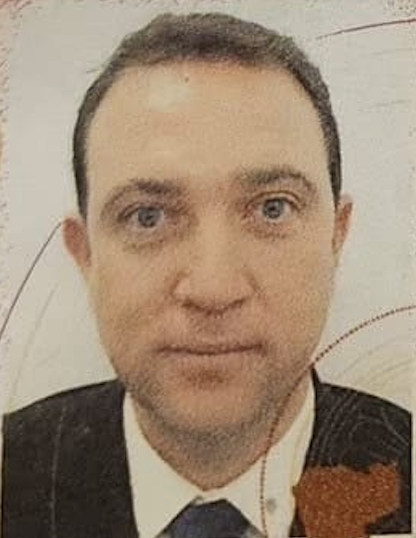
Benjamin Mauerberger
Through shell companies in Hong Kong, Singapore, and the Seychelles, KuCoin secretly accumulated control over 45% of the shares of Thai broker-dealer Finansia X PCL, making the cryptocurrency company the largest shareholder in the organization. This is according to registration documents, corporate correspondence, and sources familiar with the details of the deal. The controlling stake was accumulated through purchases from Mauerberger’s wife, through BIC Bank (described as his secret partner in Cambodia), and through a fund managed by Capital Asia Investments, a Singapore-based company run by Mauerberger himself. One of KuCoin’s executives, Li Hang, is also listed as the CEO of the Seychelles-based firm Beteverse Ltd., which recently bought a 10% stake in Finansia from Cattaliya Beevor, Mauerberger’s wife. All of these points point to a deliberate and covert attempt to accumulate significant stakes in Thailand’s traditional financial structure.
Why it matters: Thai public brokerage firms act as a “bridge” between the traditional banking system and the securities market. If a major player linked to cryptocurrency and individuals accused of money laundering controls such an institution, it provides an opportunity to move large sums between the banking sector and the crypto market without proper oversight — essentially converting “dirty” money into visible and seemingly legal assets.
Mauerberger has long been on the radar of US law enforcement agencies, but according to available information, he avoids countries with extradition agreements with the United States and usually operates from Thailand, Cambodia, and Dubai. The US wants to bring him to justice, partly because the American authorities are not interested in Thailand becoming a satellite of China, as they believe has happened with Cambodia. At the same time, the US Treasury Department recently announced sanctions against scam center networks in Cambodia: it is estimated that scam operations cost Americans approximately $10 billion last year alone.
Mauerberger and his patron, Yim Leak, also have interests in the mining business in Laos. Yim Leak has ties to the Cambodian elite (his sister is married to the son of former Cambodian Prime Minister Hun Sen). The bitcoin mining company in Laos is registered as a joint venture between Thailand’s Green Tech Ventures (a firm allegedly linked to Mauerberger through his wife’s shares) and Laos’ AIF Group, which in turn was the founder of BIC Bank in Cambodia.
Having its own mining business gives the criminal network an additional tool: stolen or otherwise questionable cryptocurrency can be converted into “freshly mined” coins, making it easier to disguise the origin of the funds. Theoretically, if you receive stolen coins and then “mix” them with coins mined on your own mining rig, it makes it more difficult to trace the origin of the funds, because transactions are visible to everyone on the blockchain, and the direct transfer of stolen coins may arouse suspicion. After “laundering” in this way, the funds can be uploaded to the KuCoin exchange and then sent to the banking system — this is effectively the last step before turning “dirty” money into legal cash or assets.
It also became known that people from Mauerberger’s circle and his partners invested money in real assets: in particular, there were reports of the purchase of a luxury apartment in New York worth $20 million, registered to Cattaliya Beevor, as well as a Gulfstream G650 private jet and other valuable assets controlled by the couple. At the same time, the Monetary Authority of Singapore began investigating the flow of funds that passed through Singaporean structures associated with them; The local press also reported that Capital Asia Investments, a Singaporean fund linked to Mauerberger, traded Thai stocks worth approximately 658 million Singapore dollars, some of which may have been linked to Yim Leak. These financial transactions attracted the attention of regulators and investigators in the US, Singapore, and Thailand.

Cattaliya Beevor’s $20 million apartment in New York
In Thailand, the situation has had unexpected political consequences: Thaksin Shinawatra was arrested last week on corruption charges, and his daughter was removed from the post of prime minister by the constitutional court, which drew additional attention to Mauerberger — his name came under scrutiny from journalists and law enforcement agencies. It is believed that Thaksin used Mauerberger’s services: Mauerberger bought expensive items for the former prime minister, including a Bombardier Global G7500 jet and a Rolls-Royce, and in return provided “protection” from the Cambodian network, which could help cover up the movement of funds. A large fleet of vehicles linked to Mauerberger was discovered: four Rolls-Royces, one Lamborghini, one Range Rover, two Porsches, three Lexuses, and several Toyota Land Cruisers and Alphards — all illustrating the level of luxury and opportunities for travel and status display.
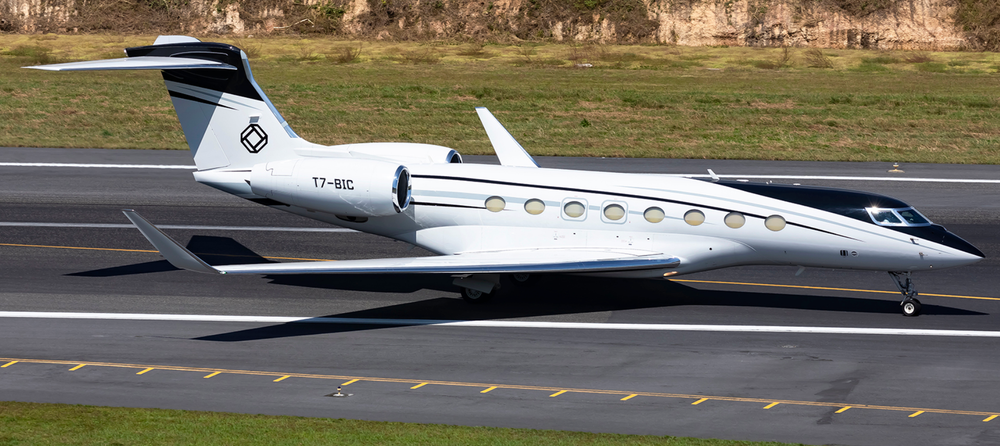
Benjamin Mauerberger’s Gulfstream G650
Journalists also discovered that the Cambodian network had secretly bought shares in the Thai energy company Bangchak, which could have been beneficial to Thaksin’s attempts to expand joint oil exploration projects with Cambodia in the Gulf of Siam — but these plans were also not implemented due to a change in political course.
The latest significant development was the removal of the name of Vorapak Tanyawong, a former banker and now Thailand’s deputy finance minister, from the website of BIC Group, an organization linked to the network’s interests. Vorapak had previously appeared as an advisor to BIC Bank, founded by Yim Leak, but after the money laundering network was exposed, his name disappeared from the bank’s website, which may indicate attempts to distance himself from controversial connections.
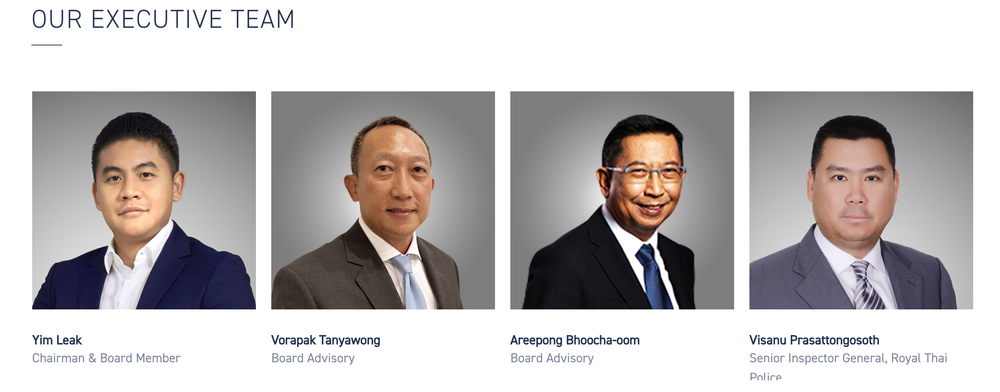
Vorapak Tanyawong’s picture on the BIC Group bank website

Useful material?
 Telegram
  Twitter
 Research
One and the same cryptocurrency address received two completely opposite assessments from different analytics systems: from an ordinary gambling service to an extremely severe criminal offense. This story has become the starting point for a broader conversation about what the scientific standards of blockchain analysis should look like — and why errors in systems like these can shape the fates of real people.
Jul 1, 2026
Research
The blockchain has helped uncover the ties between cryptocurrency fundraising campaigns, exchangers in Syria, and intermediaries in several countries around the world. A telltale pattern has emerged in which the same addresses were used across multiple donation drives at once
Jun 24, 2026
Research
Four Iranian cryptocurrency exchanges accounted for roughly 78% of all digital asset volume tied to the country in 2025. They have now become the focal point of the largest U.S. sanctions campaign against Iran's cryptocurrency infrastructure.
Jun 5, 2026
Research
A financial system is already up and running on public blockchains, with loans, analogues of U.S. Treasuries, and automated capital markets. More than $551 billion has flowed through DeFi protocols — but most of that activity has nothing to do with the real economy and everything to do with the speculative build-up of risk.
May 29, 2026
Research
Around 97% of Chinese suppliers of chemicals used to make fentanyl accept payment in cryptocurrency. The volume of such transactions continues to grow alongside the global market for synthetic drugs
May 22, 2026
Research
For the first time, the new law makes blockchain analytics an officially mandatory tool of financial oversight in the United States. Authorities will also gain the power to restrict transactions with foreign crypto services tied to money-laundering risks.
May 20, 2026
Cryptocurrency rates
-

Bitcoin
$81 452
BTC
-0.77%
-

Ethereum
$2 417.1
ETH
-0.66%
-

BNB Smart Chain
$719.3
BSC
-1.12%
-

Ripple
$1.42
XRP
+1.04%
-

TRON
$0.335114
TRX
+0.36%
-

Zcash
$1 145.36
ZEC
-6.7%
-

Dogecoin
$0.079982
DOGE
-1.5%
-

Cardano
$0.218269
ADA
+2.11%
-

Stellar XLM
$0.184461
XLM
+2.83%
-

Bitcoin Cash
$276.63
BCH
-0.4%