


Operation Serengeti 2.0: Interpol against crypto criminals in Africa
A large-scale investigation on the African continent has led to the arrest of more than 1000 people for participating in criminal and fraudulent schemes involving cryptocurrencies

27.08.2025
414
3 min
0
Interpol announced the results of Operation Serengeti 2.0, a large-scale campaign against cybercrime across Africa, which demonstrated how large-scale, coordinated action can dismantle illegal activities. During the operation, 1209 people were arrested, more than 11 000 malicious infrastructures were eliminated, and nearly $100 million was recovered. GetBlock AML Research has published a brief overview of the operation.
The operation, which ran from June to August 2025, brought together investigators from 18 African countries and the UK to combat ransomware, online fraud, business email compromise, and other major threats. These types of crimes were identified as key risks in Interpol’s report “Cyber Threat Assessment in Africa.”
As part of the operation, international agencies, together with partners from the private sector, took massive action to counter these risks. Authorities seized fraudulent infrastructure, shut down illegal mining centers, and dismantled fraudulent networks operating in several countries simultaneously.
Interpol investigators used blockchain intelligence to expand the scope of the Serengeti 2.0 operation and strike faster at cybercriminal infrastructure. In Ghana, investigators followed leads linked to the Bl00dy group, an offshoot of the notorious Conti gang, which has attacked software in the education, healthcare, and government sectors around the world. Analysis showed that part of Bl00dy’s money laundering infrastructure was actively operating in the country, indicating the presence of an affiliate or operator on the ground.
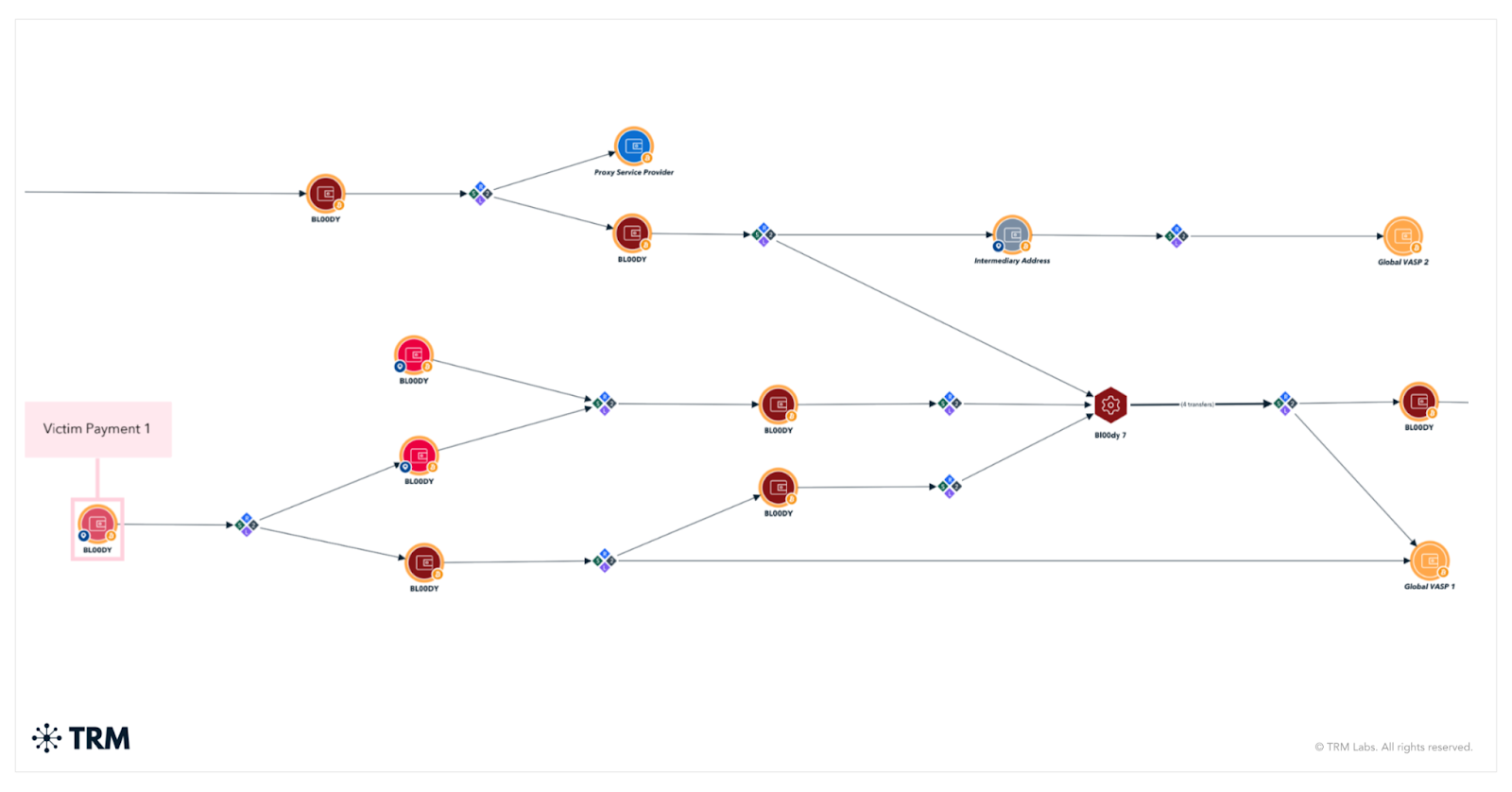
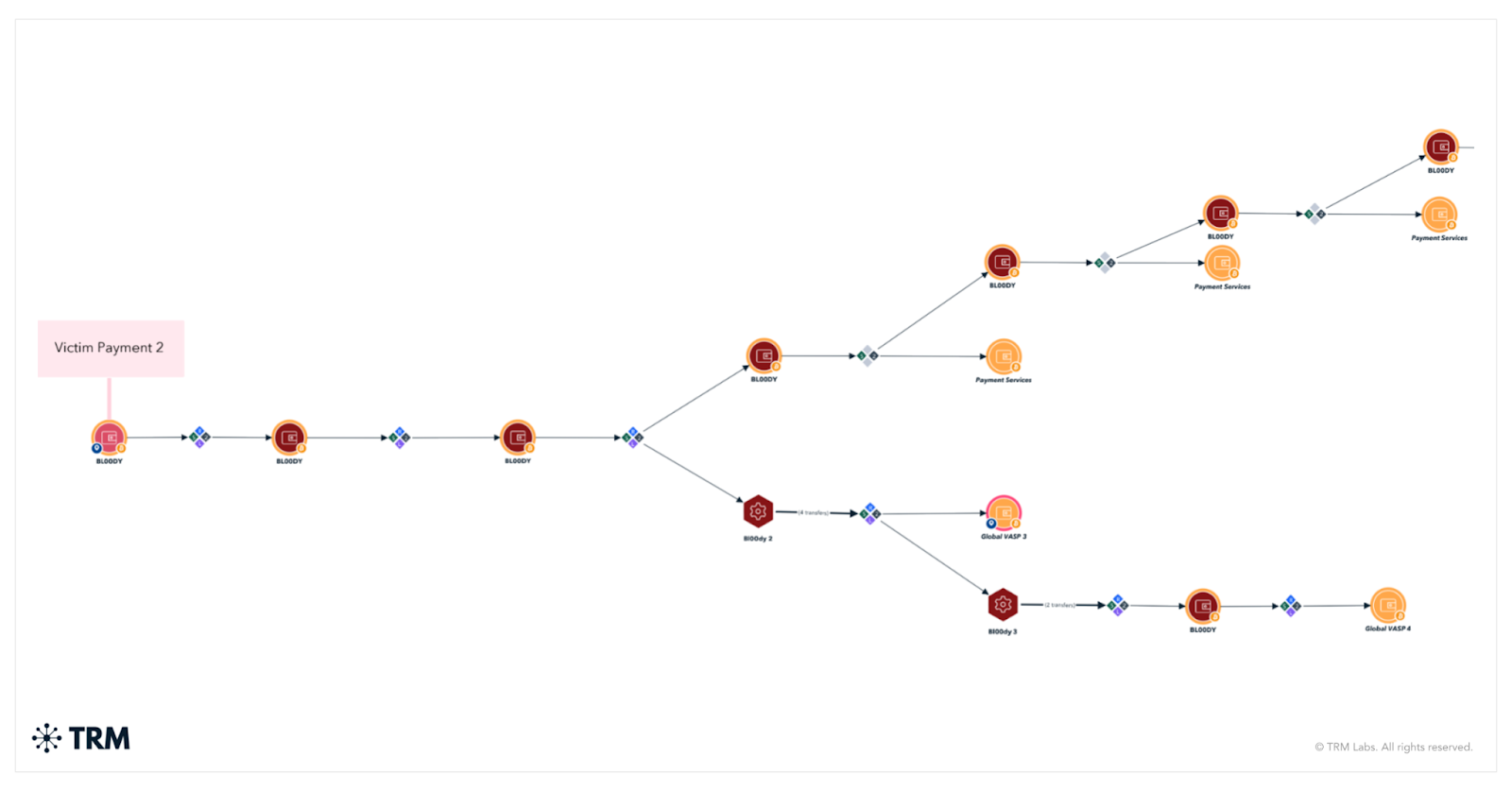
Cryptocurrency laundering graph by the Bl00dy group
In the Seychelles, investigators used data on the RansomHub group, the new name for Knight ransomware, which has been rapidly expanding its operations since 2024.
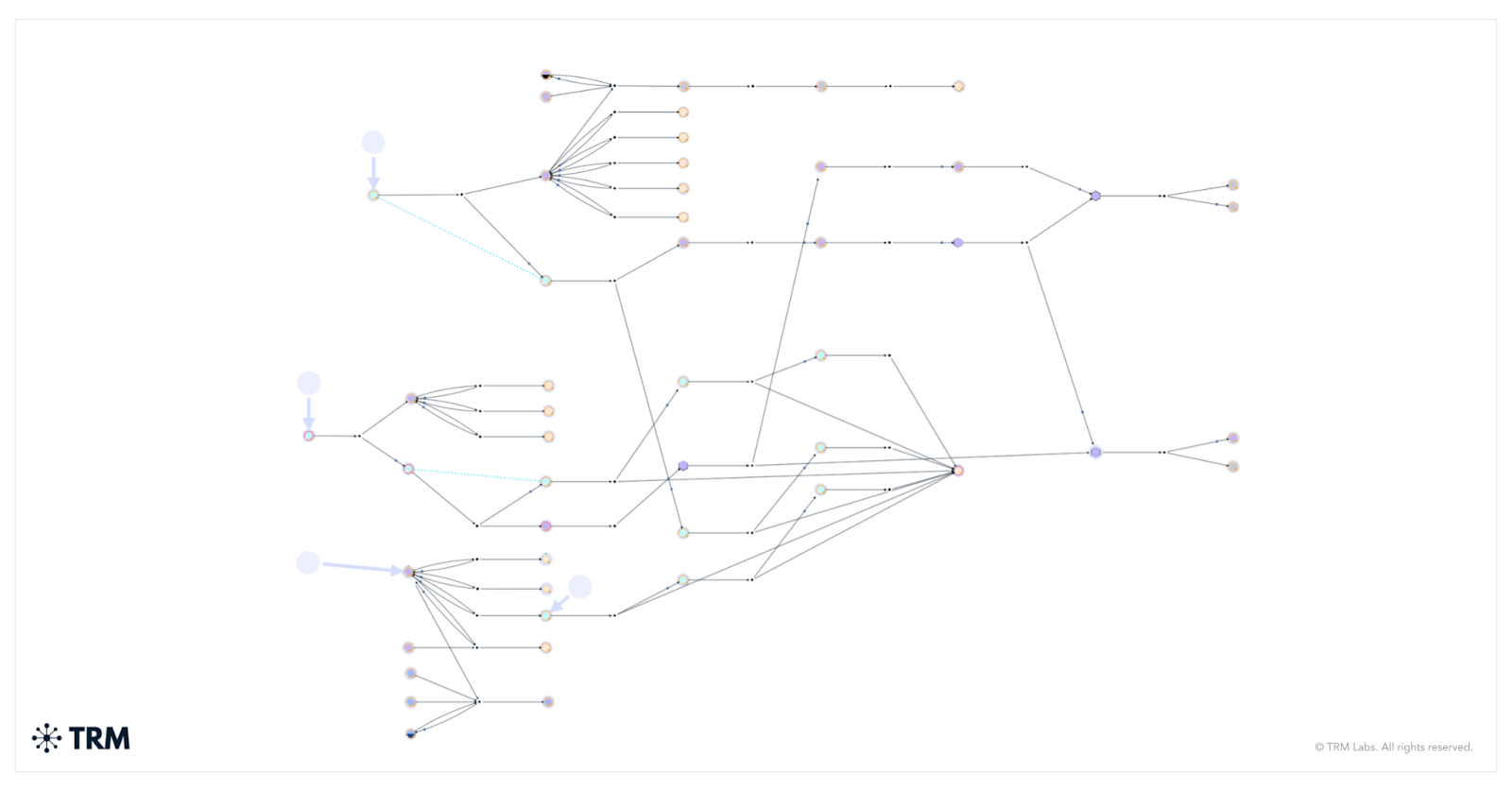
RansomHub group’s on-chain activity
The results of the operation were significant. In Angola, authorities shut down 25 illegal cryptocurrency mining centers run by foreign nationals, seizing equipment and power stations worth more than $37 million. In Zambia, investigators cracked down on a major investment scam that victimized approximately 65 000 people, who lost a total of more than $300 million.

Confiscated fake passports in Zambia
In Côte d'Ivoire, authorities dismantled an international “inheritance” fraud scheme that originated in Germany, arrested the ringleader, and seized cars, cash, and luxury items. Across Africa, investigators confiscated fake passports, shut down fraud centers, and dismantled transnational criminal networks that had victimized nearly 88 000 people.

Useful material?
 Telegram
  Twitter
 Research
One and the same cryptocurrency address received two completely opposite assessments from different analytics systems: from an ordinary gambling service to an extremely severe criminal offense. This story has become the starting point for a broader conversation about what the scientific standards of blockchain analysis should look like — and why errors in systems like these can shape the fates of real people.
Jul 1, 2026
Research
The blockchain has helped uncover the ties between cryptocurrency fundraising campaigns, exchangers in Syria, and intermediaries in several countries around the world. A telltale pattern has emerged in which the same addresses were used across multiple donation drives at once
Jun 24, 2026
Research
Four Iranian cryptocurrency exchanges accounted for roughly 78% of all digital asset volume tied to the country in 2025. They have now become the focal point of the largest U.S. sanctions campaign against Iran's cryptocurrency infrastructure.
Jun 5, 2026
Research
A financial system is already up and running on public blockchains, with loans, analogues of U.S. Treasuries, and automated capital markets. More than $551 billion has flowed through DeFi protocols — but most of that activity has nothing to do with the real economy and everything to do with the speculative build-up of risk.
May 29, 2026
Research
Around 97% of Chinese suppliers of chemicals used to make fentanyl accept payment in cryptocurrency. The volume of such transactions continues to grow alongside the global market for synthetic drugs
May 22, 2026
Research
For the first time, the new law makes blockchain analytics an officially mandatory tool of financial oversight in the United States. Authorities will also gain the power to restrict transactions with foreign crypto services tied to money-laundering risks.
May 20, 2026
Cryptocurrency rates
-

Bitcoin
$84 486
BTC
-0.2%
-

Ethereum
$2 666.11
ETH
-1.23%
-

BNB Smart Chain
$766.6
BSC
-0.43%
-

Ripple
$1.42
XRP
+1.04%
-

TRON
$0.334683
TRX
-0.08%
-

Zcash
$1 289.57
ZEC
-3.65%
-

Dogecoin
$0.092382
DOGE
-1.78%
-

Cardano
$0.218269
ADA
+2.11%
-

Stellar XLM
$0.184461
XLM
+2.83%
-

Bitcoin Cash
$309.03
BCH
+0.03%