


Under the mask of security: how not to lose cryptocurrency during “risk checking”
Scammers have started posing as security experts. Now they convince potential victims that their cryptocurrency addresses are compromised by phishing signatures

04.06.2025
941
3 min
0
A new, sophisticated way to steal cryptocurrencies has surfaced online and is being promoted under the guise of “risk checking.” GetBlock AML Research explains the details of yet another fraudulent scam.
Scam as a service
Information about the Signature Checker service (http://signature[.]land), which supposedly can be used to check the security of one’s crypto wallet, has been circulating on social networks. The tool is designed to check the wallet for phishing signatures, with the help of which attackers can gain access to the wallet.
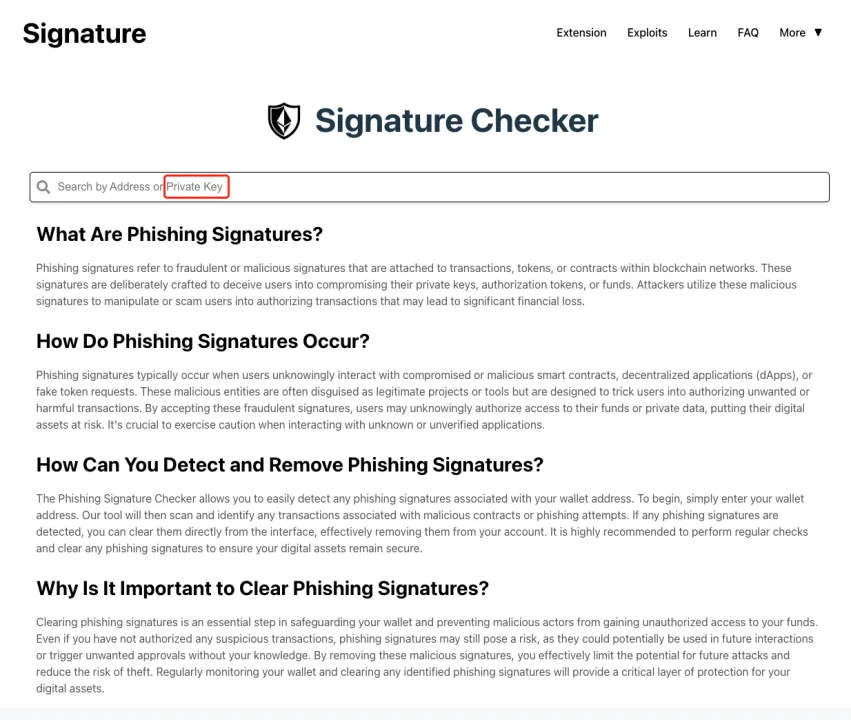
Signature Checker home page
The essence of the scam was that to clean the wallet from phishing signatures, it was necessary to enter into a special field a private key of the wallet, which should never be transferred to other persons. The service was designed in the style of another popular security checker — Revoke.
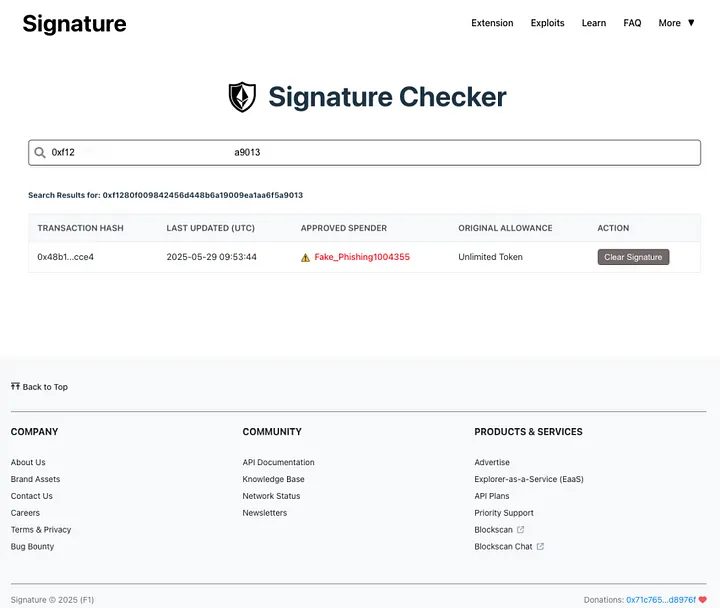
Signature Checker’s warning about the dangers of phishing
If you enter any address in the Signature Checker field, a phishing warning will be displayed. This is how scammers encourage potential victims to use their service to prevent hacking and enter a private wallet key. Once the private key is entered, it is transmitted to the attackers via email.
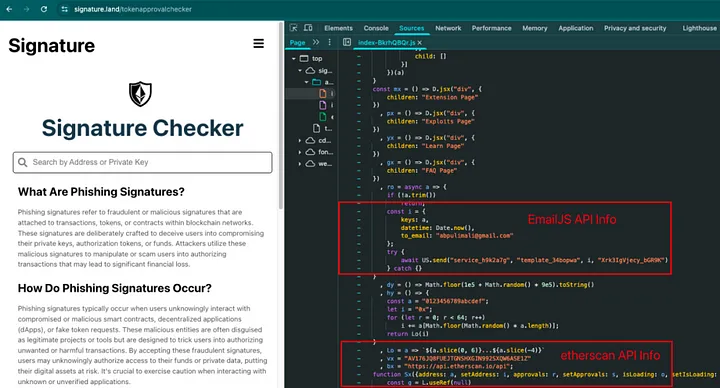
The Signature Checker code that transmits the data to the email
How not to fall for a new type of scam
Attackers often pose as security experts. One of the accounts used to spread Signature Checker was an X account that published information about cryptocurrency security from 2024. It had more than 70 000 users subscribed to it. At this point, the account has been deleted.
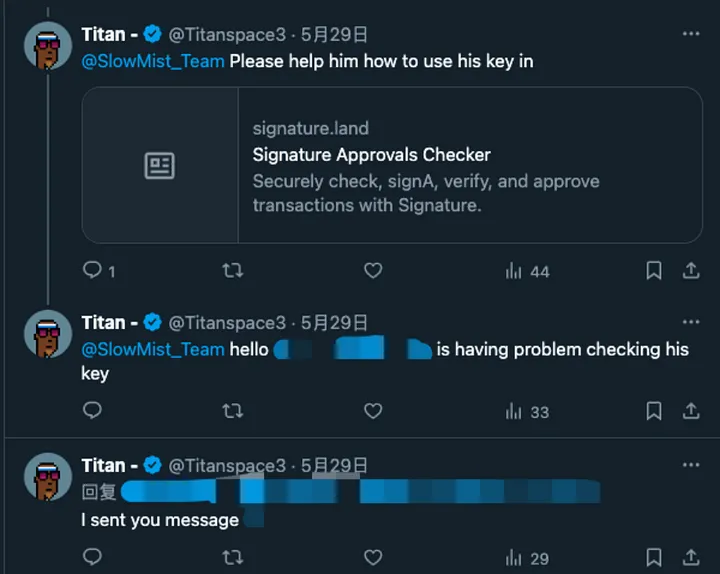
An attempt to convince users to use Signature Checker
From this account, potential victims received a warning that their address was at risk. Data from the malicious Signature Checker service was cited as evidence. The fake security expert distributed detailed instructions on how to use Signature Checker to clear phishing signatures from your wallet. He was even willing to provide additional advice on Telegram or Discord.

Offer of “help” from the attacker

Useful material?
 Telegram
  Twitter
 Research
One and the same cryptocurrency address received two completely opposite assessments from different analytics systems: from an ordinary gambling service to an extremely severe criminal offense. This story has become the starting point for a broader conversation about what the scientific standards of blockchain analysis should look like — and why errors in systems like these can shape the fates of real people.
Jul 1, 2026
Research
The blockchain has helped uncover the ties between cryptocurrency fundraising campaigns, exchangers in Syria, and intermediaries in several countries around the world. A telltale pattern has emerged in which the same addresses were used across multiple donation drives at once
Jun 24, 2026
Research
Four Iranian cryptocurrency exchanges accounted for roughly 78% of all digital asset volume tied to the country in 2025. They have now become the focal point of the largest U.S. sanctions campaign against Iran's cryptocurrency infrastructure.
Jun 5, 2026
Research
A financial system is already up and running on public blockchains, with loans, analogues of U.S. Treasuries, and automated capital markets. More than $551 billion has flowed through DeFi protocols — but most of that activity has nothing to do with the real economy and everything to do with the speculative build-up of risk.
May 29, 2026
Research
Around 97% of Chinese suppliers of chemicals used to make fentanyl accept payment in cryptocurrency. The volume of such transactions continues to grow alongside the global market for synthetic drugs
May 22, 2026
Research
For the first time, the new law makes blockchain analytics an officially mandatory tool of financial oversight in the United States. Authorities will also gain the power to restrict transactions with foreign crypto services tied to money-laundering risks.
May 20, 2026
Cryptocurrency rates
-

Bitcoin
$84 636
BTC
-1.56%
-

Ethereum
$2 678.59
ETH
-1.88%
-

BNB Smart Chain
$766.18
BSC
-1.44%
-

Ripple
$1.42
XRP
+1.04%
-

TRON
$0.335161
TRX
+0.31%
-

Zcash
$1 314.49
ZEC
-5.02%
-

Dogecoin
$0.092973
DOGE
-3.19%
-

Cardano
$0.218269
ADA
+2.11%
-

Stellar XLM
$0.184461
XLM
+2.83%
-

Bitcoin Cash
$310.29
BCH
-1.35%