

What really happened to the TradeOgre exchange? Where did the $40 million in assets go?
Canadian law enforcement agencies discovered that the cryptocurrency exchange was operating as a large laundry for laundering huge sums of money and concealing their real origin

29.09.2025
753
3 min
0
Last week, the Royal Canadian Mounted Police (RCMP) announced the largest seizure of cryptocurrency in the country’s history. Law enforcement shut down the offshore exchange TradeOgre and seized more than $40 million (56 million Canadian dollars) in digital assets. Using blockchain analysis and digital forensics technologies, investigators were able to track suspicious transfers and recover wallets containing criminal proceeds. What was once considered “unrecoverable” has now become evidence and potential compensation. GetBlock AML Research has published a brief timeline of the TradeOgre exchange shutdown.
For years, TradeOgre operated in the shadows — unregistered, with anonymous trading and no user verification. This made it a magnet for illegal operations. According to the investigation, most of the transfers through this platform were of criminal origin. Analysis showed that millions of dollars were moving between TradeOgre and dark web markets, ransomware programs, stolen funds, fraud schemes, transaction concealment services, and other risky platforms. The exchange effectively became a hub where criminal money was mixed and laundered into “pure” form.
The story began in June 2024, when Europol shared information about suspicious activity with Canadian authorities. After that, the RCMP’s money laundering investigation team, supported by C Division and NC3, studied the exchange’s infrastructure and transactions in detail. Using blockchain analysis, investigators examined wallets controlled by the platform, tracked the movement of funds between different cryptocurrencies, and identified points through which money was withdrawn to services with low levels of control. Although TradeOgre was particularly popular with fans of private coins such as Monero, large volumes of transparent assets such as bitcoin also passed through it. It was these transactions that formed the basis of the evidence.
RCMP analysts examined known money laundering schemes: transferring funds between different types of coins, breaking large sums into smaller pieces, using mixers to conceal the source, and rapid transfer cycles through risky services to cover their tracks. By comparing data on deposits and withdrawals, transaction times, and recipients, investigators directly linked proceeds from fraud and organized crime to wallets controlled by TradeOgre. This allowed them to obtain court orders to seize funds and regain access to wallets containing criminal assets. This moment set a precedent, showing that even carefully hidden cryptocurrencies can be brought under the control of law enforcement agencies.
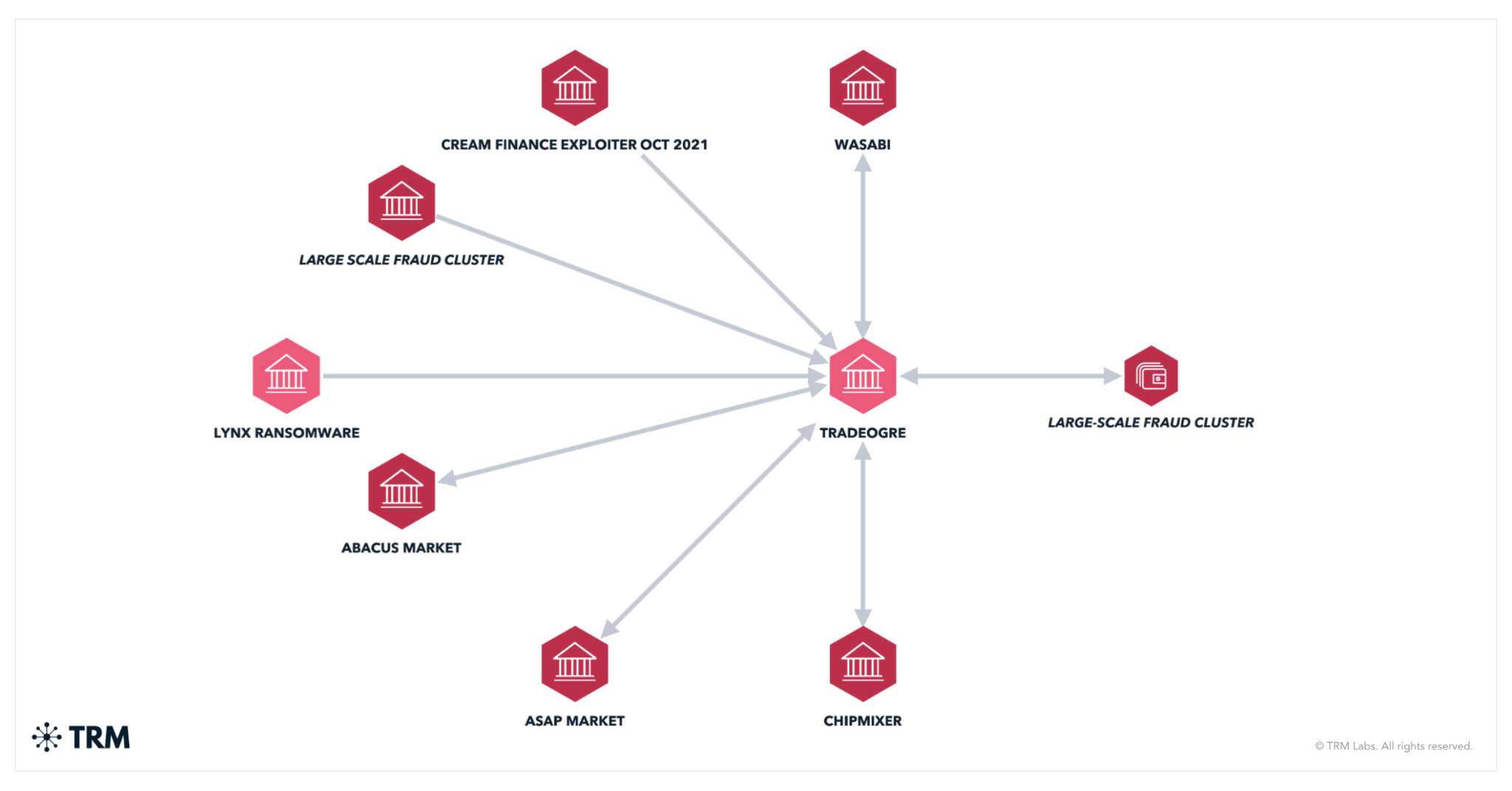
Graph of TradeOgre’s connections to criminal sources
If you visit the TradeOgre website, you will see a confiscation notice published by the RCMP. No arrests have been made yet, but the investigation is ongoing: records and transaction histories are being examined. Charges are expected in the near future as the identities of the exchange operators and associated wallets are established. The focus is now shifting from seizure to identification of the perpetrators, confiscation, and prosecution.
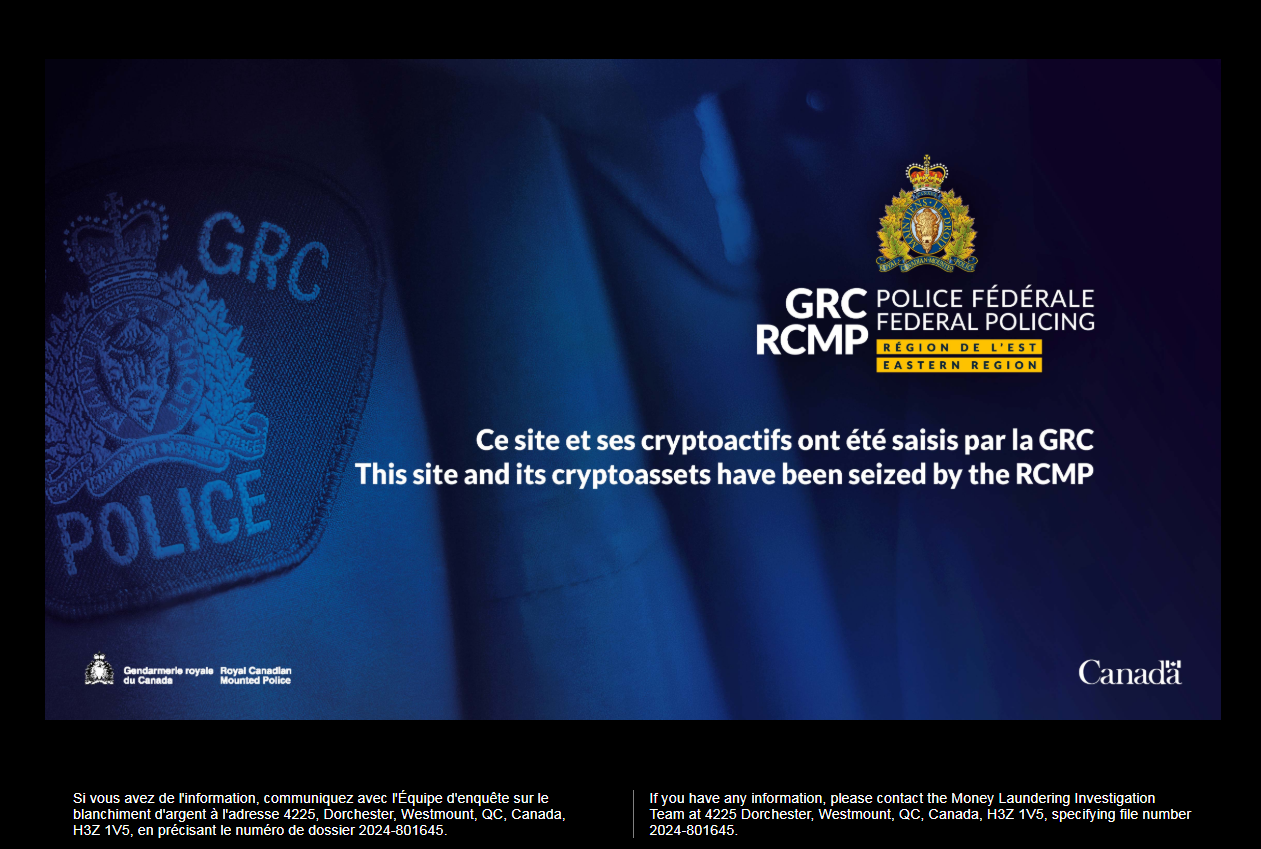
RCMP notice on the TradeOgre website
The significance of this case extends far beyond a single exchange. For crypto platforms, the message is clear: registration and strict anti-money laundering rules are not a choice, but an obligation. For criminals, the illusion that anonymity guarantees impunity has been shattered once again: even systems built on secrecy leave traces in the blockchain. And for regulators, this case demonstrates the importance of international cooperation: the exchange of intelligence from Europol and the work of the Canadian police together have achieved a historic result.

Useful material?
 Telegram
  Twitter
 Research
One and the same cryptocurrency address received two completely opposite assessments from different analytics systems: from an ordinary gambling service to an extremely severe criminal offense. This story has become the starting point for a broader conversation about what the scientific standards of blockchain analysis should look like — and why errors in systems like these can shape the fates of real people.
Jul 1, 2026
Research
The blockchain has helped uncover the ties between cryptocurrency fundraising campaigns, exchangers in Syria, and intermediaries in several countries around the world. A telltale pattern has emerged in which the same addresses were used across multiple donation drives at once
Jun 24, 2026
Research
Four Iranian cryptocurrency exchanges accounted for roughly 78% of all digital asset volume tied to the country in 2025. They have now become the focal point of the largest U.S. sanctions campaign against Iran's cryptocurrency infrastructure.
Jun 5, 2026
Research
A financial system is already up and running on public blockchains, with loans, analogues of U.S. Treasuries, and automated capital markets. More than $551 billion has flowed through DeFi protocols — but most of that activity has nothing to do with the real economy and everything to do with the speculative build-up of risk.
May 29, 2026
Research
Around 97% of Chinese suppliers of chemicals used to make fentanyl accept payment in cryptocurrency. The volume of such transactions continues to grow alongside the global market for synthetic drugs
May 22, 2026
Research
For the first time, the new law makes blockchain analytics an officially mandatory tool of financial oversight in the United States. Authorities will also gain the power to restrict transactions with foreign crypto services tied to money-laundering risks.
May 20, 2026
Cryptocurrency rates
-

Bitcoin
$84 192
BTC
+1.31%
-

Ethereum
$2 474.04
ETH
+0.74%
-

BNB Smart Chain
$747.96
BSC
+0.65%
-

Ripple
$1.42
XRP
+1.04%
-

TRON
$0.330407
TRX
-0.17%
-

Zcash
$1 324.19
ZEC
+3.03%
-

Dogecoin
$0.081954
DOGE
-0.33%
-

Cardano
$0.218269
ADA
+2.11%
-

Stellar XLM
$0.184461
XLM
+2.83%
-

Bitcoin Cash
$286.96
BCH
+0.84%