

Биржа BitMEX запустила систему подтверждения обязательств перед пользователями
Система под названием Proof-of-Liability работает с использованием алгоритма Дерево Меркла
02.12.2022 - 15:45
916
4 мин
0
Что произошло? Криптовалютная биржа BitMEX представила собственную систему проверки обязательств перед пользователями платформы под названием Proof-of-Liability (PoL). Данные системы будут обновляться два раза в неделю, по вторникам и четвергам. Об этом представители биржи сообщили в Twitter.
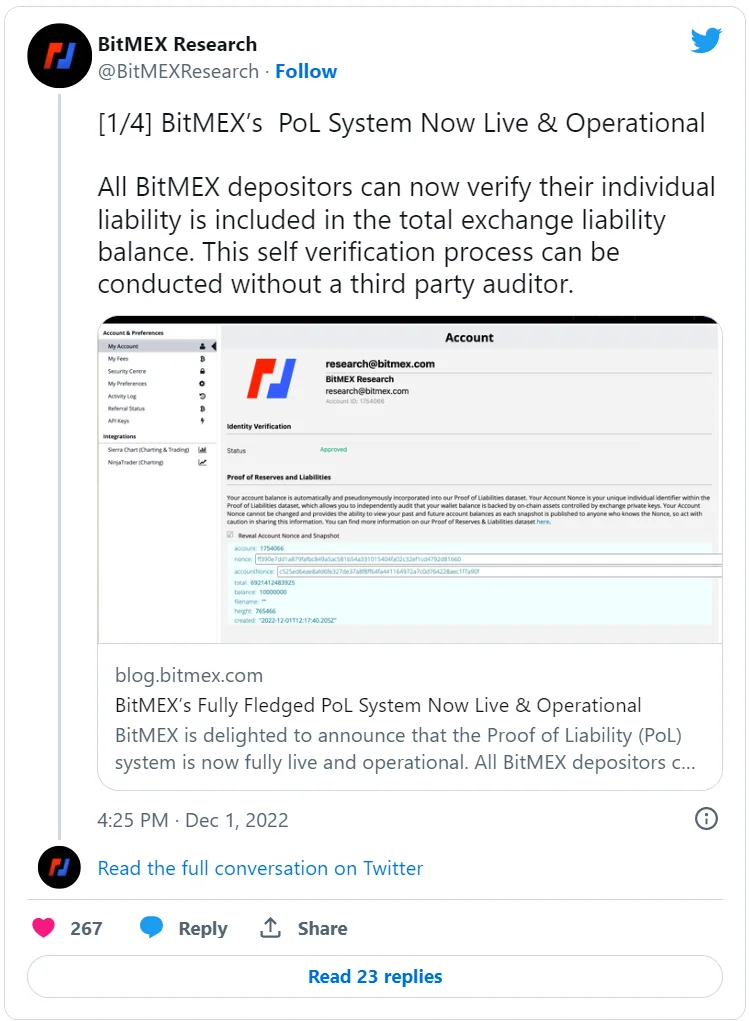
Что еще известно? С помощью системы PoL все вкладчики BitMEX могут проверить, включены ли обязательства перед ними в общий баланс обязательств биржи. Этот процесс самопроверки может быть проведен без привлечения стороннего аудитора. Уникальные номера для проверки пользователи могут найти на странице своего аккаунта после авторизации.
Представители BitMEX подчеркнули, что внедрение системы «не является панической реакцией на крах FTX». Это первая инновационная система, в которой каждый пользователь может убедиться в том, что его баланс включен в общую сумму, без нарушения конфиденциальности клиента, добавили в компании.
Конфиденциальность достигается за счет того, что при полной публикации дерева Меркла балансы пользователей случайным образом распределяются по нескольким его листам. С помощью индивидуального одноразового идентификатора каждый пользователь может определить, какие листья относятся к его балансу.
Деревья Меркла организуют данные (например, транзакции в смарт-контрактах или переводы между аккаунтами) в хэши, расположенные в виде серии родительских и дочерних узлов, что теоретически позволяет проверять актуальность резервов в криптовалютных сервисах.
Ранее инициатива по проведению аудита резервов для криптобирж была предложена главой Binance Чанпэном Чжао для повышения прозрачности отрасли. 25 ноября Binance запустила систему доказательства резервов и привлекла в качестве стороннего аудитора для проверки своей модели компанию Mazars, ранее работавшую с экс-президентом США Дональдом Трампом.
Также свой сертификат проверки резервов запустила криптобиржа OKX. А биржа Huobi опубликовала отчет о составе резервов. Суммарно на горячих и холодных кошельках платформы на 15 ноября хранились цифровые активы стоимостью около 3,5 млрд долларов.
О том, какие платформы подтвердили состоятельность после краха FTX, можно узнать в статье GetBlock Magazine.

Полезный материал?
Происшествия
За 104 минуты злоумышленник опустошил 1 404 адреса, после чего валидаторы остановили сеть и заморозили почти всю добычу.
19 окт. 2026 г.
Происшествия
Разработчики предупредили о рисках для мостов и обратились к биржам за помощью.
22 июн. 2026 г.
Происшествия
Осужденный помогал переводить средства жертв инвестиционных афер и заработал на этом не менее $4 млн.
10 июн. 2026 г.
Происшествия
Компания связывает инцидент с компрометацией приватного ключа сервисного кошелька, а не со взломом смарт-контрактов.
22 мая 2026 г.
Происшествия
После инцидента проект временно остановил торговые операции и работу узлов.
15 мая 2026 г.
Происшествия
Пользователь безуспешно подбирал пароль несколько недель, пока ИИ не помог найти старую резервную копию кошелька
14 мая 2026 г.
Курсы криптовалют
-

Bitcoin
$79 956
BTC
+0.46%
-

Ethereum
$2 318.45
ETH
+0.61%
-

BNB Smart Chain
$741.4
BSC
+0.63%
-

Ripple
$1.42
XRP
+1.04%
-

TRON
$0.329122
TRX
-0.27%
-

Zcash
$1 227.44
ZEC
+2.57%
-

Dogecoin
$0.077574
DOGE
+1.53%
-

Cardano
$0.218269
ADA
+2.11%
-

Stellar XLM
$0.184461
XLM
+2.83%
-

Bitcoin Cash
$281.37
BCH
+1.31%