


Европол ликвидировал международную сеть криптомошенников с ущербом $5,7 млн
В ходе операции были арестованы активы, заморожены счета и ликвидированы мошеннические сайты
21.10.2025 - 10:50
769
5 мин
0
Главное:
- Европол и Евроюст ликвидировали латвийскую сеть криптомошенников, действовавшую по всей Европе и причинившую ущерб на $5,7 млн.
- В рамках операции SIMCartel были изъяты серверы, десятки тысяч SIM-карт и заморожены банковские и криптосчета.
- Следователи выясняют, использовались ли криптовалюты для отмывания средств или были частью самой аферы.
Европол пресек схему мошенничества с криптовалютами, ущерб от которой оценивается в $5,7 млн. Преступная сеть, базирующаяся в Латвии, использовала миллионы поддельных онлайн-аккаунтов для обмана пользователей по всей Европе.
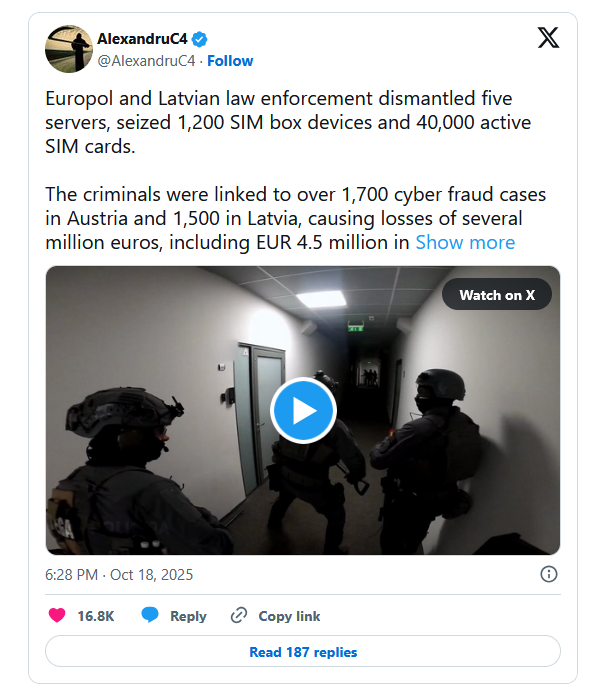
Операция под кодовым названием SIMCartel прошла при участии властей Австрии, Эстонии, Финляндии, Европолом и Евроюстом 10 октября. Правоохранители отключили пять серверов и изъяли 1200 SIM-боксов и 40 000 активных SIM-карт.
Также были взяты под контроль два мошеннических веб-сайта – gogetsms(.)com и apisim(.)com. Кроме того, были заморожены 431 000 евро на банковских счетах и $333 000 на криптовалютных счетах. В ходе операции правоохранительные органы изъяли четыре автомобиля класса люкс.
Как работала схема
Европол заявил, что группа была профессионально организована, имела продуманный веб-сайт и эффективную логистическую систему. Схема была связана как минимум с 1700 случаями цифрового мошенничества и похитила не менее 4,9 млн евро млн у жертв только в Латвии и Австрии.
Сайт GoGetSMS позиционировался как способ получения «быстрых и безопасных временных телефонных номеров». Мошенники предлагали монетизировать существующие SIM-карты, превращая их в «мощные активы для получения пассивного дохода» с помощью своего «специализированного программного обеспечения». Пользователи переводили деньги, но услуг не получали.
Сервис позволил создать более 49 млн фейковых аккаунтов, которые использовались для фишинга, смишинга и финансового мошенничества. Злоумышленники использовали различные тактики — от выдачи себя за родственников или сотрудников правоохранительных органов до мошеннических сделок и даже распространения материалов, связанных с эксплуатацией детей, с целью шантажа.
Европол продолжает расследование. Следователи пытаются установить, была ли криптовалюта инструментом отмывания денег или непосредственной частью аферы.
В последние время по всему миру проходит серия операций против международных криптомошенников. Полиция Таиланда совместно с Южной Кореей арестовала 25 членов группировки Lungo Company, обвиняемых в романтических и инвестиционных аферах на $15,1 млн. Следствие установило, что преступники использовали кросс-чейн переводы и нелегальных OTC-брокеров для сокрытия следов.
В США бюро расследований штата Колорадо ведет дело о краже $1,4 млн у местного жителя, ставшего жертвой «романтического» криптомошенничества. Аналогичные схемы выявлены в Австралии и Калифорнии, где злоумышленники обманывали инвесторов через соцсети и приложения знакомств.
По оценкам аналитиков, романтические аферы и инвестиционные криптоскамы становятся одним из самых быстрорастущих видов финансовых преступлений, что объясняет рост международных операций, подобных SIMCartel.

Полезный материал?
Происшествия
Разработчики предупредили о рисках для мостов и обратились к биржам за помощью.
22 июн. 2026 г.
Происшествия
Осужденный помогал переводить средства жертв инвестиционных афер и заработал на этом не менее $4 млн.
10 июн. 2026 г.
Происшествия
Компания связывает инцидент с компрометацией приватного ключа сервисного кошелька, а не со взломом смарт-контрактов.
22 мая 2026 г.
Происшествия
После инцидента проект временно остановил торговые операции и работу узлов.
15 мая 2026 г.
Происшествия
Пользователь безуспешно подбирал пароль несколько недель, пока ИИ не помог найти старую резервную копию кошелька
14 мая 2026 г.
Крипторегулирование
Власти вводят обязательную регистрацию для компаний, работающих с трансграничными криптопереводами
8 мая 2026 г.
Курсы криптовалют
-

Bitcoin
$83 918
BTC
-0.37%
-

Ethereum
$2 685.5
ETH
+0.17%
-

BNB Smart Chain
$772.77
BSC
-0.24%
-

Ripple
$1.42
XRP
+1.04%
-

TRON
$0.337373
TRX
-0.38%
-

Zcash
$1 533.62
ZEC
-0.88%
-

Dogecoin
$0.097466
DOGE
+2.46%
-

Cardano
$0.218269
ADA
+2.11%
-

Bitcoin Cash
$336.35
BCH
+0.89%
-

Stellar XLM
$0.184461
XLM
+2.83%