

US has imposed sanctions on 19 organizations involved in online fraud in Myanmar and Cambodia
US authorities have stepped up their fight against online fraud, accusing networks in Myanmar and Cambodia of exploiting people and defrauding investors

09.09.2025 - 11:15
378
4 min
0
Key points:
- The sanctions affected 19 organizations in Myanmar and Cambodia linked to crypto fraud and investor deception.
- Victims were lured with job offers, had their documents taken away, and were kept in debt bondage, forcing them into criminal activity.
- American losses from schemes in the region exceeded $10 billion in 2024, a 66% increase over the year.
The United States, through the Office of Foreign Assets Control (OFAC), has imposed sanctions on networks organizing cryptocurrency investment schemes in Myanmar and Cambodia. Nine entities in Myanmar, some of which operated under the cover of already sanctioned armed groups, and ten organizations in Cambodia involved in forced labor camps were subject to restrictions.
“Southeast Asia’s cyber scam industry not only threatens the well-being and financial security of Americans, but also subjects thousands of people to modern slavery,” Under Secretary of the Treasury for Terrorism and Financial Intelligence John K. Hurley said.
One of the key hubs of the fraudulent network was the Shwe Kokko settlement in Myanmar’s Karen State on the border with Thailand. Here, under the cover of the KNA armed group, the Yatai New City complex was created, where cryptocurrency investment schemes, online casinos, and human trafficking were carried out.
The Yatai New City complex in Shwe Kokko is a hub for crypto fraud and forced labor on the border between Myanmar and Thailand.
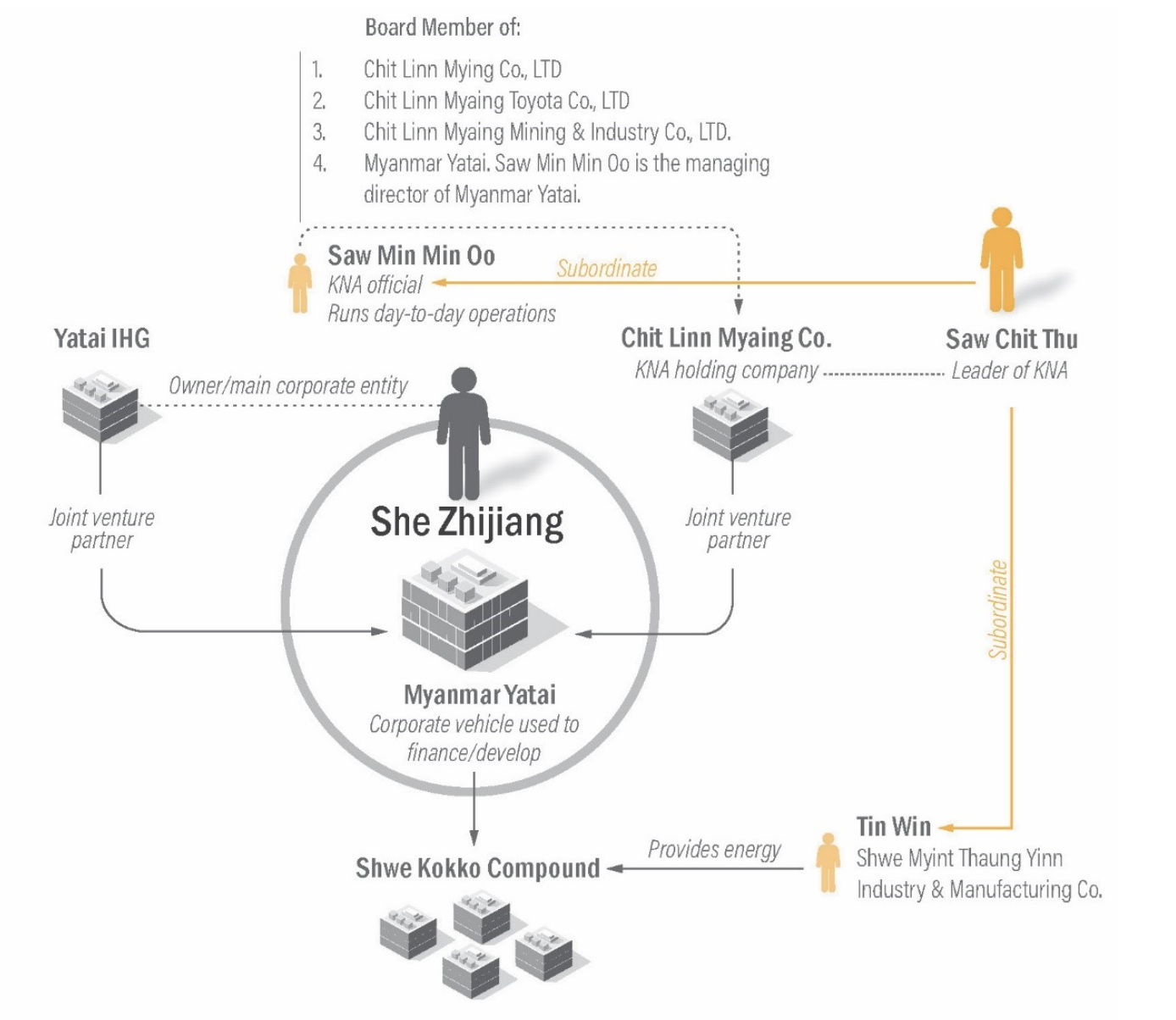
How the schemes work and what the sanctions are targeting
OFAC describes the typical mechanics: promises of high-paying jobs, confiscation of documents, control of movement, debt bondage, and threats of violence. Victims are forced to correspond via messengers, playing out “investment opportunities” and leading people to transfer money to fictitious platforms.
The most widespread scheme is “pig butchering,” where trust is built through prolonged communication and fictitious relationships.

“Pig butchering”: another $47 million belonging to scammers has been frozen
A scheme for laundering criminal proceeds obtained by fraudsters through a sophisticated scam has been uncovered
What the sanctions achieve
The new measures block the assets of individuals in the US jurisdiction and prohibit Americans from conducting any transactions with them. Legal entities that directly or indirectly belong to the specified organizations are also subject to the sanctions, and their assets are also frozen. The goal is to cut off financial flows and restrict access to the international infrastructure for transfers and cryptocurrency exchanges.

South Korea arrests hackers who stole $28 million from the elite
Hackers exploited a vulnerability in the SIM card system to gain access to the accounts of 258 wealthy Koreans, including BTS’s Jungkook
The evolution of measures against crypto schemes in the region
According to the US Treasury Department, the damage from Southeast Asian schemes exceeded $10 billion in 2024.
In the spring, US financial intelligence already identified Cambodia’s Huione Group as a key center for laundering funds linked to North Korean cyberattacks and fraud. The new sanctions logically continue the line of blocking cash-out channels and international settlements.

Useful material?
 Telegram
  Twitter
 Incidents
In 104 minutes, the attacker emptied 1,404 addresses before validators halted the network and froze almost all of the loot.
Oct 19, 2026
Incidents
Developers warned of potential risks to bridges across the ecosystem and asked exchanges for assistance.
Jun 22, 2026
Incidents
The defendant helped move funds stolen through investment scams and earned at least $4 million for his role in the operation.
Jun 10, 2026
Incidents
The company is linking the incident to a compromised private key on a service wallet, rather than a smart contract exploit
May 22, 2026
Incidents
Following the incident, the project temporarily halted trading operations and node activity.
May 15, 2026
Incidents
The user spent weeks unsuccessfully trying to guess the password until Claude helped find an old wallet backup file
May 14, 2026
Cryptocurrency rates
-

Bitcoin
$80 456
BTC
-1.06%
-

Ethereum
$2 341.56
ETH
-2.29%
-

BNB Smart Chain
$730.57
BSC
-1.51%
-

Ripple
$1.42
XRP
+1.04%
-

TRON
$0.329271
TRX
-0.21%
-

Zcash
$1 200.97
ZEC
-1.84%
-

Dogecoin
$0.077184
DOGE
-2.49%
-

Cardano
$0.218269
ADA
+2.11%
-

Stellar XLM
$0.184461
XLM
+2.83%
-

Bitcoin Cash
$275.51
BCH
-2.63%