

$8 Billion in сrypto and рundreds фrrested: Inside the FBI’s пlobal сrackdown
According to industry estimates, international criminal organizations steal roughly $64 billion annually through investment scams and romance fraud schemes. A new FBI-led operation demonstrates just how deeply organized crime has embedded itself in the worlds of cryptocurrency and online communications.

03.06.2026
222
7 min
0
The Federal Bureau of Investigation (FBI) announced the seizure of cryptocurrency worth approximately $8 billion and the arrest of hundreds of suspects during a sweeping international crackdown on so-called scam compounds and transnational criminal organizations. Among the groups identified was the Democratic Karen Benevolent Army (DKBA). GetBlock AML Research reviews what U.S. authorities describe as the largest crypto asset seizure in American history.
The Trail Leads to Prince Group
We previously reported on this seizure, but at the time there had been no official confirmation from U.S. authorities. The FBI has now acknowledged the confiscation and released additional details.

How the US became $15 billion richer in BTC in one day. All about crypto reserve
US authorities confiscated more than 127 000 bitcoins and included them in their strategic crypto reserve
Investigators believe these organizations were involved in a global fraud wave that victimized thousands of people worldwide, including U.S. citizens. In one case, an American reportedly lost approximately $3 million after falling victim to an online scam.
During the arrest of Chen Zhi, the CEO of Cambodian conglomerate Prince Holding Group and an alleged leader of the criminal network, the FBI seized more than 127,000 Bitcoin. At current market prices, the assets are worth more than $8 billion, and their value may have exceeded $15 billion at the time of seizure. U.S. authorities describe it as the largest cryptocurrency confiscation in the history of the federal government.
The Democratic Karen Benevolent Army (DKBA) is an armed group operating in a region of Myanmar. According to U.S. authorities, the organization has ties to Chinese organized crime and has previously been sanctioned by the U.S. Treasury Department for its involvement in large-scale fraud operations. The U.S. government has formally designated it as a transnational criminal organization.
Photographs released following one operation in Thailand show thousands of confiscated smartphones, computers, and other equipment allegedly used in scam centers.
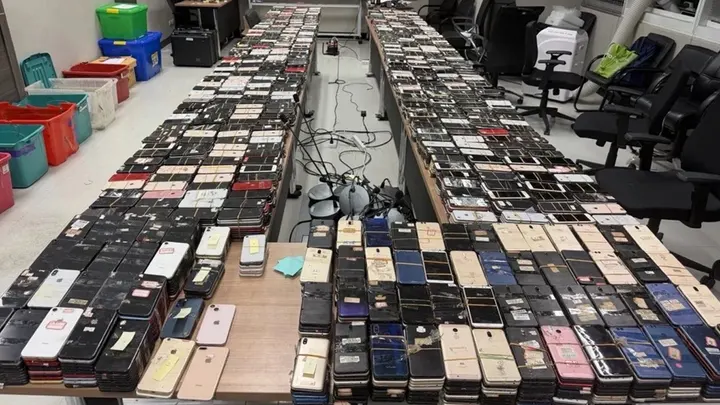
Equipment seized from scam compounds. Source: FBI
From Asia to the Middle East
According to investigators, similar scam compounds operated not only across Asia but also in Africa and the Middle East. Many have been linked to Chinese criminal organizations, with U.S. citizens serving as primary targets. International efforts to identify and dismantle these centers remain ongoing.
FBI Director Kash Patel said the bureau participated in operations ranging from the dismantling of Prince Group-linked networks in Cambodia to Operation Sand Dollar in Dubai. In Thailand, FBI personnel seized thousands of smartphones and large quantities of office equipment during raids on scam compounds.
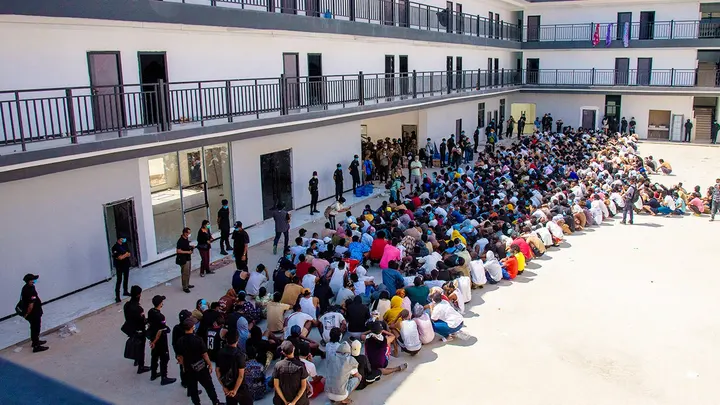
In Dubai, a joint operation conducted by local police and the FBI resulted in the arrest of 275 individuals. Six suspects are expected to be extradited to the United States to face federal charges. Investigators allege that each of the nine scam compounds dismantled in Dubai generated approximately $6 million in illicit revenue annually.
Authorities also claim that Prince Group operated similar secured compounds in multiple countries. Chen Zhi has been charged with wire fraud and conspiracy to commit money laundering.
FBI officials stated that combating these criminal networks has been one of the bureau’s top priorities over the past year.

U.S. seizes $61M in crypto as authorities uncover new fraud network
U.S. authorities have seized millions of dollars in cryptocurrency stolen through investment scams. Investigators traced the movement of funds across dozens of wallets and multiple blockchains.
How Asian Scam Compounds Made Their Money
An FBI agent described a case in which a victim lost $3 million through a romance scam. In these schemes, criminals build trust with victims online before persuading them to transfer funds. Investigators say other forms of fraud have also been linked to multiple suicides, particularly sextortion schemes targeting teenagers.
The investigation further revealed that some scam organizations relied on victims of human trafficking as part of their workforce. Individuals were often lured by promises of high-paying jobs and work visas. Upon arrival, they allegedly found themselves trapped in facilities controlled by criminal groups and were forced to participate in fraudulent schemes under threats of violence, abuse, and coercion.
Starlink Played a Role
To identify criminal operators, the FBI worked with satellite internet provider Starlink. The bureau supplied location data associated with devices allegedly used by fraud networks. As a result, more than 7,000 Starlink terminals operating in Myanmar were reportedly disabled.
The broader investigation began after a surge of complaints submitted to the FBI’s Internet Crime Complaint Center (IC3) in 2025.
Over the course of the year, IC3 received nearly 72,000 reports involving cryptocurrency investment fraud. Reported losses exceeded $7.5 billion. The FBI believes the actual figure is substantially higher, as many victims never report the crimes.
How the Operation Unfolded
According to estimates from the United States Institute of Peace, international criminal syndicates steal approximately $64 billion every year through these types of schemes.
The broader enforcement effort, known as Operation Blackout, included at least four major investigations. One of them, Operation Zephyr Exodus, targeted activities linked to Prince Holding Group.

Arrest in the Caribbean: The story behind the theft from a U.S. Government crypto wallet
Investigators were able to trace the movement of the funds across multiple blockchain networks and services often used to obscure transaction trails. The case ultimately led to an international operation and the arrest of a suspect on the Caribbean island of Saint Martin.
Another component, Operation Sand Dollar, focused on scam compounds operated by organized crime groups throughout Asia. Investigators allege these organizations used infrastructure in the United Arab Emirates to target and defraud U.S. citizens.
A separate effort, Operation Haochen, targeted the Tai Chang scam compound in Myanmar’s Kyaukhat area, which is reportedly controlled by the DKBA. According to investigators, the facility maintained connections to Chinese criminal organizations. During the investigation, the FBI seized approximately $30 million linked to Tai Chang and other scam operations.
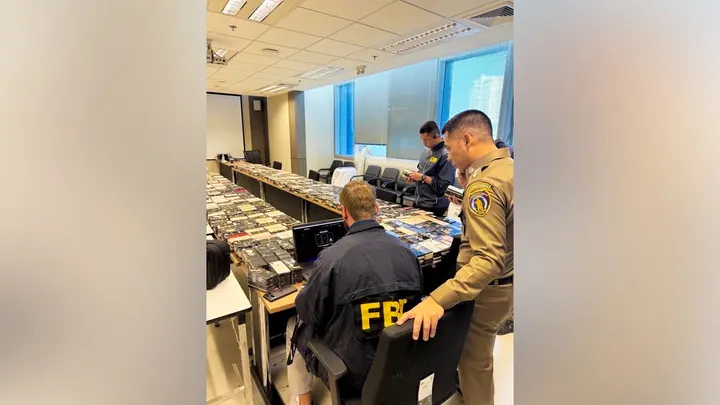
Another operation, known as the Shunda Compound Takedown, was conducted jointly by FBI personnel and Thai law enforcement. Authorities arrested two individuals and shut down a Telegram channel allegedly used to recruit people into forced labor schemes where scammers posed as Cambodian law enforcement officers.
In addition to enforcement actions, the FBI operates a prevention initiative known as Operation Level Up. The program is designed to identify victims of cryptocurrency investment fraud and alert them before they suffer additional losses.
To date, program personnel have contacted 8,935 potential victims. According to the FBI, 77% were unaware they were involved in a fraudulent scheme. The bureau estimates these interventions prevented approximately $562 million in additional losses.

Useful material?
 Telegram
  Twitter
 Research
One and the same cryptocurrency address received two completely opposite assessments from different analytics systems: from an ordinary gambling service to an extremely severe criminal offense. This story has become the starting point for a broader conversation about what the scientific standards of blockchain analysis should look like — and why errors in systems like these can shape the fates of real people.
Jul 1, 2026
Research
The blockchain has helped uncover the ties between cryptocurrency fundraising campaigns, exchangers in Syria, and intermediaries in several countries around the world. A telltale pattern has emerged in which the same addresses were used across multiple donation drives at once
Jun 24, 2026
Research
Four Iranian cryptocurrency exchanges accounted for roughly 78% of all digital asset volume tied to the country in 2025. They have now become the focal point of the largest U.S. sanctions campaign against Iran's cryptocurrency infrastructure.
Jun 5, 2026
Research
A financial system is already up and running on public blockchains, with loans, analogues of U.S. Treasuries, and automated capital markets. More than $551 billion has flowed through DeFi protocols — but most of that activity has nothing to do with the real economy and everything to do with the speculative build-up of risk.
May 29, 2026
Research
Around 97% of Chinese suppliers of chemicals used to make fentanyl accept payment in cryptocurrency. The volume of such transactions continues to grow alongside the global market for synthetic drugs
May 22, 2026
Research
For the first time, the new law makes blockchain analytics an officially mandatory tool of financial oversight in the United States. Authorities will also gain the power to restrict transactions with foreign crypto services tied to money-laundering risks.
May 20, 2026
Cryptocurrency rates
-

Bitcoin
$82 142
BTC
+0.17%
-

Ethereum
$2 414.57
ETH
-0.07%
-

BNB Smart Chain
$723.91
BSC
+0.13%
-

Ripple
$1.42
XRP
+1.04%
-

TRON
$0.331119
TRX
-0.6%
-

Zcash
$1 133.45
ZEC
+0.58%
-

Dogecoin
$0.078835
DOGE
-0.66%
-

Cardano
$0.218269
ADA
+2.11%
-

Stellar XLM
$0.184461
XLM
+2.83%
-

Bitcoin Cash
$276.54
BCH
+0.76%