

Anatomy of a political scam: how LIBRA and NYC Token cost investors millions
Politicians have found a new way to profit from crypto. No need to sell courses — just launch a memecoin

18.02.2026
393
6 min
0
The fraudulent trend of launching worthless tokens and selling them to unsuspecting buyers has moved from the fringes of crypto into mainstream politics. GetBlock AML Research takes a closer look at a troubling new pattern in which political figures monetize their reputation and public trust.
Political crypto scams: how LIBRA and NYC Token set the tone
On February 14, 2025, Argentine President Javier Milei posted on X (formerly Twitter) promoting a crypto token called $LIBRA on the Solana blockchain. The project claimed it would support small businesses in Argentina by raising funds through crypto.
Within hours, $LIBRA’s market capitalization soared to $4.5 billion. At the same time, wallets linked to the project’s creators began withdrawing funds from the liquidity pool — the mechanism that allows users to buy and sell the token. By the time the situation became clear, retail investors had lost an estimated $250 million. Milei deleted his post. The project vanished.
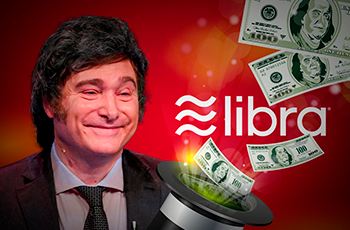
How much they earned from the LIBRA token scam, or calculate the average salary of a crypto scammer
For the first time in history, a sitting president of a sovereign country took part in the promotion of a fraudulent token
Eleven months later, on January 13, 2026, former New York City Mayor Eric Adams held a press conference in Times Square to unveil NYC Token — a novelty memecoin, also built on Solana. He claimed the project would combat antisemitism and promote blockchain education.
Less than 30 minutes after launch, the token crashed 80% from its peak valuation of $540 million. On-chain data showed that the developer withdrew $3.4 million from the liquidity pool. Users on X labeled the incident a “rug pull” — a scheme in which creators abruptly remove funds, leaving investors with nearly worthless assets.
These are not isolated incidents. They reflect a new and alarming trend: political figures leveraging their public status as part of schemes that extract money from ordinary investors.
How a political rug pull works: token concentration and liquidity drain
The process often follows a predictable structure.
First, digital wallets are prepared in advance. In the case of $LIBRA, more than 150 wallets were created before the token officially launched. These wallets circulated funds among themselves to obscure the fact that they were controlled by a single group.
Next comes token concentration. Within 20 minutes of launch, linked wallets had acquired up to 95% of the total $LIBRA supply. While the token was technically “publicly available,” ordinary buyers had little meaningful access to it.
Then a public figure enters the picture. A well-known politician promotes the token, triggering a surge of retail interest fueled by trust in the individual’s name. Mass buying pushes the price higher.
Once the price peaks, insiders either sell their token holdings or withdraw liquidity directly from the pool. The price collapses. Retail investors are left holding nearly worthless tokens. The politician distances themselves, deletes promotional posts, and claims ignorance of the project’s internal mechanics.
In the case of NYC Token, the structure was even more blatant: 70% of the one billion issued tokens were held in a single “reserve” wallet, excluded from circulating supply calculations. That meant only about 30% of tokens were actually available for trading, making price manipulation far easier.
Why political memecoins are more dangerous than typical crypto scams
When an anonymous developer launches a questionable token, many investors recognize the risk. It blends into the background noise of crypto speculation.
But when a sitting president or former mayor publicly endorses a token, it creates a sense of legitimacy. People assume legal review, oversight, and accountability. The thought process becomes: “If someone this public is behind it, it can’t be a scam.”
That perception of trust is central to the scheme.
The politician provides social validation. The technical infrastructure enables rapid fund extraction. Together, they create a more effective mechanism than either element alone.
Political figures also operate within a different accountability framework than anonymous developers. Investigations may drag on. Jurisdictional questions complicate enforcement. Influence and connections can provide additional insulation. The consequences for organizers often pale in comparison to the financial damage suffered by investors.
In both cases, the warning signs were visible on-chain from the start.
For $LIBRA, a simple review of token distribution would have shown that over 150 wallets accumulated 95% of supply within 20 minutes — a pattern inconsistent with organic demand. Wallet link analysis would have revealed interconnected funding sources and extreme ownership concentration.
For NYC Token, basic supply analysis would have shown that 70% of tokens were locked in a single reserve wallet, leaving only 30% for actual trading. Monitoring the liquidity pool would have exposed the rapid $3.4 million withdrawal.
No advanced forensic tools were required. A basic review of the smart contract and token distribution — a process that takes seconds — would have highlighted the risks. The data was public, transparent, and accessible to anyone willing to check.
From LIBRA to HAWK: why the political crypto scam model keeps repeating
$LIBRA and NYC Token are simply the most prominent examples. Similar schemes emerge daily across various blockchains on a smaller scale.
The $HAWK memecoin, promoted by internet personality Haliey Welch, reached a $490 million valuation before crashing more than 90% within hours. On-chain data showed that only 3–4% of tokens were available for public trading, while the majority were concentrated in ten wallets.
The X account of French footballer Kylian Mbappé was hacked to promote a memecoin that briefly reached a $460 million market cap before collapsing. Memecoins tied to the names of Donald and Melania Trump launched with heavy hype and immediately raised concerns due to insider token concentration.

Trump’s meme coin turns one: how the leader of the Western World left Investors holding the bag
We break down how the current U.S. president and World Liberty Financial allegedly manipulated the crypto market to generate more than $1 billion in profit.
Each time, the pattern repeats: a celebrity or political figure generates trust, a small circle extracts profits, and retail investors absorb the losses.
How to evaluate a memecoin before buying: red flags of political crypto scams
Political status does not guarantee transparency on-chain. A press conference is not due diligence. A famous name does not mean the code is secure.
The only verification that matters is the one you conduct yourself before investing.

Useful material?
 Telegram
  Twitter
 Research
One and the same cryptocurrency address received two completely opposite assessments from different analytics systems: from an ordinary gambling service to an extremely severe criminal offense. This story has become the starting point for a broader conversation about what the scientific standards of blockchain analysis should look like — and why errors in systems like these can shape the fates of real people.
Jul 1, 2026
Research
The blockchain has helped uncover the ties between cryptocurrency fundraising campaigns, exchangers in Syria, and intermediaries in several countries around the world. A telltale pattern has emerged in which the same addresses were used across multiple donation drives at once
Jun 24, 2026
Research
Four Iranian cryptocurrency exchanges accounted for roughly 78% of all digital asset volume tied to the country in 2025. They have now become the focal point of the largest U.S. sanctions campaign against Iran's cryptocurrency infrastructure.
Jun 5, 2026
Research
A financial system is already up and running on public blockchains, with loans, analogues of U.S. Treasuries, and automated capital markets. More than $551 billion has flowed through DeFi protocols — but most of that activity has nothing to do with the real economy and everything to do with the speculative build-up of risk.
May 29, 2026
Research
Around 97% of Chinese suppliers of chemicals used to make fentanyl accept payment in cryptocurrency. The volume of such transactions continues to grow alongside the global market for synthetic drugs
May 22, 2026
Research
For the first time, the new law makes blockchain analytics an officially mandatory tool of financial oversight in the United States. Authorities will also gain the power to restrict transactions with foreign crypto services tied to money-laundering risks.
May 20, 2026
Cryptocurrency rates
-

Bitcoin
$81 147
BTC
-4.16%
-

Ethereum
$2 376.71
ETH
-5.44%
-

BNB Smart Chain
$728.85
BSC
-2.88%
-

Ripple
$1.42
XRP
+1.04%
-

TRON
$0.328283
TRX
-1.31%
-

Zcash
$1 205.9
ZEC
-11.35%
-

Dogecoin
$0.078389
DOGE
-6.11%
-

Cardano
$0.218269
ADA
+2.11%
-

Stellar XLM
$0.184461
XLM
+2.83%
-

Bitcoin Cash
$273.45
BCH
-4.9%