

Don’t repeat this at home: fake suicide for $1,5 million
A young and hopeful prodigy made money by convincing everyone he was dead

12.05.2025
697
4 min
0
The meme coin era continues to gift the crypto community with incredible stories of “success” and fraud. Once again, there was a smart crypto user who decided to go all in and make a big score. GetBlock AML Research publishes the details of the most unusual scam scheme in 2025.
Legend

Jeffy Yu
Meet Jeffy Yu, a young and hopeful developer, as well as a “visionary” and tech prodigy from a young age. In his younger years, he has already co-founded the AI project Zerebro for decentralized content creation and distribution.
On May 4, Jeffy creates his own meme coin, $LLJEFFY, and later that day publishes an article on his Mirror blog about so-called legacoins. In the article, he speculates that meme coins have supposedly become cultural symbols and ideas that can hold value for a long time.
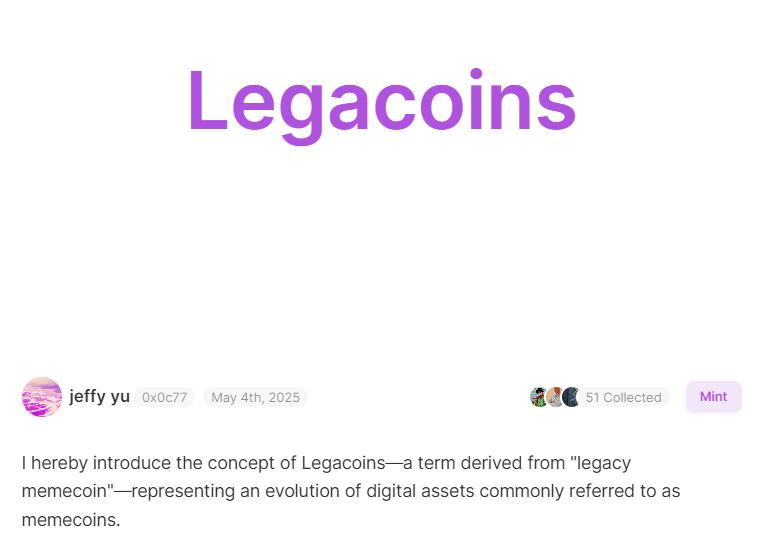
Legacoins article on Mirror
The very next day, a video clip from Jeffy’s live broadcast in which he allegedly commits suicide began circulating online. And on May 6, an obituary appears on the Legacy website, allegedly confirming the death of the developer. The obituary text mentions the $LLJEFFY token as Jeffy’s last “work of art”. On the same day, the official Zerebro account and Jeffy’s personal X page were deleted.

Obituary on the Legacy website (later removed)

How much they earned from the LIBRA token scam, or calculate the average salary of a crypto scammer
For the first time in history, a sitting president of a sovereign country took part in the promotion of a fraudulent token
What really happened
As one could guess, this is not a tragic story and Jeffy is actually alive. Already on May 8, journalists from The Standard found the developer alive and unharmed at his parents’ house. After the discovery, Jeffy tried to play up the panic attack and said that he was being stalked and now he had to go into hiding again. The prodigy also said he was in a state of post-traumatic stress disorder and asked reporters to leave the grounds of his parents’ home. The developer’s obituary from the Legacy website has since been removed.
Rumors that Jeffy was actually alive surfaced on the day of his alleged death. Wonderland CEO Daniele Sestagalli claimed on his X page that Jeffy had faked his death. Sestagalli received a text message from the Zerebro co-founder in which he admitted to faking his death due to threats that were allegedly made against him. The story would have looked more believable if it weren’t for on-chain data.
What Jeffy was doing
Immediately after the obituary was published, the price of the $LLJEFFY token soared 42 000% (from $0,07 to $0,3). The address, which created the meme coin and is owned by Jeffy, started selling coins. To further inflate the altcoin’s value, Jeffy began burning coins, reducing the total issuance. It is impossible to calculate the exact amount of money earned from this scheme, but the count is in the tens of thousands of dollars.
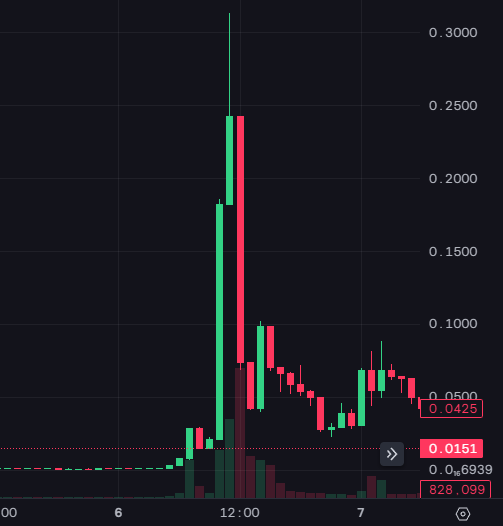
Growth of the $LLJEFFY meme coin
Apparently, the young visionary decided to fully convert his reputation into cash, so he did not bypass the Zerebro project. On the day of his staged death, Jeffy sold $1,5 million worth of $ZEREBRO.
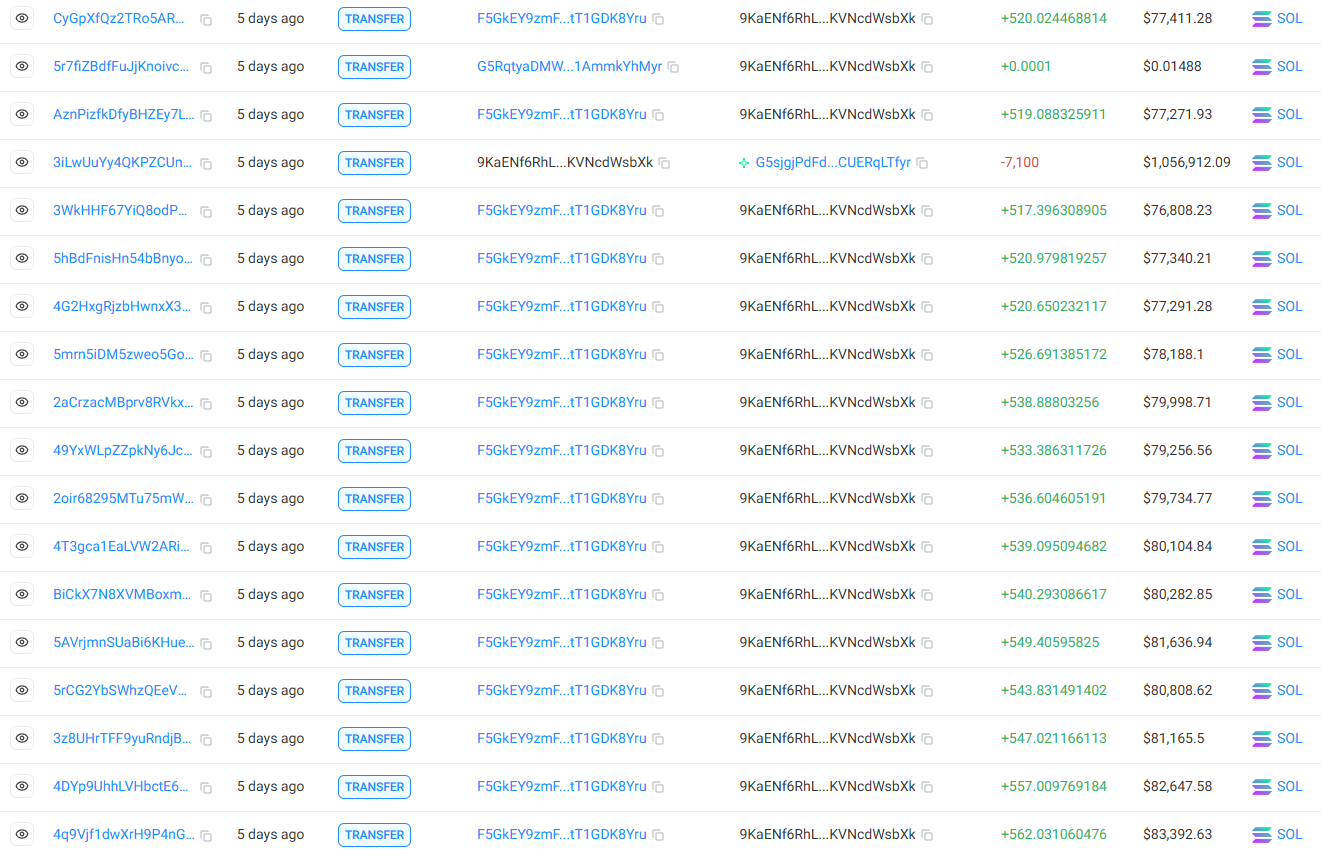
$ZEREBRO sales from Jeffy’s wallet
“A true believer and builder of blockchain, someone who upheld his life's beliefs even in death—he deserves to be honored in a uniquely blockchain way,” the Requiem platform wrote about Jeffy. It looks like Jeffy has indeed made history, but not as a blockchain creator, but as a common fraudster.

Useful material?
 Telegram
  Twitter
 Research
One and the same cryptocurrency address received two completely opposite assessments from different analytics systems: from an ordinary gambling service to an extremely severe criminal offense. This story has become the starting point for a broader conversation about what the scientific standards of blockchain analysis should look like — and why errors in systems like these can shape the fates of real people.
Jul 1, 2026
Research
The blockchain has helped uncover the ties between cryptocurrency fundraising campaigns, exchangers in Syria, and intermediaries in several countries around the world. A telltale pattern has emerged in which the same addresses were used across multiple donation drives at once
Jun 24, 2026
Research
Four Iranian cryptocurrency exchanges accounted for roughly 78% of all digital asset volume tied to the country in 2025. They have now become the focal point of the largest U.S. sanctions campaign against Iran's cryptocurrency infrastructure.
Jun 5, 2026
Research
A financial system is already up and running on public blockchains, with loans, analogues of U.S. Treasuries, and automated capital markets. More than $551 billion has flowed through DeFi protocols — but most of that activity has nothing to do with the real economy and everything to do with the speculative build-up of risk.
May 29, 2026
Research
Around 97% of Chinese suppliers of chemicals used to make fentanyl accept payment in cryptocurrency. The volume of such transactions continues to grow alongside the global market for synthetic drugs
May 22, 2026
Research
For the first time, the new law makes blockchain analytics an officially mandatory tool of financial oversight in the United States. Authorities will also gain the power to restrict transactions with foreign crypto services tied to money-laundering risks.
May 20, 2026
Cryptocurrency rates
-

Bitcoin
$81 147
BTC
-4.16%
-

Ethereum
$2 376.71
ETH
-5.44%
-

BNB Smart Chain
$728.85
BSC
-2.88%
-

Ripple
$1.42
XRP
+1.04%
-

TRON
$0.328283
TRX
-1.31%
-

Zcash
$1 205.9
ZEC
-11.35%
-

Dogecoin
$0.078389
DOGE
-6.11%
-

Cardano
$0.218269
ADA
+2.11%
-

Stellar XLM
$0.184461
XLM
+2.83%
-

Bitcoin Cash
$273.45
BCH
-4.9%