

Drift Protocol hack for $286 million: causes of the attack and fund movements
After the exploit, the funds were quickly moved across multiple blockchains to make tracking more difficult. Such attacks are becoming systemic and may impact the entire crypto market

03.04.2026
241
4 min
0
Drift Protocol — the largest decentralized futures trading platform on the Solana blockchain — was hit by a major attack on April 1, 2026.
According to estimates, total losses amounted to approximately $286 million. The attackers’ behavior, obfuscation methods, and technical indicators are consistent with patterns seen in previous operations linked to North Korea. GetBlock AML Research presents all currently known details of the attack.
If the involvement of North Korean hackers is confirmed, this would mark the eighteenth such attack linked to the country this year. The total amount stolen would exceed $300 million. In recent years, these groups are estimated to have stolen more than $6.5 billion in cryptocurrency. U.S. authorities believe these funds may be used to finance military programs.
This incident comes amid a broader increase in crypto-related attacks linked to North Korea. Earlier, a supply chain attack involving a third-party software component was also reported, highlighting a systemic approach to compromising infrastructure.

FBI exposes global crypto scheme involving wash trading
Defendants allegedly inflated prices artificially and sold assets at a profit.
How the Drift Protocol hack happened
Within the first hour, the attacker began массово withdrawing funds from the system. Nearly all liquidity (i.e., user funds held in the protocol) was drained through multiple vaults.
Preliminary findings suggest the root cause was access to an administrator’s private keys — effectively a “master password” that grants full control over the system. With this access, the attacker was able to manage funds and modify platform settings.
What assets were stolen
The attack targeted three main vaults:
- JLP Delta Neutral
- SOL Super Staking
- BTC Super Staking
The largest transaction involved the withdrawal of approximately 41.7 million JLP tokens, worth around $155 million.
Other assets were also stolen, including USDC, SOL, Bitcoin in various forms, and additional tokens.
Following the attack, the platform’s total value locked (TVL) dropped sharply — from around $550 million to below $250 million. This makes the incident the largest DeFi hack of 2026 and the second-largest in the Solana ecosystem after the Wormhole bridge exploit in 2022.
The Drift team confirmed the attack and stated that deposits and withdrawals were temporarily suspended. They also reported working with external partners to mitigate the impact.
Where the funds were moved
Analysis shows that the attacker’s wallet was created approximately 8 days before the attack. During that time, a test transaction was carried out, indicating premeditation.
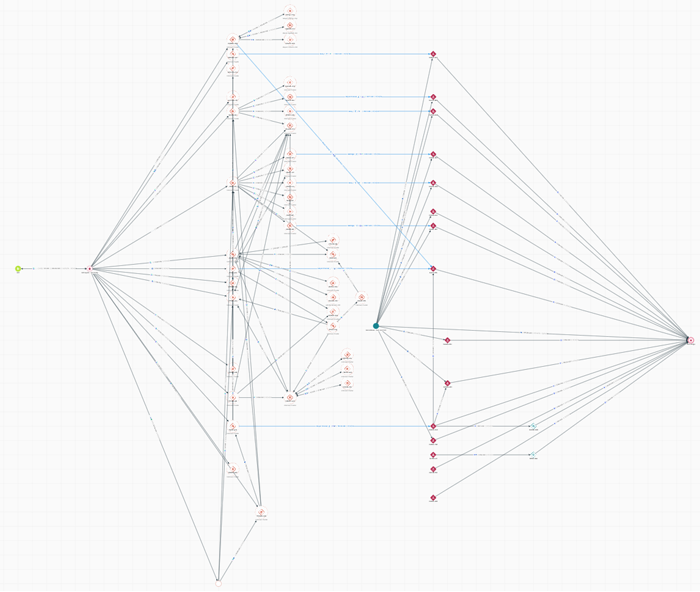
Flow of stolen funds from Drift Protocol. Visualization: Elliptic
After the theft, the attacker quickly swapped tokens into more stable assets (USDC) using exchange services. The funds were then bridged to another blockchain (Ethereum), where they were converted into ETH.
This follows a standard pattern: steal → swap → bridge → obfuscate.
Why such attacks are dangerous for the crypto market
The purpose of this attack goes beyond stealing funds — it demonstrates that even large and established platforms can be compromised through critical control points.
The main vulnerability is access to “admin keys.” If such keys are compromised, the attacker gains full control over the system, effectively acting as its owner.
This creates several risks:
- users cannot be fully confident in the safety of their funds;
- attacks are becoming more sophisticated and заранее подготовленными;
- stolen funds may be used not only for profit but also to finance state-level programs.
Moreover, such incidents undermine trust in the entire crypto industry and can trigger a chain reaction — project failures, user outflows, and increased regulatory pressure.

Useful material?
 Telegram
  Twitter
 Research
One and the same cryptocurrency address received two completely opposite assessments from different analytics systems: from an ordinary gambling service to an extremely severe criminal offense. This story has become the starting point for a broader conversation about what the scientific standards of blockchain analysis should look like — and why errors in systems like these can shape the fates of real people.
Jul 1, 2026
Research
The blockchain has helped uncover the ties between cryptocurrency fundraising campaigns, exchangers in Syria, and intermediaries in several countries around the world. A telltale pattern has emerged in which the same addresses were used across multiple donation drives at once
Jun 24, 2026
Research
Four Iranian cryptocurrency exchanges accounted for roughly 78% of all digital asset volume tied to the country in 2025. They have now become the focal point of the largest U.S. sanctions campaign against Iran's cryptocurrency infrastructure.
Jun 5, 2026
Research
A financial system is already up and running on public blockchains, with loans, analogues of U.S. Treasuries, and automated capital markets. More than $551 billion has flowed through DeFi protocols — but most of that activity has nothing to do with the real economy and everything to do with the speculative build-up of risk.
May 29, 2026
Research
Around 97% of Chinese suppliers of chemicals used to make fentanyl accept payment in cryptocurrency. The volume of such transactions continues to grow alongside the global market for synthetic drugs
May 22, 2026
Research
For the first time, the new law makes blockchain analytics an officially mandatory tool of financial oversight in the United States. Authorities will also gain the power to restrict transactions with foreign crypto services tied to money-laundering risks.
May 20, 2026
Cryptocurrency rates
-

Bitcoin
$81 385
BTC
-1.68%
-

Ethereum
$2 379.56
ETH
-2.22%
-

BNB Smart Chain
$726.83
BSC
+0.13%
-

Ripple
$1.42
XRP
+1.04%
-

TRON
$0.331882
TRX
+0.29%
-

Zcash
$1 126.24
ZEC
-3.4%
-

Dogecoin
$0.078807
DOGE
-1.15%
-

Cardano
$0.218269
ADA
+2.11%
-

Stellar XLM
$0.184461
XLM
+2.83%
-

Bitcoin Cash
$273.57
BCH
-1.69%