

New accomplices of North Korean IT specialists have been revealed. There is a Russian among them
US authorities have imposed sanctions on a Russian citizen who helped North Korean IT specialists launder cryptocurrency for further transfer to the North Korean authorities
29.08.2025
363
3 min
0
On August 27, 2025, the US Treasury Department’s Office of Foreign Assets Control (OFAC) announced sanctions against a network of individuals and companies that facilitate North Korea's revenue generation through its overseas IT workers. GetBlock AML Research provides a brief review of the new restrictive measures against accomplices of the North Korean authorities.
Russian citizen Vitaliy Sergeyevich Andreyev was included in the sanctions list. He was accused of helping to transfer money to Chinyong Information Technology Cooperation Company. This organization has previously been subject to US sanctions and is linked to the DPRK Ministry of Defense. It hires North Korean programmers and IT specialists in Russia and Laos. According to the Treasury Department, since December 2024, Andreyev and Kim Ung Sun have converted more than $600 000 from cryptocurrency to US dollars.
The sanctions list also includes two companies that helped manage the cash flows of the Chinyong network:
- Shenyang Geumpungri Network Technology Co., Ltd. — a front company in China that supports Chinyong’s operations.
- Korea Sinjin Trading Corporation — a North Korean organization subordinate to the political administration of the DPRK Ministry of People’s Armed Forces General Political Bureau.
How North Korea uses IT specialists abroad
North Korea is increasingly relying on its programmers working in other countries to earn money for military programs that are banned. This is a direct violation of US and UN sanctions. To get a job, North Korean IT specialists often use fake documents, fictitious identities, and even get hired by legitimate companies around the world, including in the United States.
Their salaries, which total hundreds of millions of dollars, are almost entirely taken by the state and directed toward prohibited projects. Sometimes these workers also installed malware to steal important technologies from companies.
Cryptocurrency transfers and surveillance
OFAC identified one crypto wallet linked to Andreyev.
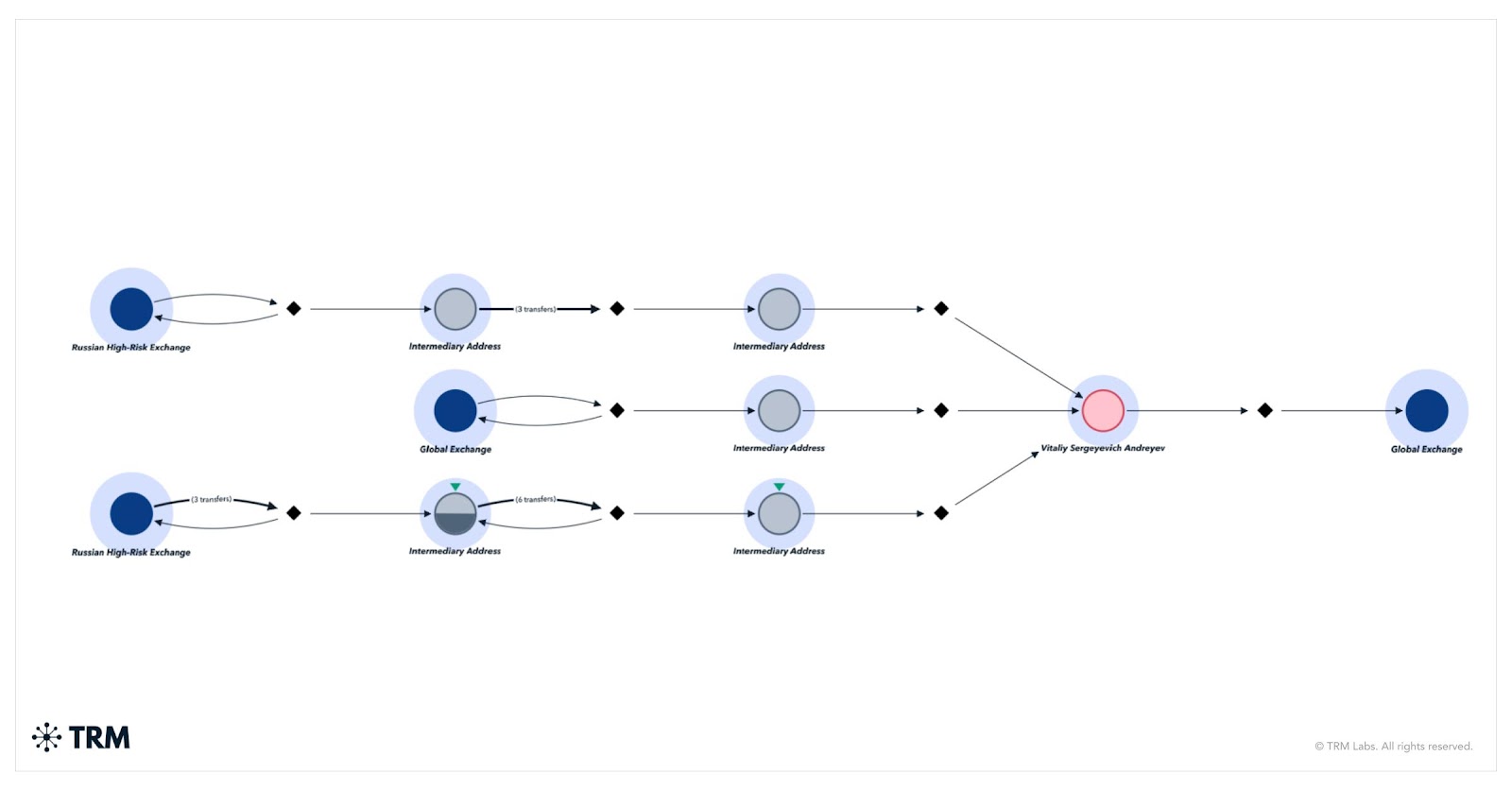
Diagram of cryptocurrency movement through Andreyev’s wallet
These sanctions were a continuation of previous US actions against North Korean intermediaries in Russia, China, and Southeast Asia. For example, on July 8, 2025, OFAC imposed sanctions against another person linked to the North Korean IT scheme. He was accused of laundering millions of stolen cryptocurrency funds through shell companies and unofficial brokers.

Hackers from North Korea find jobs in foreign IT companies. How it happens
North Korea has found another source of funding — using large international technology and crypto companies
Cryptocurrency remains North Korea’s main tool for circumventing sanctions. It is particularly effective when used in conjunction with front companies and intermediaries in various countries. The new US measures show how this system works and underscore the importance of vetting all counterparties for links to North Korean IT networks.

Useful material?
 Telegram
  Twitter
 Research
One and the same cryptocurrency address received two completely opposite assessments from different analytics systems: from an ordinary gambling service to an extremely severe criminal offense. This story has become the starting point for a broader conversation about what the scientific standards of blockchain analysis should look like — and why errors in systems like these can shape the fates of real people.
Jul 1, 2026
Research
The blockchain has helped uncover the ties between cryptocurrency fundraising campaigns, exchangers in Syria, and intermediaries in several countries around the world. A telltale pattern has emerged in which the same addresses were used across multiple donation drives at once
Jun 24, 2026
Research
Four Iranian cryptocurrency exchanges accounted for roughly 78% of all digital asset volume tied to the country in 2025. They have now become the focal point of the largest U.S. sanctions campaign against Iran's cryptocurrency infrastructure.
Jun 5, 2026
Research
A financial system is already up and running on public blockchains, with loans, analogues of U.S. Treasuries, and automated capital markets. More than $551 billion has flowed through DeFi protocols — but most of that activity has nothing to do with the real economy and everything to do with the speculative build-up of risk.
May 29, 2026
Research
Around 97% of Chinese suppliers of chemicals used to make fentanyl accept payment in cryptocurrency. The volume of such transactions continues to grow alongside the global market for synthetic drugs
May 22, 2026
Research
For the first time, the new law makes blockchain analytics an officially mandatory tool of financial oversight in the United States. Authorities will also gain the power to restrict transactions with foreign crypto services tied to money-laundering risks.
May 20, 2026
Cryptocurrency rates
-

Bitcoin
$81 285
BTC
-1.97%
-

Ethereum
$2 377.82
ETH
-2.59%
-

BNB Smart Chain
$726.39
BSC
-0.02%
-

Ripple
$1.42
XRP
+1.04%
-

TRON
$0.332031
TRX
+0.3%
-

Zcash
$1 126
ZEC
-3.49%
-

Dogecoin
$0.078743
DOGE
-1.36%
-

Cardano
$0.218269
ADA
+2.11%
-

Stellar XLM
$0.184461
XLM
+2.83%
-

Bitcoin Cash
$272.5
BCH
-2.49%